
Where the 20% Rule Came From - and Why It's Not the Whole Story
The idea that homebuyers must put 20% down has been passed down through generations of conventional wisdom - and it's not baseless. Historically, 20% was the threshold at which lenders felt comfortable extending a mortgage without additional protection. It also happens to be the point at which buyers avoid private mortgage insurance (PMI), a monthly cost that can add hundreds of dollars to a mortgage payment.
But treating 20% as a universal requirement misrepresents how the mortgage market actually works today. The median down payment for first-time buyers is considerably lower, and a range of loan products are specifically designed to make homeownership accessible below that threshold. The real question isn't whether you can hit 20% - it's what trade-offs come with the amount you choose. For a broader look at the myths surrounding this topic, see Homebuying Myths That Trip Up First-Timers.
8%
Median down payment for first-time buyers
According to the National Association of Realtors, first-time buyers put down a median of 8% in recent years - well below the 20% benchmark.
3%
Minimum down payment on some conventional loans
Fannie Mae and Freddie Mac-backed conventional loan programs allow qualifying first-time buyers to put as little as 3% down.
2%-5%
Typical closing cost range as share of purchase price
In addition to a down payment, buyers typically owe closing costs equal to 2-5% of the loan amount, which must be budgeted separately.
Common Down Payment Thresholds and What Each Means
Different down payment levels unlock different loan types and carry different costs. Here's how the main thresholds break down:
- 3% down - Conventional loans: Fannie Mae and Freddie Mac back conventional loans with as little as 3% down for qualifying first-time buyers. PMI is required, but it can be removed once you reach 20% equity.
- 3.5% down - FHA loans: Federal Housing Administration loans are popular with first-time buyers because they allow lower credit scores and smaller down payments. The trade-off: FHA mortgage insurance premiums last the life of the loan in most cases, unlike conventional PMI.
- 5%-10% down: This range reduces your loan balance and monthly payment compared to the minimums, and typically results in lower PMI costs. It's a common middle ground for buyers who can save more but can't reach 20%.
- 20% down: No PMI, lower monthly payment, and often better interest rate pricing. The trade-off is that accumulating this amount takes time and may mean waiting longer to buy.
- 0% down - VA and USDA loans: Eligible military service members and veterans can access VA loans with no down payment. USDA loans offer similar terms for qualifying buyers in designated rural and suburban areas.
Private Mortgage Insurance: Understanding the PMI Trade-Off
PMI is often framed as a penalty for not saving enough, but it's more accurately described as a tool that lets buyers enter the market sooner. The cost typically ranges from 0.2% to 2% of the loan amount annually, depending on your down payment size, credit score, and loan type - spread across monthly payments.
On a $300,000 loan, PMI might add $600 to $1,800 per year to your costs. That's real money, but it's worth weighing against the opportunity cost of waiting additional years to save a larger down payment while home prices and interest rates shift. On conventional loans, PMI is not permanent - federal law (the Homeowners Protection Act) requires automatic cancellation when your mortgage balance reaches 80% of the original home value, as long as you're current on payments. You can also request early cancellation at that same threshold.
Down Payment Assistance Programs: What's Available
Many first-time buyers don't realize that help exists beyond their own savings. A variety of programs - federal, state, and nonprofit - provide funds specifically to bridge the down payment gap.
Common forms of assistance include:
- Grants: Funds that don't need to be repaid, typically tied to income limits and first-time buyer status.
- Forgivable loans: Second loans that are forgiven after a set number of years, provided you remain in the home and meet other conditions.
- Deferred-payment loans: Second mortgages with no payments due until you sell, refinance, or pay off your primary loan.
State housing finance agencies (HFAs) are a primary source of these programs, and HUD maintains a database of approved housing counseling agencies that can help you identify options in your area. Income limits, home price caps, and residency requirements vary significantly by program and location, so direct research or a HUD-approved counselor is essential.
Before making any decisions about how much to put down, make sure you're also accounting for what you'll owe at the closing table - see Closing Costs Explained for a complete breakdown.
Check Your State's Housing Finance Agency First
Most states have a housing finance agency (HFA) that administers down payment assistance programs specifically for first-time buyers. Before assuming you need to save the full amount on your own, visit your state's HFA website or contact a HUD-approved housing counselor. Many programs have income and home price limits but are broader than buyers expect.
Balancing Your Down Payment Against the Bigger Financial Picture
Deciding how much to put down is ultimately a personal financial decision that extends beyond the mortgage itself. Draining your savings to hit 20% may cost you more in the long run if it leaves no cushion for repairs, job disruptions, or other emergencies that arise after you move in.
A practical approach: think in layers. First, identify the minimum needed to qualify for your preferred loan type. Second, calculate the cost of PMI at that level versus the interest savings from a larger down payment. Third, ensure you're not spending so aggressively on the down payment that you arrive at closing short of funds - or without an emergency reserve.
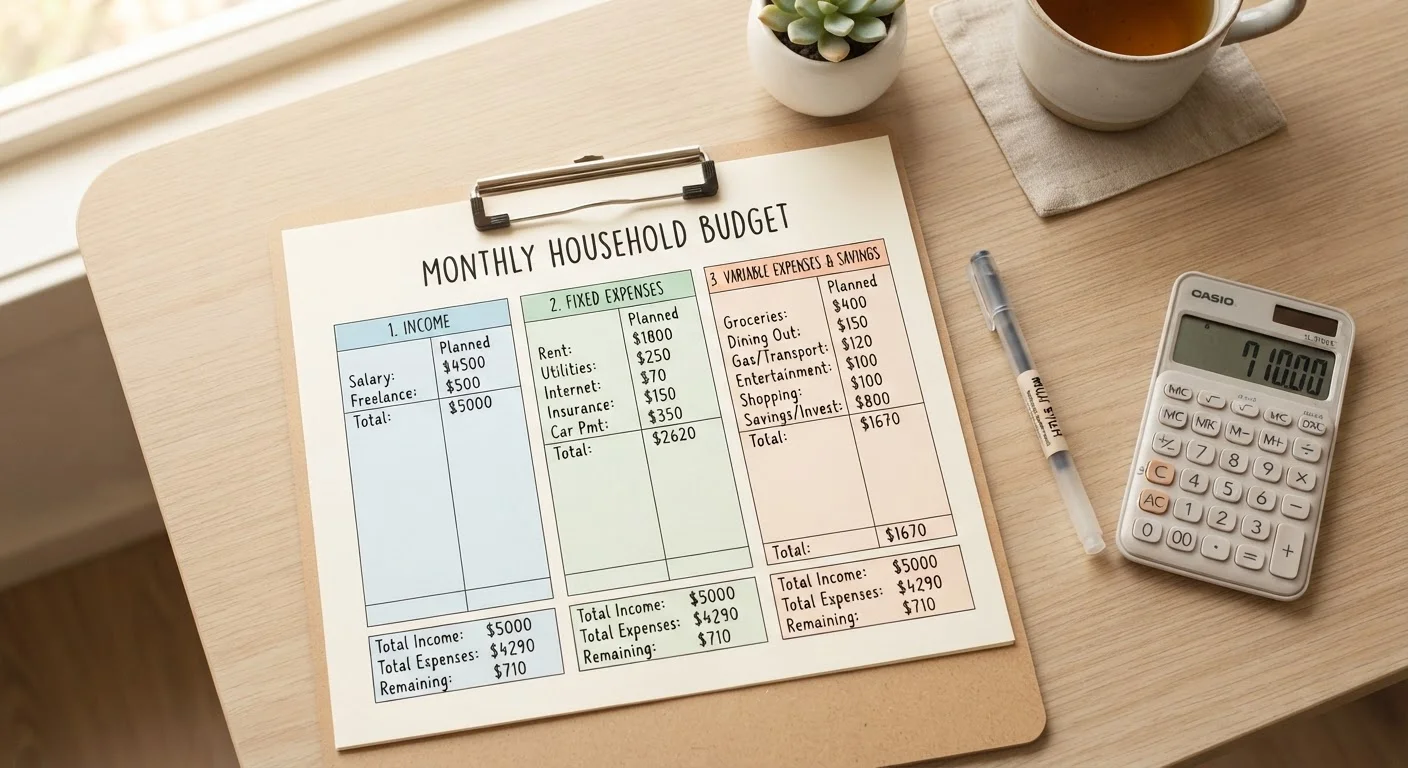
Sound budgeting habits are foundational to this planning. If you're working on structuring your income and expenses to hit a savings target, the 50/30/20 budgeting framework is one starting point worth exploring.
This article is for general informational and educational purposes only. It is not financial or legal advice. Consult a licensed financial professional or HUD-approved housing counselor for guidance tailored to your individual circumstances.