Why Budget Eating Often Gets a Bad Rap
Many people assume that eating nutritiously requires expensive organic produce, specialty supplements, or trendy superfoods. In practice, the nutritional science points in a different direction: some of the most nutrient-dense foods available are also among the least expensive. The challenge isn't access to good food in an absolute sense - it's knowing which foundational strategies reliably stretch a grocery dollar without sacrificing quality.
This article is general educational information and is not a substitute for personalized advice from a qualified healthcare or nutrition professional. That said, the principles here are grounded in widely established dietary guidance and are suitable for most healthy adults looking to eat better on a modest budget.
For a broader look at how nutrition principles translate into everyday meals, see our guide to building a balanced plate without obsessing over numbers.
Best Practices for Nutritious, Affordable Eating
The following practices are drawn from established nutritional and consumer research. They are ordered to build on one another - start with whichever feels most actionable for your situation.
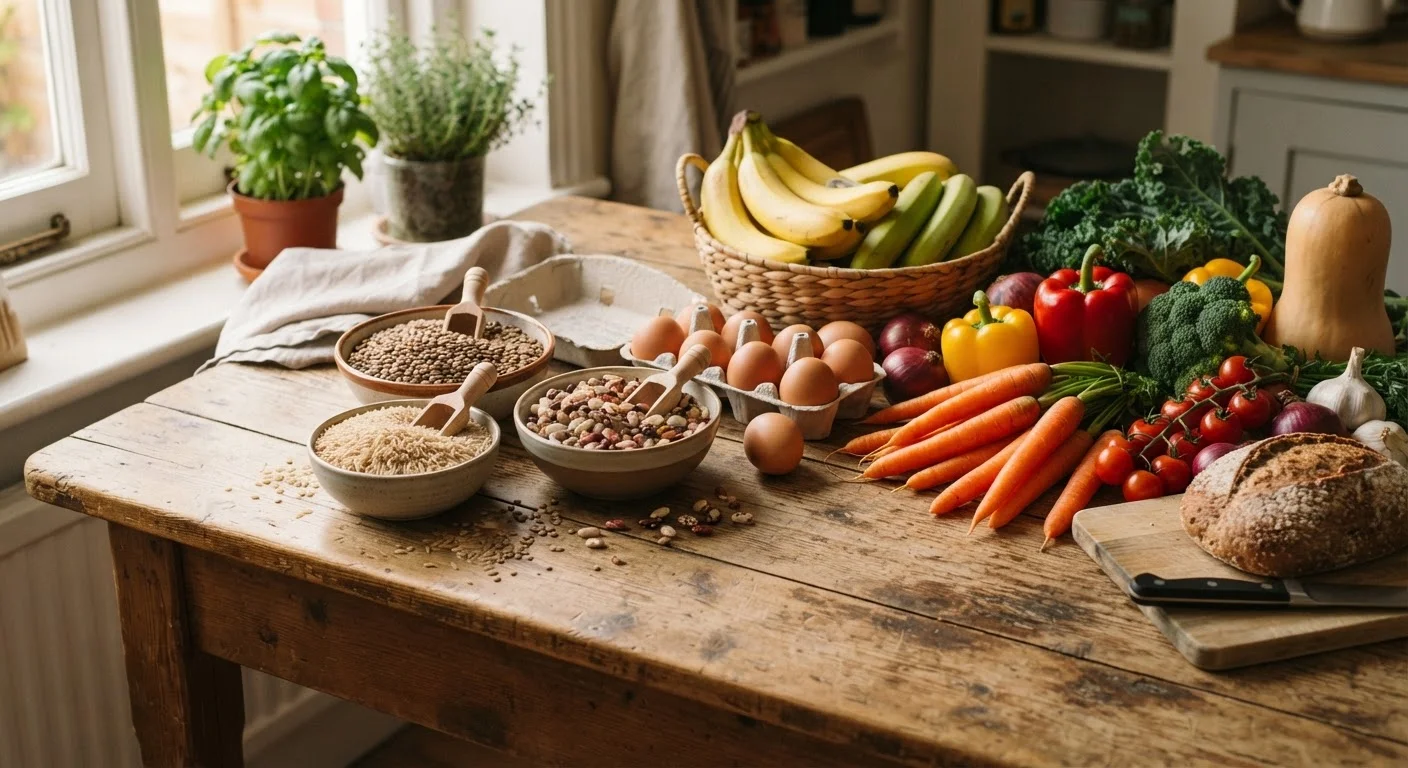
Anchor your diet around legumes, whole grains, and eggs as primary protein sources.
Dried beans, lentils, chickpeas, and eggs consistently rank among the most cost-effective protein sources per gram available in American grocery stores. They also supply fiber, B vitamins, and important minerals - nutrients many Americans fall short on. Reducing reliance on meat as the primary protein doesn't require eliminating it, just rebalancing.
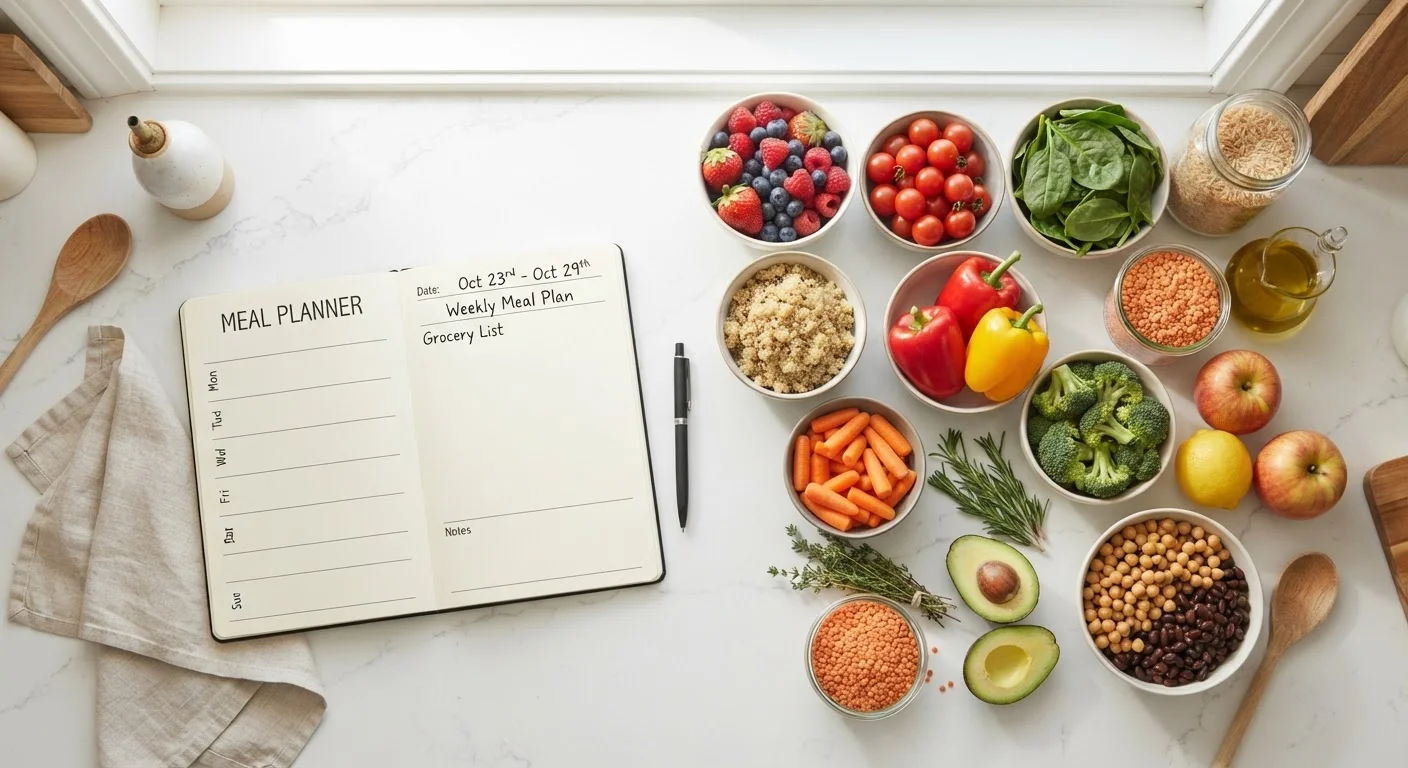
Shop with a written meal plan and a firm list before entering the store.
Unplanned shopping is one of the primary drivers of food waste and impulse spending. When meals are mapped out in advance, purchases align with what will actually be eaten, reducing spoilage - which the USDA estimates accounts for a significant share of household food loss. A plan also reduces the mental load of daily meal decisions.
Treat frozen and canned vegetables as nutritional equals to fresh.
Freezing and canning preserve most of the vitamins and minerals in vegetables at the point of peak ripeness. Research published in nutrition journals consistently shows that frozen produce is nutritionally comparable to - and sometimes better than - fresh produce that has traveled long distances. Canned options are similarly useful; choosing low-sodium or no-salt-added versions where possible is a sensible habit.
Buy dry goods and shelf-stable staples in bulk when storage allows.
Per-unit cost drops substantially when buying oats, rice, dried beans, and pasta in larger quantities. These foods have long shelf lives and form the caloric foundation of nearly every budget-friendly meal pattern. The upfront cost is higher, but the per-meal expense is consistently lower.
Prioritize seasonal and store-brand produce over premium or out-of-season options.
Produce prices fluctuate significantly with season and supply chain. In-season fruits and vegetables are cheaper, often fresher, and may have traveled less distance. Store-brand canned and frozen items are produced to the same regulatory standards as name brands and are usually nutritionally identical.
Cook in batches and repurpose components across multiple meals.
Batch cooking reduces per-meal labor, minimizes food waste by using ingredients fully, and discourages costly takeout decisions driven by end-of-day fatigue. A pot of grains or a tray of roasted vegetables made once can anchor several different meals throughout the week.
High-Impact Actions You Can Take This Week
Long-term habits matter, but a few immediate changes can make a noticeable difference in both your nutrition and your grocery bill within days. The quick wins below require no special equipment or prior knowledge.
If you're also working on broader spending goals, the strategies in our guide to saving on a tight budget pair naturally with these food-focused habits.
Putting It All Together
Budget-conscious eating is less about restriction and more about intentionality. Understanding which foods deliver the most nutritional value per dollar - and organizing your shopping and cooking around those choices - removes much of the friction. Legumes, whole grains, eggs, frozen vegetables, and seasonal produce are the backbone of affordable, balanced eating across virtually every major dietary pattern.
For a practical next step, our week-long meal planning checklist walks through how to apply these principles across an entire week of meals. And if you're curious how affordable eating fits within specific dietary approaches, our comparison of popular diet patterns shows how the Mediterranean, DASH, and plant-based frameworks each support budget-friendly choices.
This article is for general informational and educational purposes only and does not constitute medical or nutritional advice. Consult a qualified healthcare professional before making significant changes to your diet, especially if you have an existing health condition.