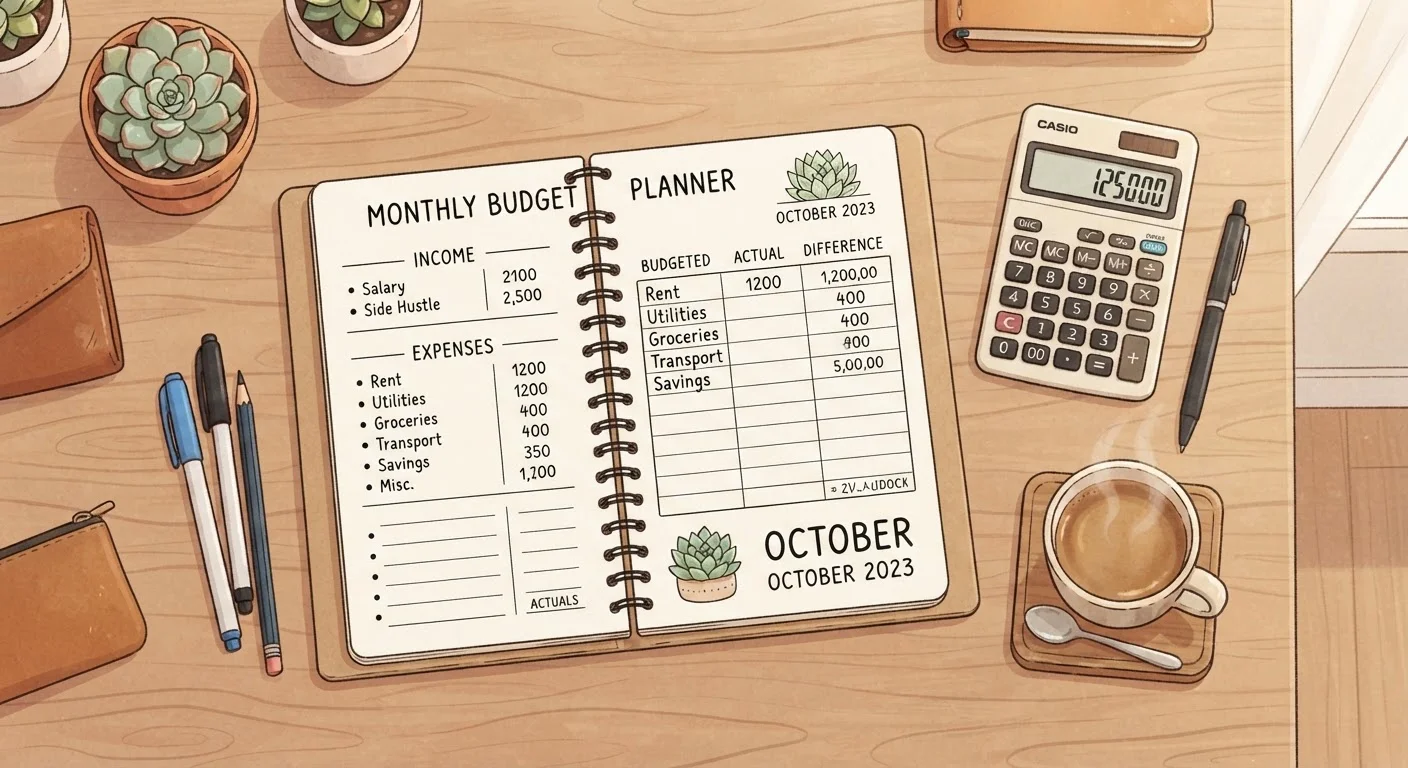

Why Most Budgets Fall Apart Before Month Two
Research in behavioral economics consistently shows that financial failure is rarely about ignorance of the numbers. People quit budgeting because the system demands too much cognitive effort, too frequently. Every daily spending decision becomes a test of willpower - and willpower is a finite resource.
The good news is that habit science offers concrete ways to sidestep these pitfalls. The practices below are grounded in that research and designed to work with how people actually behave, not how they wish they did. If you're starting from scratch, the plain-English guide to your first budget covers foundational vocabulary before you apply these habits.
This article is for general informational purposes only and is not personalized financial advice. Consider consulting a qualified financial professional for guidance specific to your situation.
Best Practices for Making Budgeting Stick
The following practices address the behavioral side of budgeting - the habits, structures, and mindset shifts that separate people who sustain a budget from those who abandon it after a rough week.
Start with one spending category, not your entire financial life.
Attempting to track every dollar immediately creates an overwhelming system that most people abandon within weeks. Focusing on one category - such as dining out or groceries - builds the tracking habit with manageable effort. Success in one area creates confidence and momentum to expand.
Automate savings and recurring bills before you spend on anything else.
When savings and essential payments happen automatically on payday, you remove the repeated decisions that drain willpower. This 'pay yourself first' structure means your budget works even on days you're distracted or stressed. It also prevents the common pattern of spending available cash before saving.
Choose a budgeting method that matches your personality, not just your income.
A zero-based budget suits detail-oriented planners who want precise control; a percentage-based approach like the 50/30/20 rule works better for people who prefer broad guardrails. Using the wrong method for your temperament is a primary reason people quit. The comparison of zero-based and percentage-based budgeting can help you identify which fits your style.
Schedule a fixed, recurring time each week for a brief budget check-in.
Habit research shows that tying a new behavior to a consistent time and context dramatically increases follow-through. A 10-minute Sunday evening review - treated like any recurring appointment - keeps small overages from becoming large ones and reinforces that budgeting is an ongoing practice, not a one-time event.
Build a small 'buffer' category into every budget for unplanned spending.
Budgets that account for only predictable expenses fail the moment something unexpected occurs - and unexpected expenses occur every month. A modest buffer category prevents one imperfect week from derailing the entire system. It also reduces the guilt that leads people to abandon their budget entirely after a slip.
Quick Actions You Can Take Today
You don't need a perfect plan to start. Small, immediate steps build momentum and lower the activation energy that keeps most people stuck in planning mode.
For readers with variable income from freelance or gig work, the same principles apply - but the execution looks different. See budgeting strategies for irregular income for adapted approaches.
Reviewing and Adjusting: The Habit That Sustains All Others
No budget survives first contact with a real month unchanged. A brief monthly review - 20 minutes with your bank statements and your original plan - is what separates a living financial tool from a forgotten spreadsheet. Look for categories you consistently overspent, and ask whether your budget was unrealistic or your behavior shifted.
The monthly budget reset checklist offers a structured way to do this without turning it into a multi-hour ordeal. Also worth examining: the spending categories most budgets underestimate, which are a frequent culprit when totals don't add up.
Once your budgeting habit is stable, you may find yourself ready to think beyond month-to-month cash flow. The investing basics hub is a natural next step for readers who have freed up consistent savings.