Why Budgeting Feels Hard (And Why It Doesn't Have to Be)
For many people, the word budget carries a heavy feeling - restriction, sacrifice, or a reminder of financial stress. But a budget is simply a written plan for how you intend to use your money. It doesn't require spreadsheet expertise, a finance degree, or a high income. What it does require is a willingness to look honestly at what comes in and what goes out.
Much of the discomfort around budgeting comes from misconceptions. If you've heard that budgeting is only for people in debt, or that it means giving up everything enjoyable, those ideas are worth revisiting. Our guide on common budgeting myths addresses these directly. The goal here is to give you a clean, honest starting point.
The Core Concepts You Need First
Before building a budget, it helps to understand a handful of terms you'll encounter repeatedly. You don't need to memorize financial jargon - just get comfortable with the basics.
Take-home income
The money you actually receive after taxes and payroll deductions - what hits your bank account, not your gross salary.
Fixed expense
A bill that stays the same amount each month, like rent, a car loan payment, or a set insurance premium.
Variable expense
A cost that changes month to month based on usage or behavior, such as groceries, gas, or utility bills.
Discretionary spending
Money spent on non-essential things you choose - dining out, entertainment, subscriptions - as opposed to necessities.
Net income
Another term for take-home pay: your earnings after all deductions have been subtracted.
Emergency fund
A dedicated pool of savings set aside to cover unexpected expenses - like a car repair or medical bill - without going into debt.
For a deeper reference on money vocabulary, see our plain-language personal finance glossary.
Your First Three Budget Steps
Starting a budget doesn't mean creating a perfect system immediately. It means taking three concrete actions:
- Calculate your take-home income. Add up all money that actually lands in your bank account each month after taxes and deductions. If your income varies, use your lowest recent monthly figure as a conservative baseline.
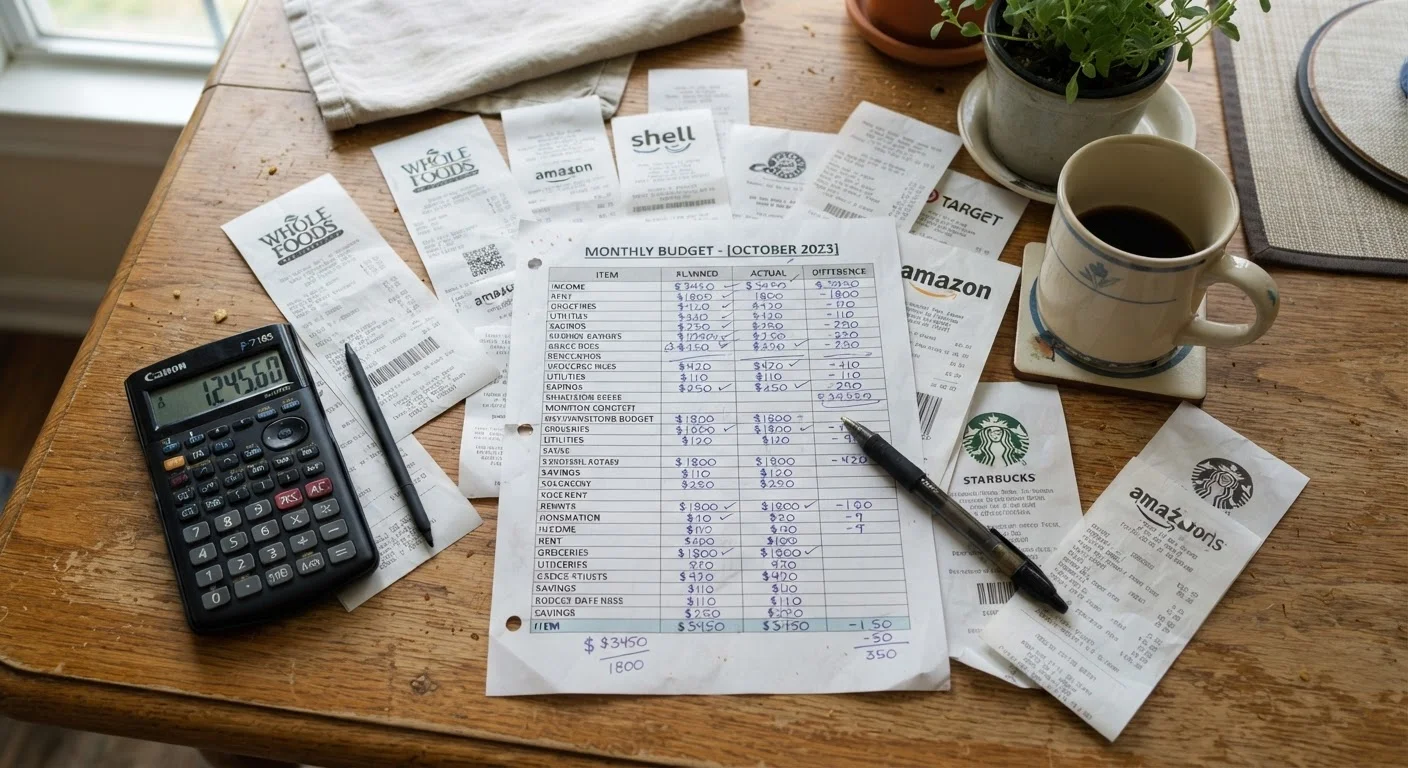
- List every recurring expense. Start with fixed costs - rent or mortgage, car payment, insurance, loan minimums - then move to variable ones like groceries and utilities. Don't forget irregular expenses like annual subscriptions or car registration fees; divide their yearly cost by 12 and treat them as a monthly line item. These are the categories most budgets underestimate.
- Find the gap. Subtract total expenses from take-home income. A positive number means room to save or pay down debt. A negative number signals that spending adjustments are necessary - and now you know where to look.
This three-step snapshot is your first real budget. It doesn't need to be elaborate to be useful.
Simple Frameworks to Guide Your Spending
Once you know your income and expenses, a percentage-based framework can help you set intentional targets rather than just tracking after the fact.
The 50/30/20 rule is one widely cited starting point: allocate roughly 50% of take-home pay to needs (housing, utilities, groceries, transportation), 30% to wants (dining out, entertainment, hobbies), and 20% to savings and debt repayment. Our dedicated explainer on how the 50/30/20 rule works covers when this approach fits and when it needs adjusting for your situation.
Not every household will fit neatly into those percentages - housing costs alone can consume more than 50% in high-cost areas. Treat any framework as a starting reference, not a strict prescription. The value is in having a deliberate target, not hitting it perfectly in month one.
Start With Pen and Paper if Needed
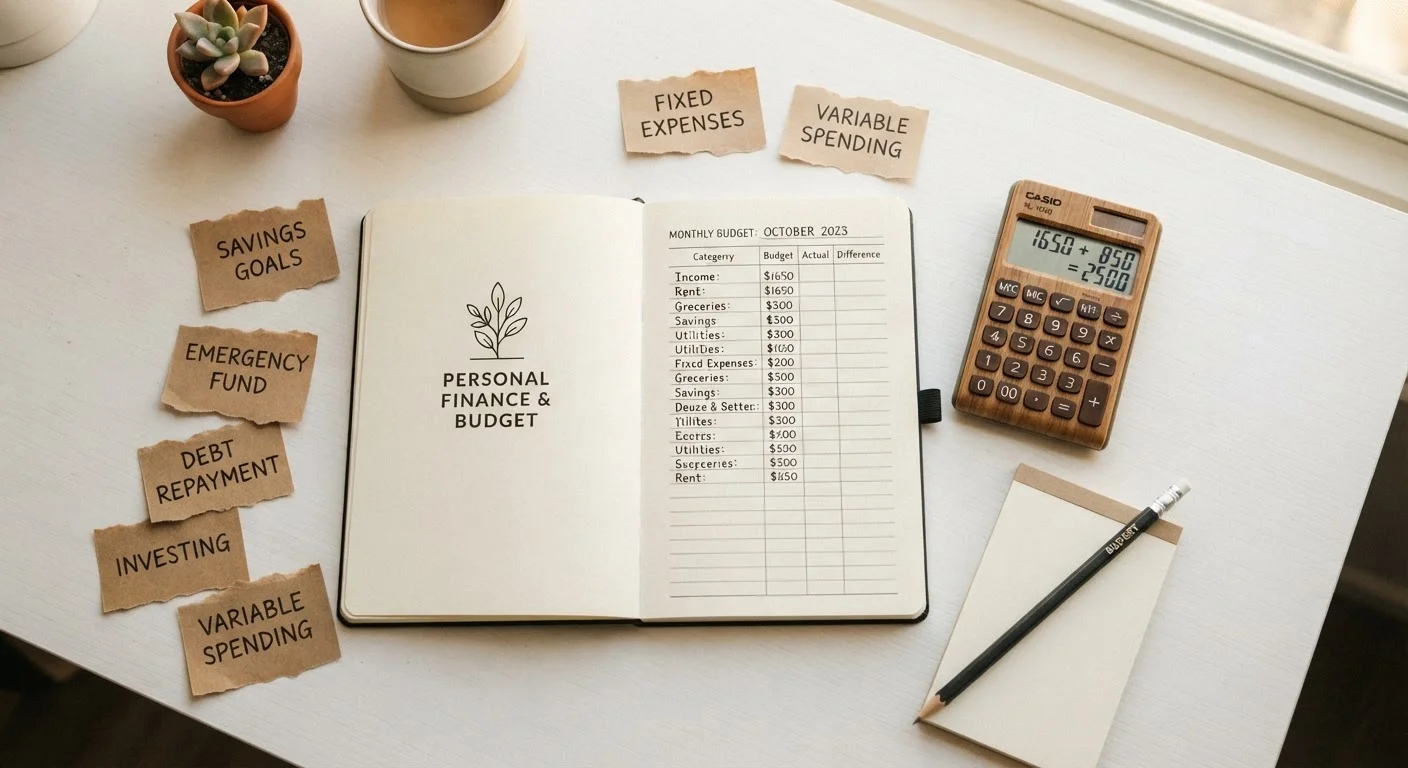
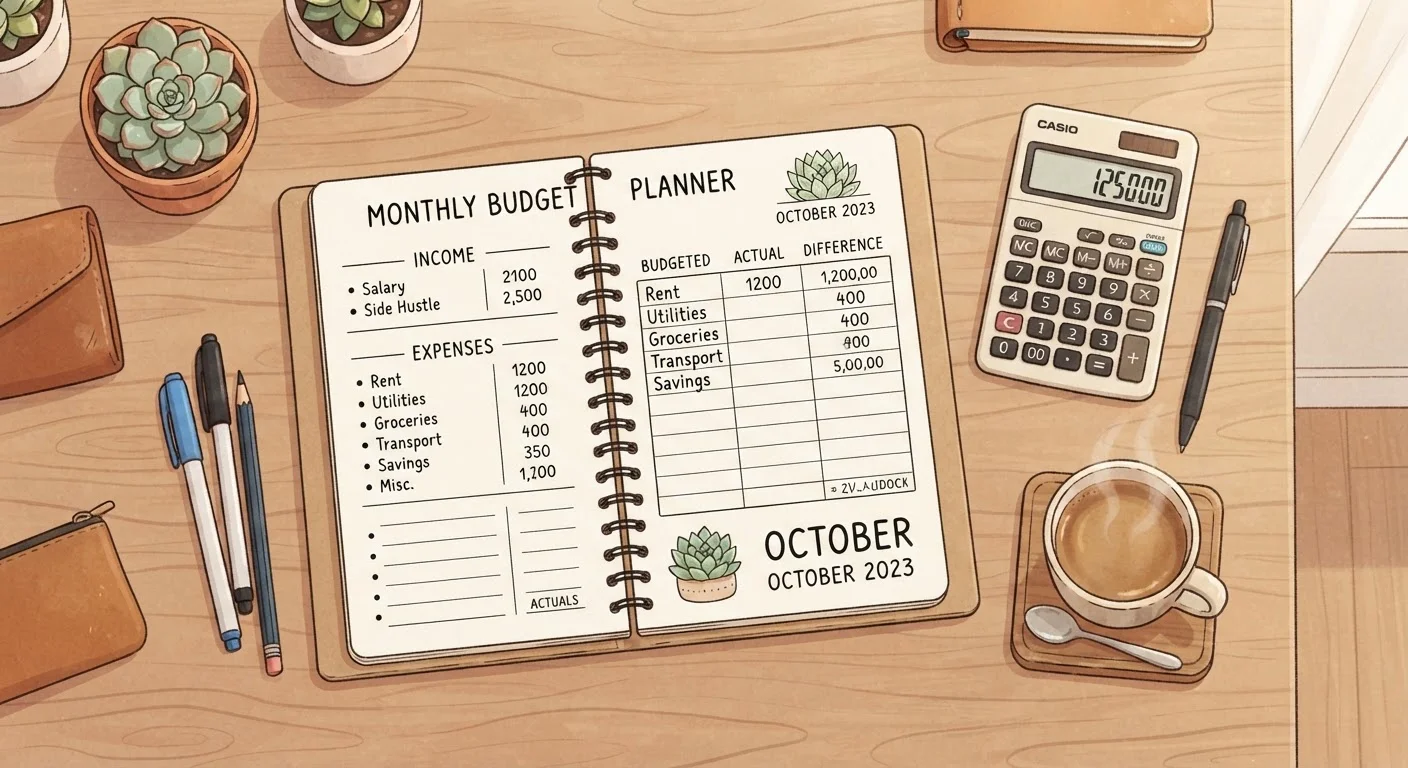
You don't need an app or software to build a first budget. A simple two-column list - income on one side, expenses on the other - gets the job done. Digital tools can add convenience later, but the habit of tracking is what matters most at the start.
Common Pitfalls and How to Avoid Them
Most first budgets stumble for predictable reasons. Recognizing them early makes them easier to sidestep:
- Setting unrealistic targets. Cutting every discretionary expense immediately rarely holds. Gradual reductions are more sustainable than dramatic ones.
- Forgetting irregular expenses. Annual fees, seasonal costs, and one-time purchases are real expenses - build them in monthly as described above.
- Treating one bad month as failure. A budget is a living document. One overspent category is data, not defeat. The habit of reviewing and adjusting is what matters. See how to build a budgeting habit that sticks for behavioral strategies that help.
- Ignoring savings entirely. Even a small, consistent amount set aside each month builds the emergency fund that prevents future budget crises. Our primer on emergency fund basics explains why this belongs in your first budget.
Where to Go From Here
A working budget is the foundation everything else in personal finance is built on. Once yours is running - even roughly - you'll be in a better position to tackle related goals: understanding your credit profile (see getting a handle on credit), approaching shopping decisions more deliberately (shopping sales without overspending), and eventually moving toward longer-term goals like investing basics or buying a home.
Start small. Be honest about your numbers. Review once a month. Those three habits, practiced consistently, are more powerful than any elaborate financial system.
This article is for general informational and educational purposes only and does not constitute personalized financial advice. Consult a qualified financial professional for guidance specific to your situation.