Why Fluid Checks Belong in Every Driver's Routine
Your car relies on six key fluids to protect its mechanical systems, maintain safe stopping power, and keep you comfortable on the road. Neglecting them is one of the most common - and costly - maintenance oversights drivers make. As part of any solid ownership routine, routine fluid checks take less than 20 minutes and can catch problems long before they compound. For a broader look at what regular upkeep actually prevents, see how common shortcuts quietly shorten a car's life.
The six fluids covered here are: engine oil, engine coolant (antifreeze), brake fluid, power steering fluid, automatic transmission fluid, and windshield washer fluid. Some modern vehicles eliminate one or two of these - electric cars have no engine oil, and many newer models have electric power steering with no fluid reservoir. Your owner's manual is the authoritative guide for your specific vehicle.
Make It a Monthly Habit
Checking fluids once a month - or before any long road trip - catches problems while they're still minor. Pairing fluid checks with a seasonal inspection keeps your vehicle in reliable shape year-round. See the seasonal car care checklist for a broader schedule of what to inspect as the weather changes.
What You'll Need Before You Start
Fluid checks require minimal equipment, but having the right items ready makes the process faster and safer.
What you will need
Park on flat, level ground and turn off the engine. For most fluids, especially engine oil and coolant, waiting 10-15 minutes after driving lets the engine cool and fluids settle - giving you a more accurate reading and reducing burn risk.
Step-by-Step: Checking and Topping Off Each Fluid
Work through each fluid systematically. Pop the hood using the interior release lever, then secure it with the prop rod or hood strut before reaching inside the engine bay.
Check Engine Oil
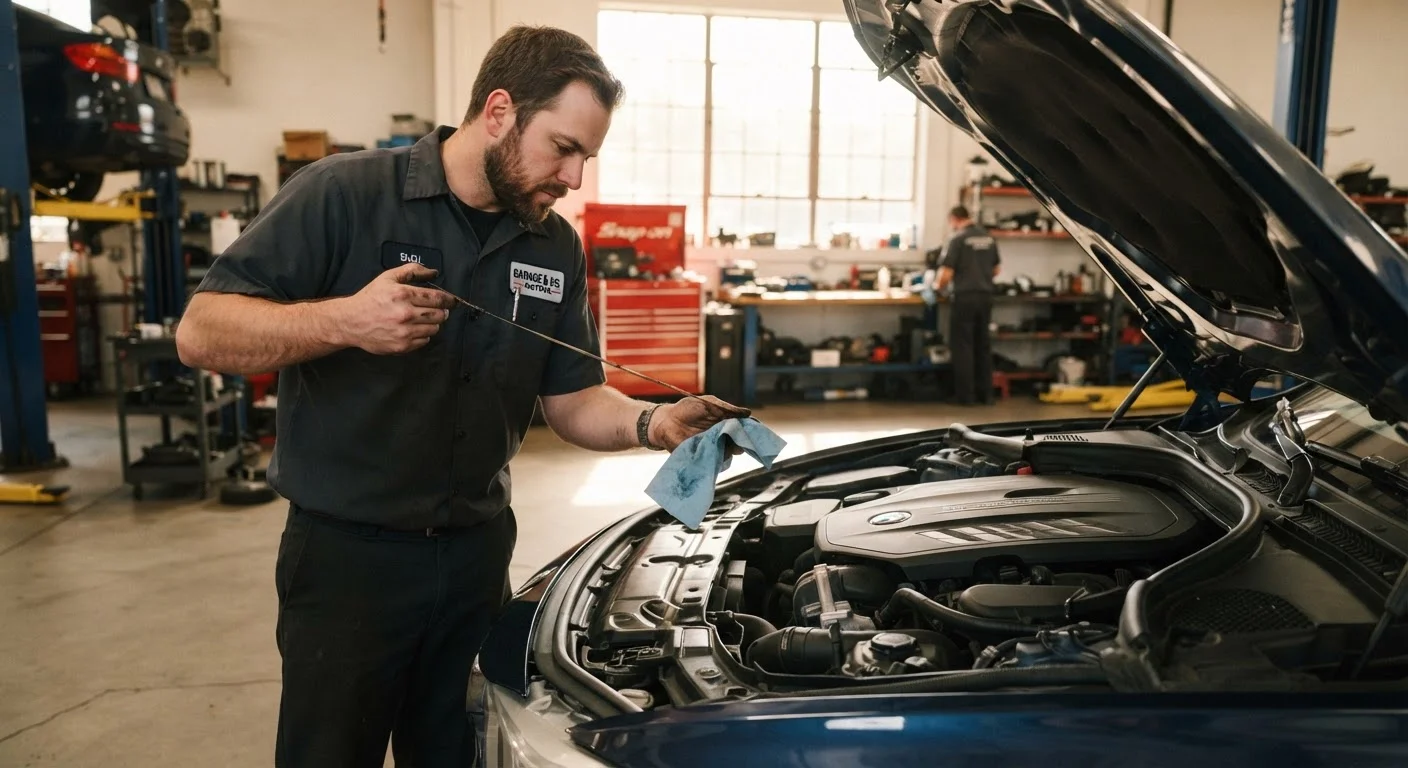
Locate the oil dipstick - usually a brightly colored ring or handle near the front of the engine. Pull it out, wipe it clean with a rag, reinsert it fully, then pull it out again. Read the oil level against the MIN and MAX markers on the stick. If the level is at or below MIN, add the oil grade specified in your owner's manual using the twist-off oil filler cap on top of the engine.
Check Engine Coolant
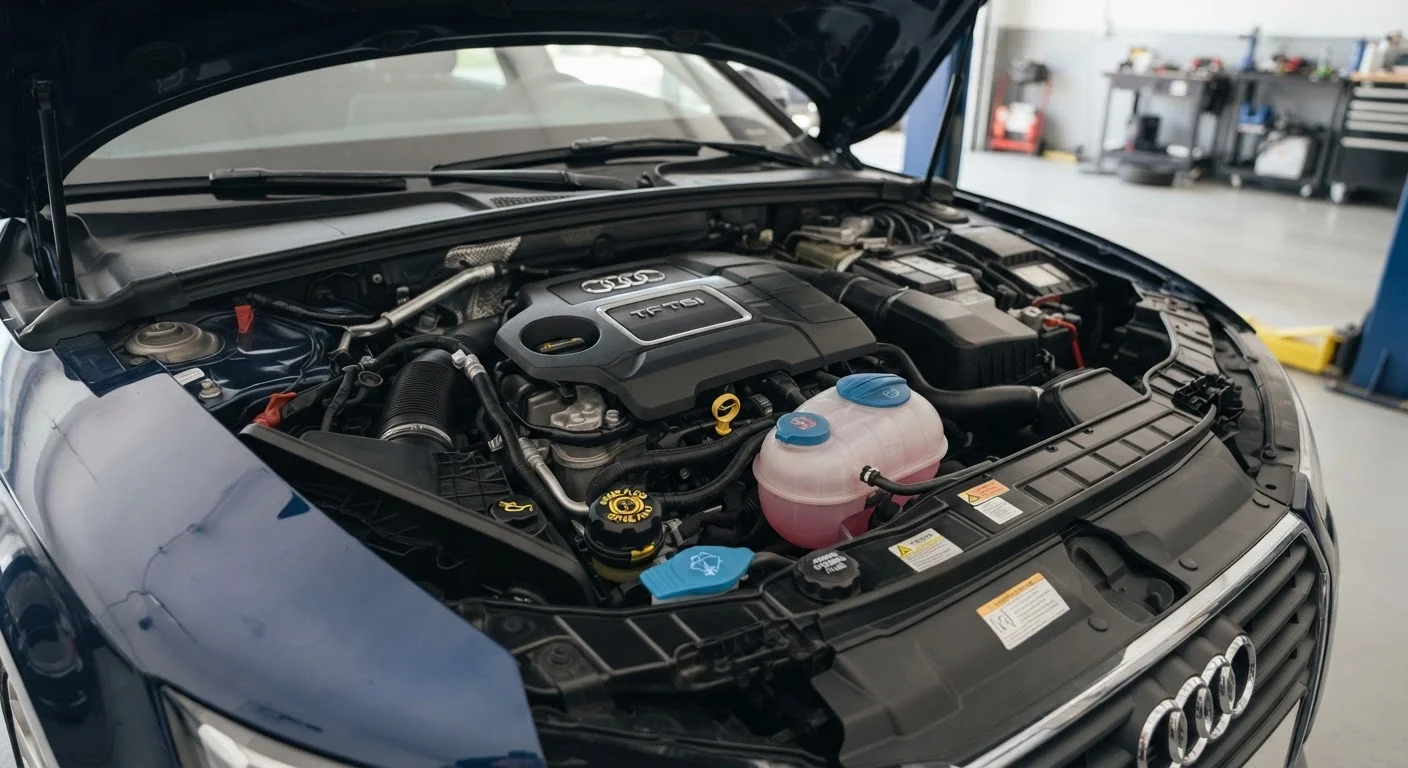
Find the translucent coolant reservoir (usually marked with a thermometer icon). Read the level against the FULL COLD or MIN/MAX lines on the side - no dipstick needed. If low, add the correct coolant type (check your manual; mixes vary by manufacturer) up to the appropriate line.
Check Brake Fluid
The brake fluid reservoir sits on top of the brake master cylinder, typically near the firewall on the driver's side. Most reservoirs are translucent - check the level against the MIN and MAX lines without opening the cap if possible. If topping off is needed, use only the fluid type printed on the cap (commonly DOT 3 or DOT 4). Wipe up any spills immediately, as brake fluid damages paint.
Check Power Steering Fluid
If your vehicle has hydraulic power steering, find the reservoir (typically labeled with a steering wheel icon). Many have a dipstick built into the cap; others have MIN/MAX lines on the reservoir wall. Add the manufacturer-specified fluid if the level is below the minimum. Note: many vehicles made after 2010 use electric power steering and have no fluid reservoir at all.
Check Transmission Fluid
On vehicles with a transmission dipstick (many newer models are sealed and require dealer service), locate the dipstick - often red-handled - with the engine warmed up and running in Park. Wipe, reinsert, and read the level. Transmission fluid should appear reddish and translucent, not dark or burnt-smelling. Top off with the exact fluid type specified in your manual.
Check and Refill Windshield Washer Fluid
The washer fluid reservoir is the simplest check - locate the cap marked with a windshield/spray icon, open it, and visually inspect the level. Refill with premixed washer fluid rated for your climate. In winter, use a formula with a freeze rating below the lowest expected temperature in your area.
After completing all checks, close the hood firmly and confirm it latches. Fluid checks pair naturally with other pre-drive inspections - the pre-trip safety checklist covers tires, lights, and more items worth combining into a single walk-around.
When a Low Fluid Level Means More Than a Top-Off
Topping off a fluid that's slightly low is routine. But if a level drops noticeably between checks - especially for brake fluid, coolant, or transmission fluid - that's a signal worth investigating. These systems are largely closed loops, meaning significant fluid loss usually indicates a leak rather than normal consumption.
Brake fluid loss in particular warrants immediate attention, as it directly affects your ability to stop. Any fluid you can't explain losing should prompt a visit to a qualified mechanic. For drivers building long-term ownership habits, consistent maintenance habits like fluid monitoring are what separate high-mileage reliable vehicles from those that fail prematurely.
This article provides general automotive maintenance information for educational purposes. Always consult your vehicle's owner's manual and, when in doubt, a qualified mechanic before performing or deferring any maintenance task.