
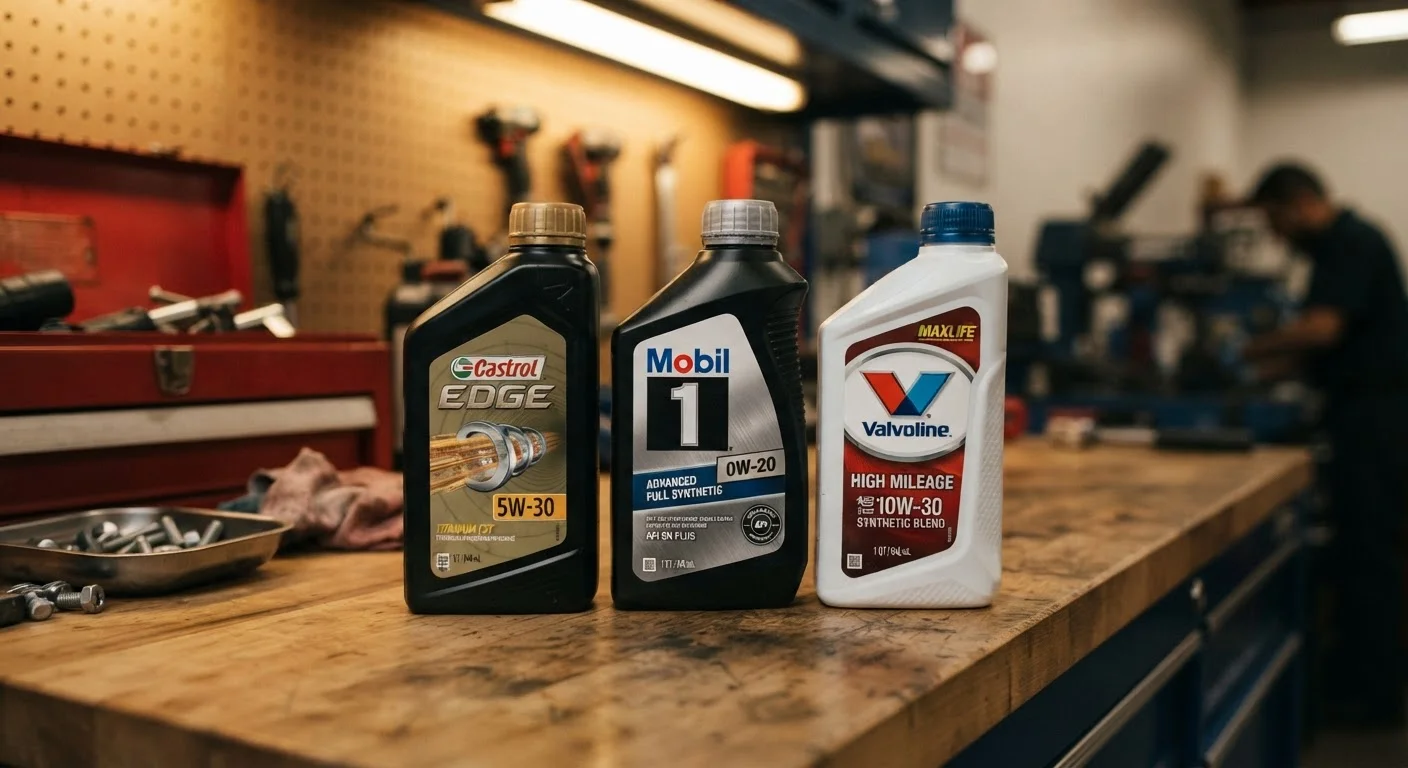
What Makes Engine Oils Different
Engine oil is the lifeblood of your vehicle's motor - it lubricates moving parts, reduces heat buildup, and carries contaminants away from critical components. But not all oils are produced or refined the same way, and those differences matter when it comes to how well your engine is protected.
The three main categories - conventional, full synthetic, and synthetic blend - vary primarily in how they're manufactured, how stable they remain under heat and pressure, and how long they last before needing to be changed. Understanding these differences helps you make an informed decision rather than guessing at the auto parts store. For a broader look at how oil changes fit into your overall service routine, see your vehicle's maintenance schedule explained.
Conventional Oil: The Baseline
Conventional motor oil - sometimes called mineral oil - is derived from crude petroleum through a refining process. It has been the industry standard for decades and remains widely available and affordable.
It performs reliably in engines that were designed around its characteristics, particularly older vehicles, low-displacement engines, and those not subjected to severe driving conditions. However, conventional oil breaks down more quickly under high heat and contains more natural impurities than its synthetic counterparts, which means it typically requires more frequent oil changes - often in the 3,000-5,000 mile range depending on the vehicle and driving habits.
One persistent myth worth addressing: the old "change your oil every 3,000 miles" rule was based on conventional oil in older engines. Many modern vehicles using conventional oil can go longer between changes. Check your owner's manual for actual intervals. Car maintenance myths that cost drivers money covers this in more detail.
| Conventional | Synthetic Blend | Full Synthetic | |
|---|---|---|---|
| Base material | Refined crude oil | Crude oil + synthetic base | Engineered synthetic compounds |
| Typical drain interval | 3,000-5,000 miles | 5,000-7,500 miles | 7,500-10,000+ miles |
| Cold-temperature flow | Slower to flow at startup | Better than conventional | Best cold-start protection |
| High-heat stability | Lower; breaks down faster | Moderate improvement | Highest stability |
| Cost per quart | Lowest | Moderate | Highest |
| Best suited for | Older or low-stress engines | Trucks, SUVs, high-mileage vehicles | Modern, turbocharged, or performance engines |
Full Synthetic Oil: Engineered for Performance
Full synthetic oil is chemically engineered from base compounds rather than simply refined from crude. This manufacturing process allows formulators to create oil molecules that are more uniform in size and structure, resulting in a lubricant that performs more predictably across a wide range of temperatures and operating conditions.
Key advantages of full synthetic include better performance at cold startup (the oil flows faster in freezing temperatures, protecting engine parts before they fully warm up), greater resistance to breakdown under high heat, and extended drain intervals - commonly 7,500 to 10,000 miles or more, depending on the oil specification and the vehicle. Turbocharged engines and high-performance vehicles particularly benefit from full synthetic, as their internal temperatures and pressures exceed what conventional oil handles comfortably.
The trade-off is cost: full synthetic typically runs noticeably more per quart than conventional. Over time, though, longer drain intervals can offset some of that price difference.
Synthetic Blend Oil: A Middle Ground
Synthetic blend oil combines conventional base oil with a portion of synthetic base stock, along with additive packages. The result sits meaningfully above conventional oil in terms of thermal stability and oxidation resistance, while remaining less expensive than full synthetic.
Synthetic blends are often recommended for trucks and SUVs that carry heavy loads or tow frequently, as well as for drivers making the transition from conventional oil. They offer better protection during cold starts and high-temperature operation than straight conventional oil, without requiring a full switch to a premium synthetic.
High-mileage variants of synthetic blends - specifically formulated for vehicles with over 75,000 miles - are also widely available. These formulations typically include seal conditioners intended to reduce minor oil seepage common in aging engines.
How to Choose the Right Oil for Your Vehicle
The single most important resource when choosing engine oil is your vehicle's owner's manual. It specifies the required viscosity grade (such as 5W-30 or 0W-20) and may indicate whether the manufacturer approves or requires synthetic oil. Some modern engines - particularly those with tight tolerances or variable valve timing systems - are designed to run on full synthetic and should not be filled with conventional oil.
Beyond the manual, consider your driving conditions. Frequent short trips, extreme cold or heat, towing, or extended highway driving all place different demands on engine oil. Drivers who log fewer miles annually may also benefit from full synthetic's longer service life, since conventional oil degrades over time even when a vehicle isn't driven frequently.
Maintaining a consistent oil change schedule - regardless of oil type - is one of the most impactful habits for vehicle longevity. Maintenance habits that extend vehicle life outlines why routine care like this pays off over the long run.
This article is for general informational purposes only. Always consult your vehicle's owner's manual and a qualified mechanic before making changes to your maintenance routine.