What a Maintenance Schedule Actually Is
Every vehicle comes with a factory-defined set of service intervals built around one core idea: parts wear out at predictable rates, and replacing or refreshing them on schedule prevents larger failures. Your maintenance schedule is that plan in writing.
The schedule is found in your owner's manual - not the quick-reference guide in the glove box, but the full manual. It lists specific tasks alongside mileage milestones: 5,000 miles, 15,000 miles, 30,000 miles, 60,000, and so on. Some tasks recur frequently (engine oil, tire rotation), while others appear just once or twice in a vehicle's typical lifespan (timing belt, spark plugs).
Time also factors in. If you drive fewer miles per year, certain fluids and components still degrade from age - brake fluid absorbs moisture over time regardless of mileage, for example. Most schedules are framed as whichever comes first: miles or months.
For a deeper look at how common maintenance assumptions lead drivers astray, see our article on car maintenance myths that are costing drivers money.
Key Service Intervals and What They Cover
Understanding what gets serviced - and why - makes it far easier to prioritize when budget or timing is tight.
Frequent Intervals (Every 5,000-10,000 Miles)
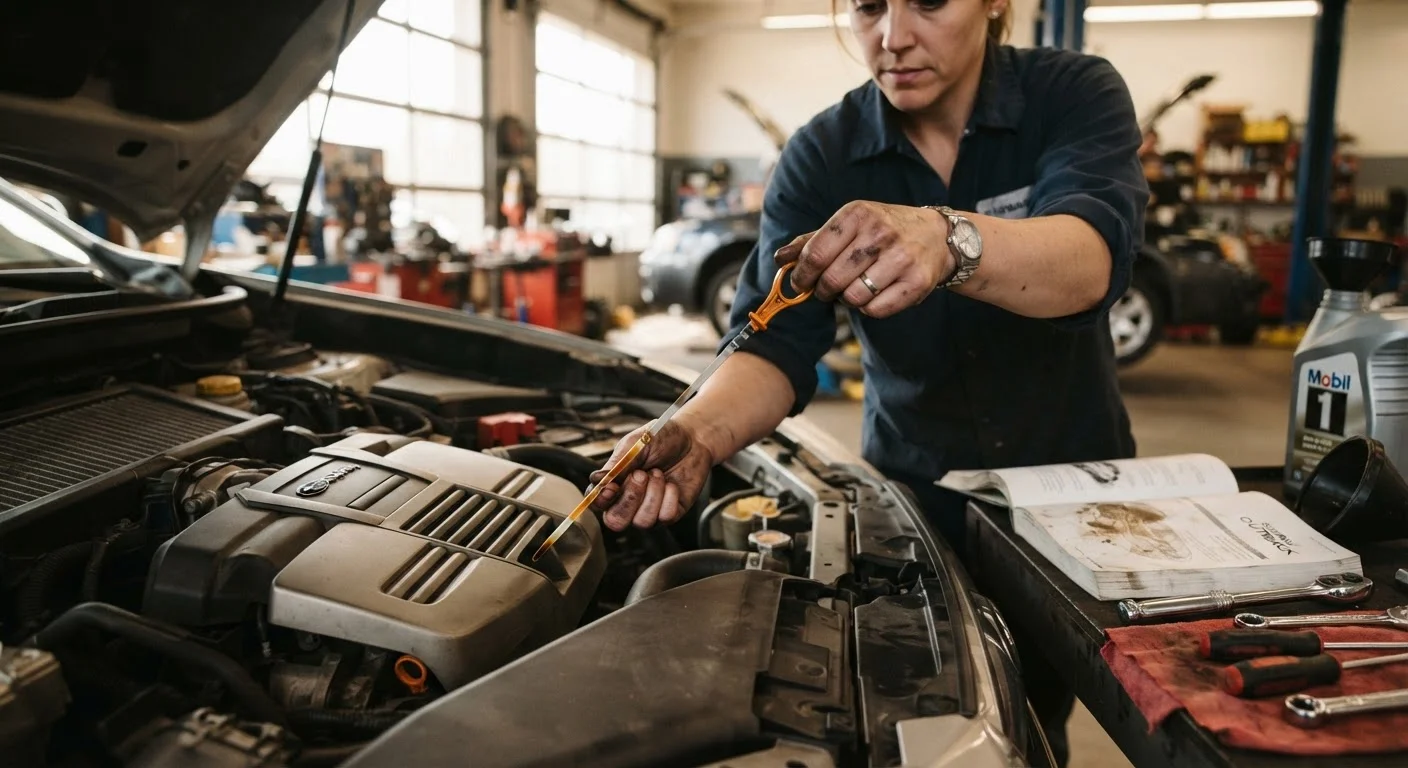
- Engine oil and filter: Oil lubricates moving engine parts and carries heat away. Degraded oil causes friction and wear. The right interval depends on your oil type (conventional vs. synthetic) and your vehicle - check your manual, not a generic guideline.
- Tire rotation: Rotating tires equalizes tread wear across all four corners, extending tire life and maintaining even handling.
Mid-Range Intervals (15,000-30,000 Miles)
- Air and cabin filters: Engine air filters keep debris out of the intake; cabin filters clean the air inside. Both become restricted over time and affect performance or air quality.
- Brake fluid: Hygroscopic by nature, brake fluid absorbs moisture and loses effectiveness. Most manufacturers recommend replacement every two years regardless of mileage.
Long-Range Intervals (60,000-100,000 Miles)
- Spark plugs: Modern iridium or platinum plugs last far longer than older copper plugs, but worn plugs reduce fuel efficiency and can cause misfires.
- Timing belt or chain: The timing belt synchronizes the engine's internal components. A snapped belt can cause catastrophic engine damage. Timing chains generally last longer but should still be monitored. This is one service where deferring to a qualified mechanic is strongly recommended.
- Coolant flush: Coolant degrades over time, becoming acidic and less effective at regulating engine temperature.
1 in 3
Vehicles with overdue oil changes
According to the Car Care Council, approximately one in three vehicles on American roads is due for an oil change at any given time.
$1,200+
Average cost of a blown head gasket repair
Overheating from neglected coolant maintenance is a leading cause of head gasket failure, with repair costs commonly exceeding $1,200 depending on the vehicle.
200,000 mi
Achievable lifespan with consistent maintenance
Industry data consistently shows that vehicles maintained on schedule have a substantially greater likelihood of exceeding 200,000 miles in service life.
Normal vs. Severe Service: Which Applies to You?
Most owner's manuals include two service tracks: normal and severe. A surprising number of everyday drivers actually qualify for the severe schedule without realizing it.
Severe conditions include:
- Frequent trips under five miles (the engine never fully warms up, promoting oil contamination)
- Driving in extreme heat or extreme cold climates
- Regular towing, hauling, or carrying heavy loads
- High-dust or unpaved road environments
- Extended idling (common in rideshare or delivery driving)
If your driving pattern matches any of these, the shorter severe-service intervals apply. Ignoring this distinction is one of the more common ways drivers unknowingly under-service their vehicles. For new owners especially, understanding this distinction early pays dividends - our first-car maintenance primer covers this and other essentials in plain language.
How to Track and Stay Ahead of Your Schedule
Keeping track of maintenance doesn't need to be complicated. Here are practical approaches that work for most drivers:
- Use your vehicle's built-in system: Many modern vehicles include an Oil Life Monitor or Maintenance Reminder system that calculates service needs based on actual driving conditions - not just mileage. When the light appears, take it seriously.
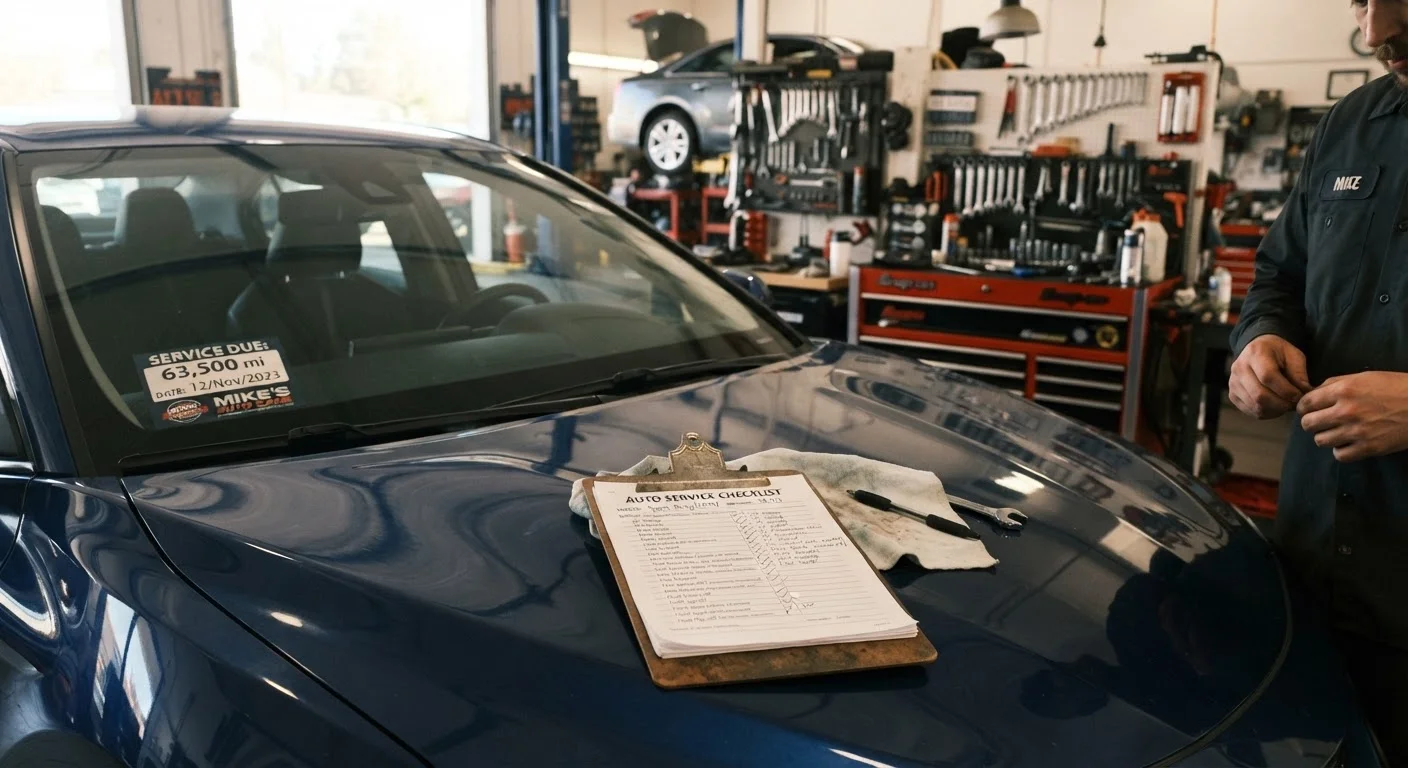
- Keep a simple log: A small notebook in the glove box or a note in your phone recording each service date, mileage, and task completed is sufficient. Some drivers use a free app for this purpose.
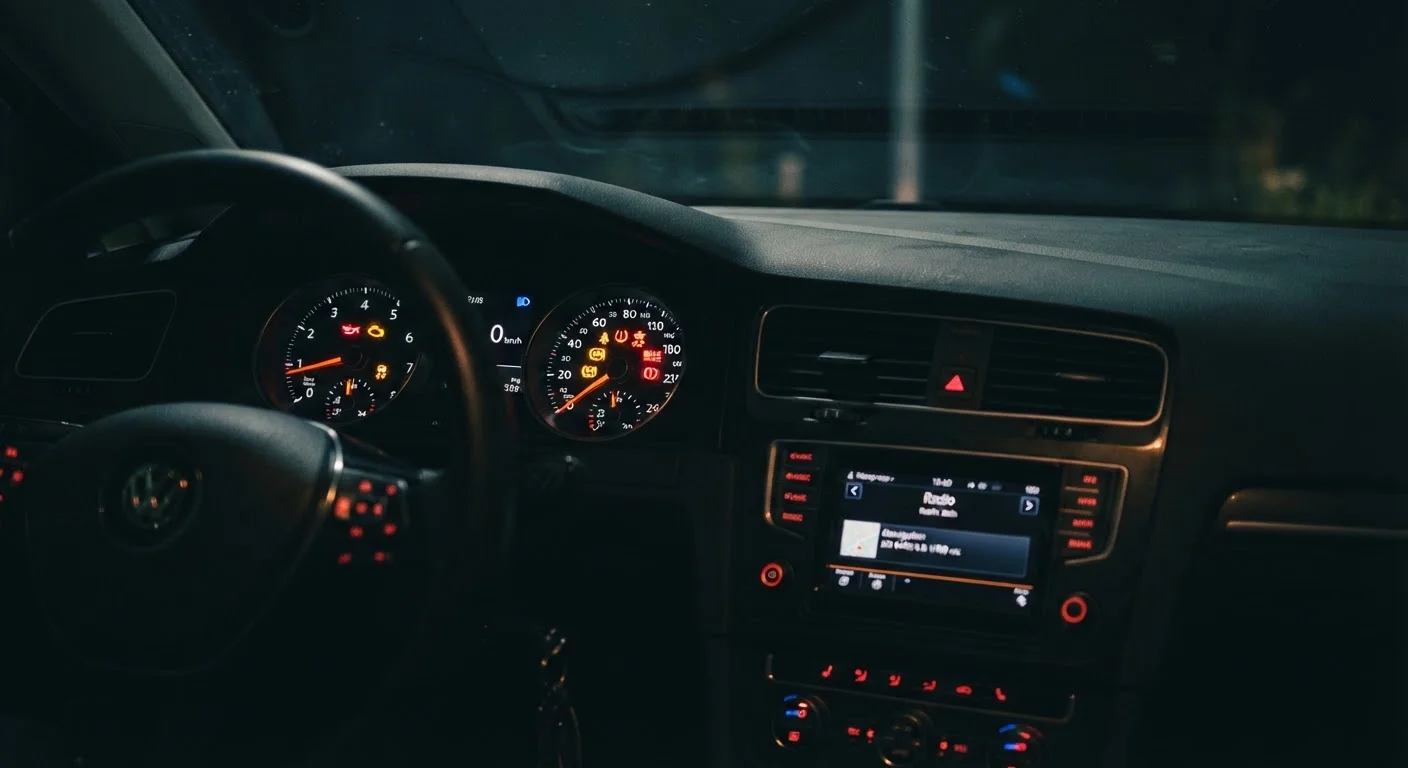
- Check warning lights promptly: Dashboard alerts are often the first signal that something needs attention. Our guide to what dashboard warning lights actually mean can help you interpret them accurately.
- Align with seasons: Pairing certain checks - battery, tires, coolant - with seasonal transitions is a natural reminder system. See our seasonal car care checklist for a structured approach.
Staying consistent with your schedule is among the maintenance habits that extend any vehicle's life - a straightforward commitment with a measurable return.
This article provides general vehicle maintenance information for educational purposes. For guidance specific to your vehicle, always consult your owner's manual or a qualified automotive technician.