How to Read a Warning Light Before You Panic
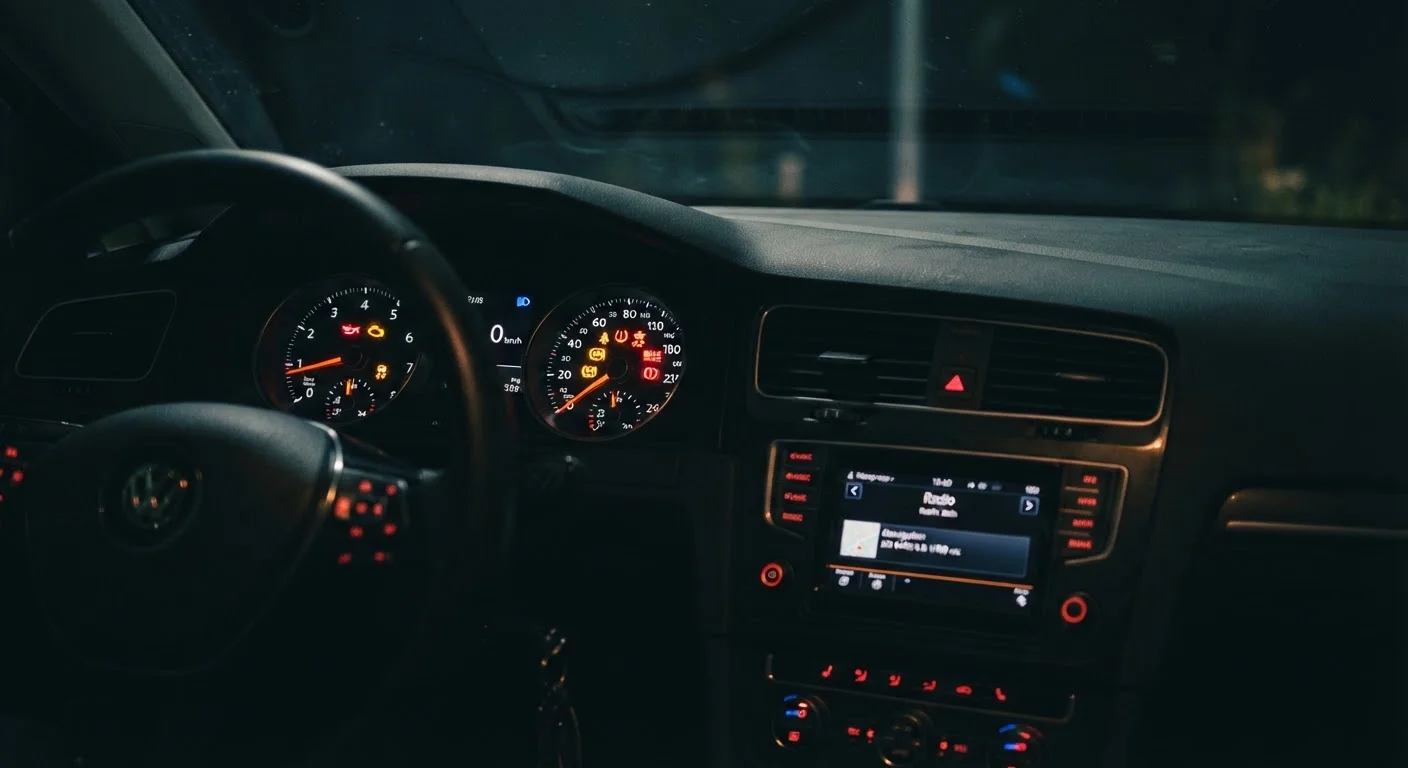
Your dashboard is designed to communicate. When a warning light appears, the first thing to understand is that not every light is an emergency - but none of them should be ignored indefinitely. Automakers use a standardized color system to signal urgency:
- Red: Requires immediate attention. Pull over safely if the light comes on while driving.
- Amber/Yellow/Orange: A caution. Something needs service, but you typically have time to schedule it.
- Green or Blue: Informational - a system is active, not malfunctioning.
Your owner's manual is the definitive reference for your specific vehicle. Many drivers never open it, but it contains exact descriptions and recommended responses for every indicator on your cluster. Keep it in your glovebox.
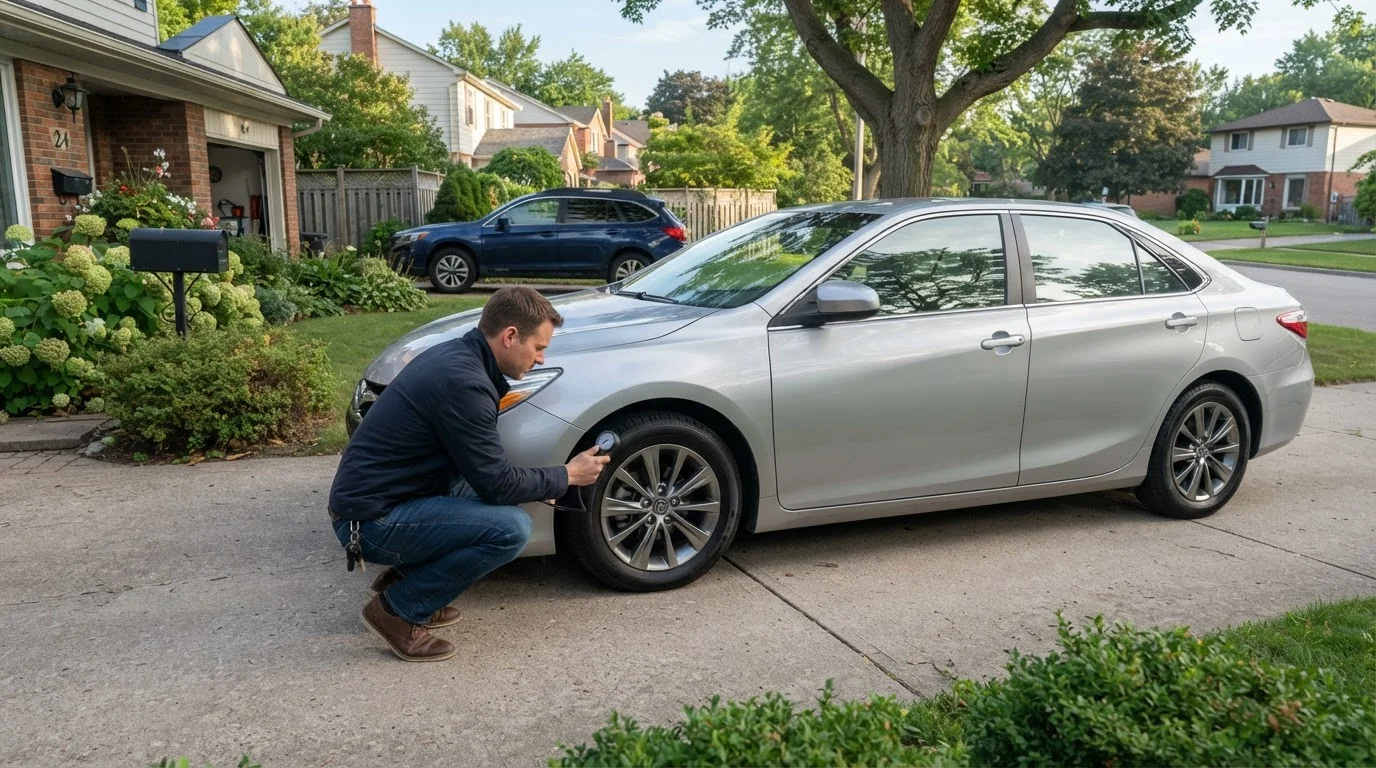
Pairing good dashboard awareness with a pre-trip safety check helps you catch problems before they escalate on the road.
OBD-II (Onboard Diagnostics)
A standardized system built into all US vehicles sold after 1996 that monitors engine and emissions performance. When a fault is detected, it stores a diagnostic trouble code (DTC) and illuminates the check engine light.
TPMS
Tire Pressure Monitoring System. A sensor-based system that alerts the driver when one or more tires drops significantly below the recommended inflation pressure.
Catalytic Converter
An emissions control device in the exhaust system that converts harmful combustion byproducts into less harmful gases. Prolonged engine misfires can overheat and permanently damage it.
Alternator
A generator driven by the engine belt that recharges the battery and powers electrical systems while the engine runs. A failing alternator will eventually drain the battery even in a running vehicle.
Fault Code (DTC)
A diagnostic trouble code stored by the vehicle's computer when a sensor reading falls outside expected parameters. A mechanic or scan tool is needed to retrieve and interpret these codes.
The Most Common Warning Lights and What They Mean
Below are the lights American drivers encounter most often, organized by urgency.
| Color: Red lights | Immediate action required |
| Color: Amber/Yellow lights | Service needed soon |
| Color: Green/Blue lights | System active - informational |
| Check engine light variants | Steady = schedule service; Flashing = stop driving soon |
| Correct tire pressure source | Driver's door jamb sticker (not tire sidewall) |
| OBD-II standard required since | Model year 1996 (all US passenger vehicles) (US EPA/CARB OBD-II mandate) |
Red Lights - Act Promptly
- Oil Pressure Warning (oil can icon)
- Signals low oil pressure, not necessarily low oil level. Stop driving as soon as it is safe to do so. Running an engine with low oil pressure can cause catastrophic internal damage within minutes.
- Engine Temperature (thermometer in water)
- The engine is overheating. Pull over, turn off the engine, and allow it to cool before investigating. Never remove a radiator cap on a hot engine.
- Battery / Charging System (battery icon)
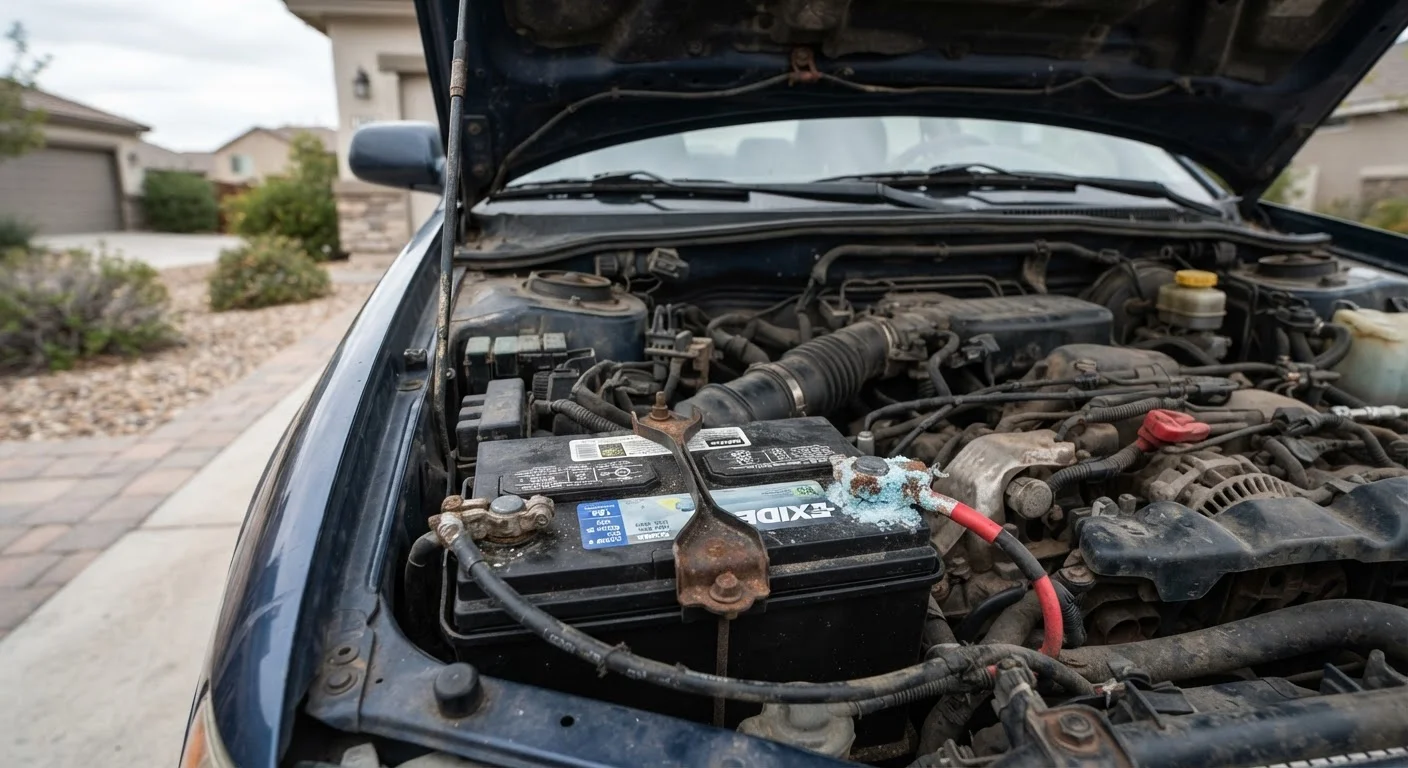
- The electrical charging system isn't functioning normally. This could indicate a failing alternator, a loose belt, or a battery problem. Learn how to spot battery failure early before you end up stranded. Drive to a service center promptly - your car may stop running when the battery discharges.
- Brake System Warning (exclamation mark in circle or BRAKE)
- Could mean the parking brake is engaged, brake fluid is low, or there is a fault in the brake system. If releasing the parking brake doesn't extinguish the light, have it inspected immediately.
Amber Lights - Schedule Service
- Check Engine (engine outline)
- One of the most misunderstood lights. It signals that the vehicle's onboard diagnostic system has stored a fault code - anything from a loose gas cap to a misfiring cylinder. It does not mean stop immediately, but it does mean a technician should read the stored code with a diagnostic scanner. Do not ignore a flashing check engine light; that typically indicates an active misfire that can damage the catalytic converter.
- Tire Pressure Monitoring System (TPMS) (flat tire with exclamation mark)
- One or more tires are significantly under-inflated. Check all four tires with a gauge and inflate to the pressure listed on the driver's door jamb sticker - not the number molded into the tire sidewall.
- Traction Control / Stability Control (car with wavy lines)
- If it flashes briefly, the system is actively working - normal on slippery roads. If it stays on, the system may be disabled or malfunctioning.
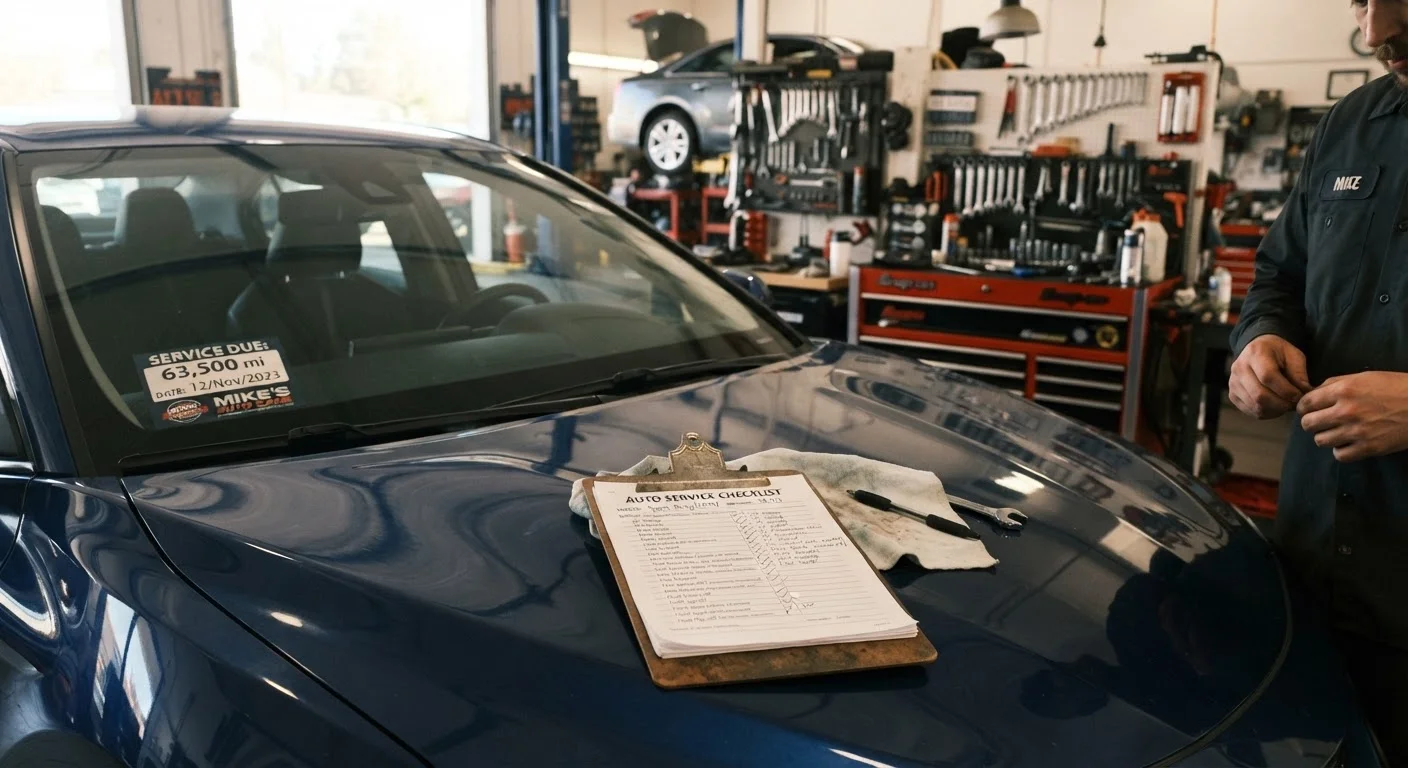
Staying on top of these alerts is a core part of responsible vehicle ownership. See our car maintenance schedule guide to understand how routine service connects to preventing many of these warnings.
When to Pull Over Immediately vs. When to Schedule Service
The single most important judgment call is distinguishing a stop-now situation from a schedule-soon situation. Use this framework:
- Stop immediately if you see a red oil pressure light, engine temperature in the red zone, or any warning accompanied by unusual sounds, burning smells, or handling changes. Continuing to drive risks serious mechanical damage or a safety hazard.
- Drive cautiously to a shop for amber check engine lights (non-flashing), TPMS warnings, or a battery light that just appeared - provided the vehicle is still running normally.
- Schedule within a week for maintenance reminders, transmission temperature warnings under light load, or service interval indicators.
If you are uncertain, err toward caution. A roadside inspection or tow is far less expensive than a seized engine or brake failure. Good situational awareness on the road - the kind developed through defensive driving principles - extends to how you respond when something unexpected happens behind the wheel.
This article is for general informational purposes only. Always consult a qualified mechanic for diagnosis and repair of any vehicle warning light. Conditions vary by make, model, and year - your owner's manual is the authoritative source for your specific vehicle.