What Your Battery Actually Does
Your car's battery does more than just start the engine. It provides the initial burst of electrical energy that powers the starter motor, and it stabilizes voltage for your vehicle's electronics while the engine is off. Once the engine runs, the alternator takes over and recharges the battery - but if the battery can't hold a charge, that cycle breaks down.
Understanding this helps explain why battery problems often appear as electrical glitches, not just starting trouble. When you notice something "off" with your car's behavior, the battery deserves an early look.
The Warning Signs to Watch For
Battery problems rarely appear all at once. They tend to develop gradually, making it easy to dismiss early signals as minor quirks. Here are the most common indicators that your battery is losing capacity:
- Slow or labored cranking: If the engine takes longer than usual to turn over - especially on a normal-temperature morning - the battery may not be delivering enough current to the starter motor.
- Dim headlights or interior lights: Electrical systems draw on battery power when the engine is off. If lights appear noticeably dimmer than usual, voltage may be dropping.
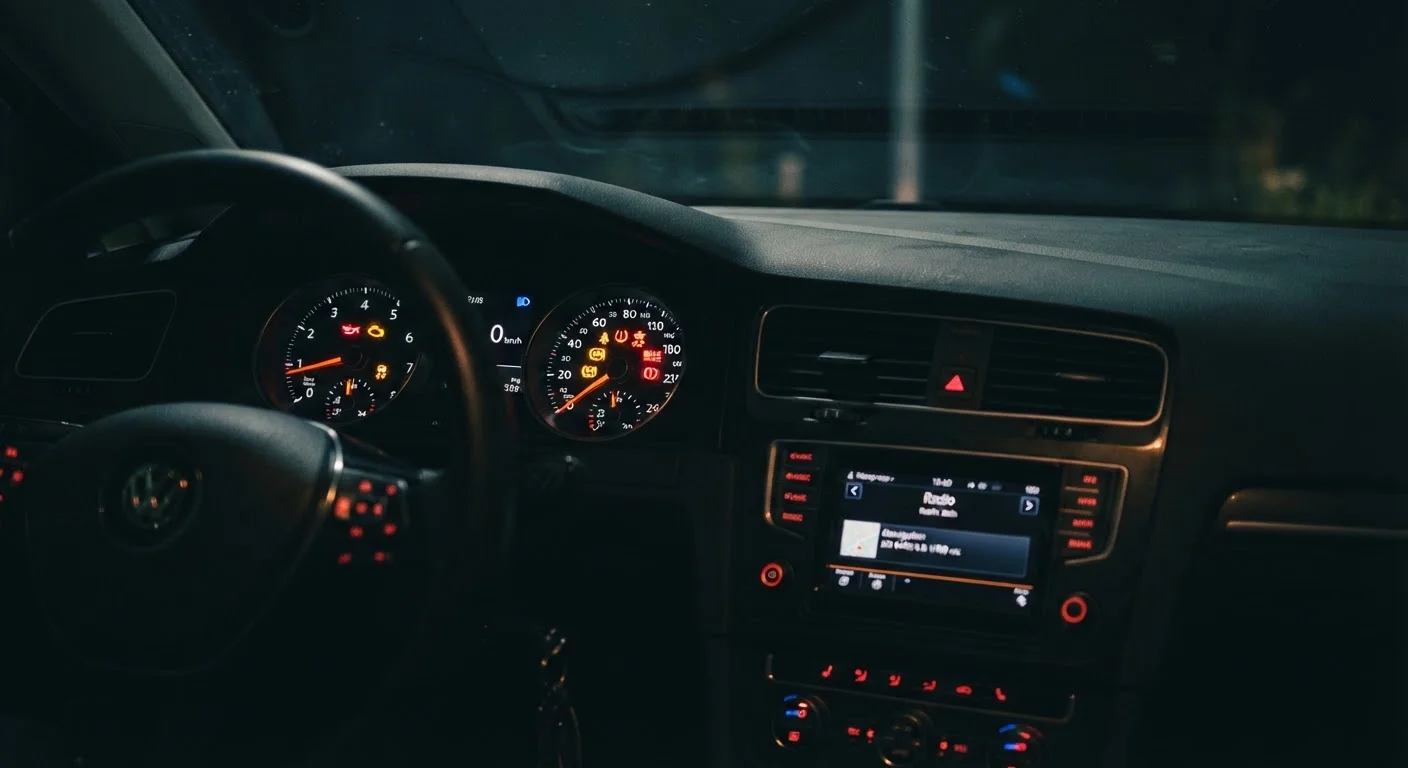
- Battery warning light: This dashboard indicator signals a problem in the charging system, which includes the battery, alternator, and related components. See our guide to dashboard warning lights for what it means and when to act.
- Swollen battery case: Excessive heat can cause the battery casing to bulge. A visibly swollen battery should be inspected by a mechanic promptly - it's a sign of internal damage.
- Frequent need for jump-starts: Needing a jump more than once in a short period strongly suggests the battery is no longer holding a charge adequately.
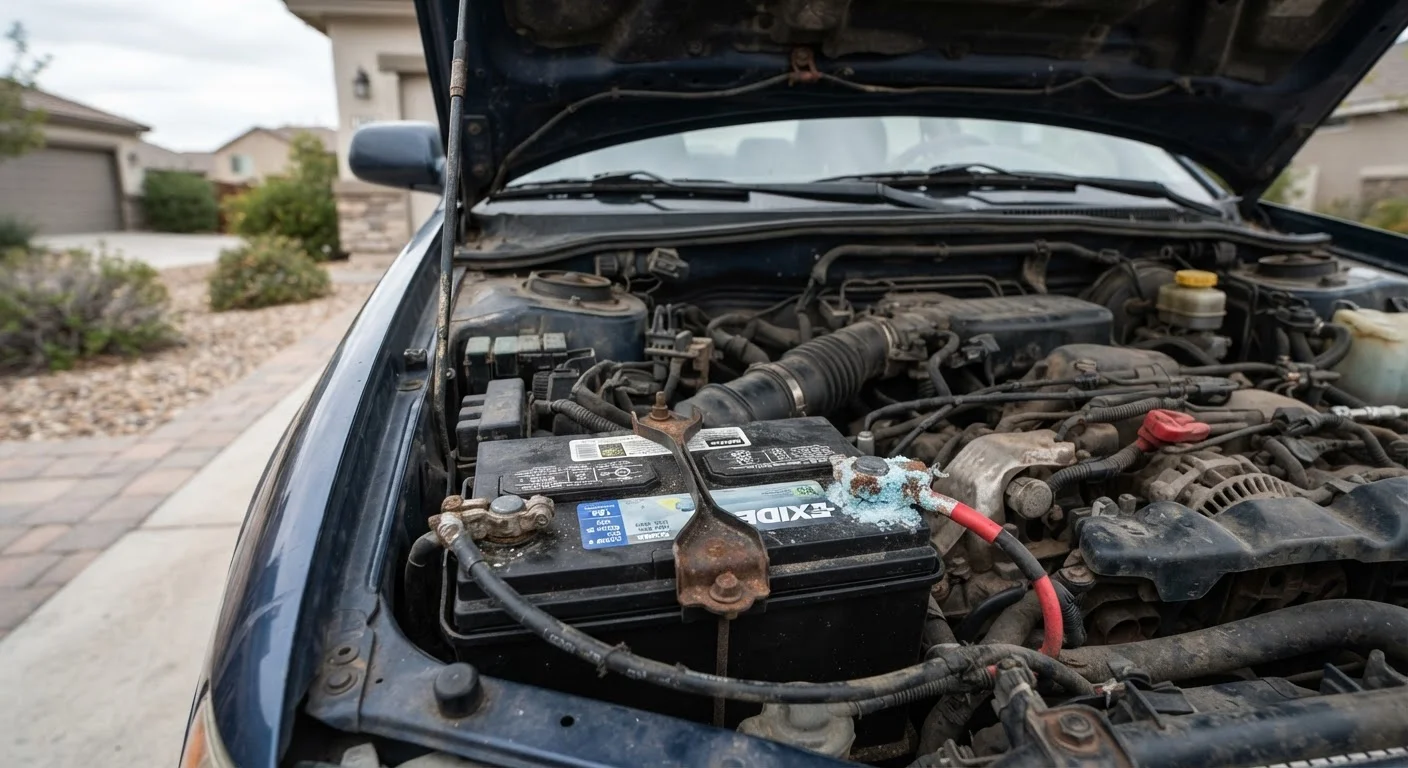
- Corrosion on terminals: Visible white or blue-gray buildup around the battery posts can interrupt the electrical connection and is often a sign of an aging battery.
Test Your Battery Before Winter Arrives
Cold weather is the leading trigger for battery failures, and a battery that's borderline in autumn may not survive January. Most auto parts stores offer free battery load testing - a 10-minute check that can tell you whether your battery has enough reserve capacity to handle cold-weather starts. Schedule it as part of your fall vehicle prep.
If your car is more than three years old and you haven't had the battery tested, consider adding it to your seasonal car care checklist - particularly before cold weather sets in.
Why Temperature Makes Everything Worse
Temperature is one of the biggest factors in battery health. Cold weather thickens engine oil, making the starter motor work harder - at the exact moment the battery's chemical reactions are slowed by the cold. A battery that was borderline in October may simply refuse to start the car in January.
Heat is equally damaging, but in a different way. High temperatures accelerate the internal corrosion of battery components and cause electrolyte evaporation, shortening overall lifespan. Drivers in hot climates often see batteries fail earlier than the national average lifespan suggests.
3-5 years
Typical car battery lifespan
According to AAA, most automotive batteries have an expected service life of three to five years under normal conditions.
~50%
Reduction in battery power at freezing temperatures
AAA research indicates that at 0°F, a car battery can lose up to 60% of its rated strength compared to performance at 80°F.
1 in 4
Vehicles with underperforming batteries
AAA's vehicle research has found that roughly one in four cars brought in for service has a battery operating below optimal capacity.
This is why battery testing before each seasonal change is one of the most practical steps in any vehicle maintenance routine.
How Batteries Are Tested - and What to Do Next
A battery's voltage at rest (called open-circuit voltage) tells only part of the story. A proper load test applies a controlled electrical load and measures how well the battery performs under real-world conditions. Many auto parts stores offer this test at no charge, and a qualified mechanic can perform a more comprehensive assessment.
If your battery tests weak or marginal, replacement before failure is the practical choice. When having any battery work done, it's also worth asking a mechanic to inspect the alternator - a failing alternator can drain even a new battery quickly.
As part of your regular vehicle inspection habits, battery health fits naturally into a pre-trip safety check routine, especially for longer drives or road trips in extreme weather.
This article is for general informational purposes. For any maintenance or repair work you're uncertain about, consult a qualified mechanic.