Why the Distinction Matters
A drafty window or door isn't just uncomfortable - it quietly increases heating and cooling costs year-round. The fix sounds simple: seal the gap. But the right material depends entirely on where the gap is and whether that surface moves. Reaching for the wrong product means redoing the job within a season.
Caulk is a pliable compound that cures into a semi-rigid seal. It bonds two stationary surfaces together and resists moisture. Weatherstripping, by contrast, is a compressible material - foam, rubber, vinyl, or felt - installed along edges that must open and close. It creates a seal through compression, not adhesion. One is essentially a gasket; the other is more like a patch. Both block air, but in fundamentally different ways and places.
| Criterion | Caulk | Weatherstripping |
|---|---|---|
| Primary use | Stationary joints and gaps | Moving edges and sashes |
| Sealing mechanism | Adhesion and cure | Compression |
| Common locations | Frame-to-wall, frame-to-siding joints | Door edges, window sashes, thresholds |
| Flexibility after cure | Semi-rigid; limited movement | Fully flexible; designed to flex repeatedly |
| Typical lifespan | 5-10 years (varies by type and exposure) | 2-5 years (depends on traffic and material) |
| Skill level | Beginner-friendly with basic prep | Beginner-friendly; mostly peel-and-stick |
| Tools needed | Caulk gun, putty knife, alcohol | Scissors or knife, cleaning cloth |
Where Caulk Belongs - and Where It Doesn't
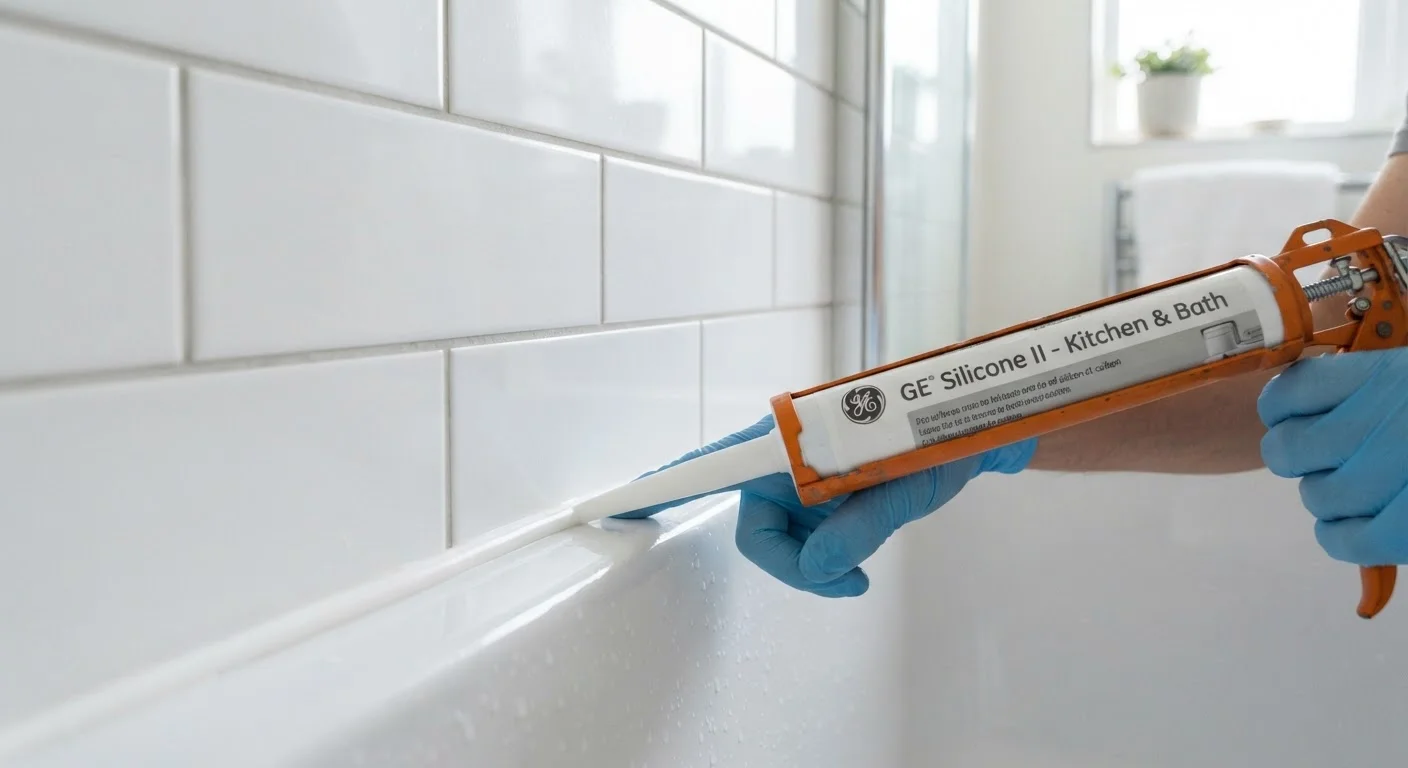
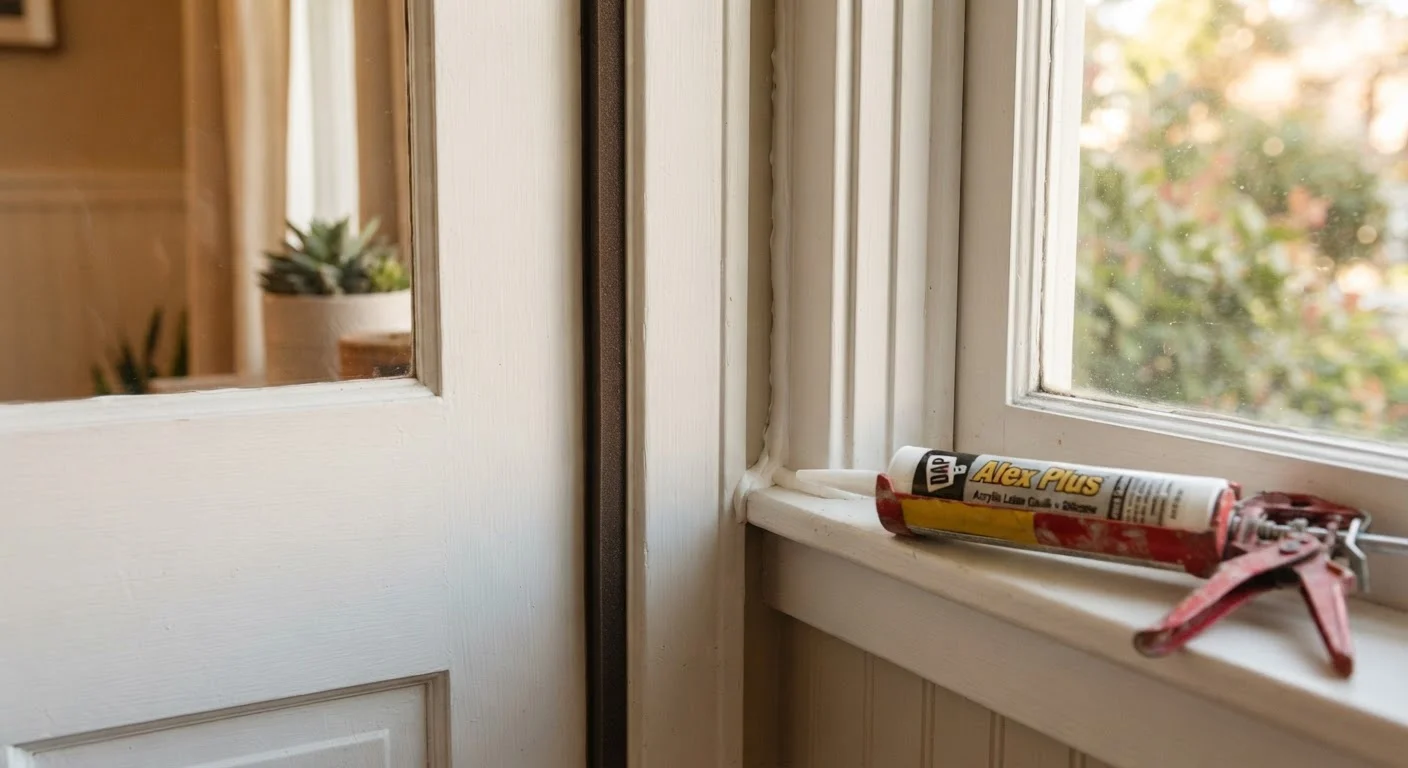
Apply caulk anywhere a stationary frame meets another fixed surface. On windows, that means the joint between the window frame and the interior wall trim, and the joint between the exterior frame and the siding or brick. On exterior doors, caulk seals the door frame (also called the jamb) to the surrounding wall - not the moving door itself.
The most common caulk types for this work are silicone and paintable latex (sometimes called acrylic latex). Silicone holds up better to outdoor temperature swings and moisture, making it a good choice for exterior joints. Paintable latex is easier to tool and clean up, and works well for interior gaps where you plan to paint over the sealant.
Where caulk clearly does not belong: along any edge that opens and closes. Caulking a door's bottom edge to the threshold, for example, will tear free almost immediately and leave a sticky residue. For related moisture-sealing situations - like tubs and sinks - the principles are similar. See our bathroom caulking guide for a detailed walkthrough of prep and application technique.
Where Weatherstripping Belongs - and How to Choose a Type
Weatherstripping lives on moving parts: the top, sides, and bottom of a door slab, and around the sash of any window that slides, swings, or tilts. When the door or window closes, the weatherstripping compresses to fill the gap; when it opens, the material springs back. The right type depends on the location and how much wear it will see.
- Foam tape - inexpensive and easy to install; best for low-traffic windows and the top of door frames. Compresses well but wears faster on high-use doors.
- V-strip (tension seal) - a folded plastic or metal strip that fits inside the channel of a sliding or double-hung window sash. Durable and nearly invisible once installed.
- Door sweeps and door shoes - installed along the bottom edge of the door slab to seal the gap between the door and threshold. Door shoes wrap around the bottom and outlast simple sweeps in high-traffic entries.
- Reinforced rubber or vinyl bulb strip - installs in the door stop and compresses when the door closes. A solid choice for exterior doors that see heavy use.
Measure the gap with a piece of paper: if you can slide a sheet through easily when the door is closed, the existing weatherstripping has failed or is absent.
Applying Both Correctly: Surface Prep Is Everything
No sealant - caulk or weatherstripping - will stick or compress properly over a dirty, wet, or crumbling surface. Before applying either material, remove all old product with a putty knife or utility knife, then clean the surface with rubbing alcohol or a mild detergent and let it dry completely. For exterior caulk, avoid applying in temperatures below 40°F or above 90°F, as the compound won't cure correctly.
When applying caulk, cut the tube tip at a 45-degree angle to match the width of the gap, hold the gun at a consistent angle, and move steadily along the joint. Smooth the bead immediately with a wet finger or caulk tool before it skins over. Most latex caulks skin within 30 minutes; silicone can take longer.
For weatherstripping, cut strips to length with scissors or a utility knife, peel the adhesive backing, and press firmly - especially at corners. Test the door or window several times right after installation to confirm it closes and latches without excessive resistance. Some compression is expected and necessary; if the door won't latch, the strip is too thick for that gap.
Inspecting both areas every one to two years - especially after harsh winters - will catch failures early and keep your sealing system working as intended.