Why Terminology Matters Before You Mix Anything
Walk into a tile aisle and you'll find bags labeled thinset, mastic, unsanded grout, mortar, and more - each with overlapping descriptions that can blur together fast. Using the wrong product in the wrong place is one of the most common and costly beginner mistakes. A batch of sanded grout in a narrow joint, for example, can cause cracking because the sand particles can't compress into tight spaces.
This glossary gives you a plain-language foundation so you can read product labels, follow installation guides, and ask informed questions at the hardware store. For a broader look at what a tile project involves from start to finish, see our DIY tile installation overview. And if you're newer to home projects in general, our guide for new homeowners is a good place to build confidence first.
Thinset Mortar
A cement-based adhesive mixed with sand and water-retention agents, used to bond tile to a substrate. It is moisture-resistant when cured and suitable for wet areas.
Grout
A filler material pressed into the joints between tiles after the setting material cures. It protects joints from moisture and debris and provides a finished look.
Mastic
A premixed organic tile adhesive suitable for dry, light-duty wall applications. It should never be used in wet or submerged areas because it loses bond strength when exposed to sustained moisture.
Substrate
The surface beneath the tile onto which the setting material is applied. Common substrates include concrete, cement board, and uncoupling membranes.
Sanded Grout
Grout containing fine sand aggregate, used for joints 1/8 inch or wider. The sand prevents shrinkage and cracking in larger gaps.
Unsanded Grout
Smooth grout without sand, used for joints narrower than 1/8 inch and for delicate tile surfaces like polished stone or glass that sand could scratch.
Epoxy Grout
A two-part grout system that cures very hard and resists stains, chemicals, and moisture. It is more durable than cement-based grout but harder to install and must be cleaned from surfaces quickly.
Cement Board
A sheet product made from cement and reinforcing fibers, used as a tile substrate in wet areas. It resists moisture damage unlike standard drywall, though it still requires waterproofing in showers.
Modified Thinset
Thinset mortar that includes polymer additives to improve bond strength and flexibility. It is the standard choice for most residential tile installations.
Mortar Bed
A thick layer of sand-and-cement mortar applied to a floor or wall to create a flat, level setting surface. Typically used by professionals for shower pans and significant leveling work.
Grout Haze
The cloudy film remaining on tile faces after grouting. It must be wiped away before it fully cures, or it becomes very difficult to remove.
Epoxy Mortar
A multi-part setting material using resin and hardener that cures to a very hard, chemical-resistant bond. Used in demanding environments like commercial kitchens or areas exposed to grease and acids.
Setting Materials: What Holds the Tile Down
Setting materials bond the tile to the substrate (the surface underneath). Choosing correctly depends on the tile type, the substrate, and whether the area gets wet.
| Thinset working time (typical) | 30-60 minutes after mixing (Varies by brand and temperature; check product label) |
| Mastic - suitable for wet areas? | No - dry areas only (Tile Council of North America installation guidelines) |
| Sanded grout minimum joint width | 1/8 inch or wider (Standard industry practice) |
| Cement board required in showers? | Yes - or equivalent moisture-resistant substrate (Most local building codes; verify with your jurisdiction) |
| Epoxy grout - cleanup window | Very short; clean tile faces immediately (Varies by product formulation) |
| Thinset cure time before grouting | Typically 24 hours minimum (Always confirm on product packaging) |
Thinset Mortar
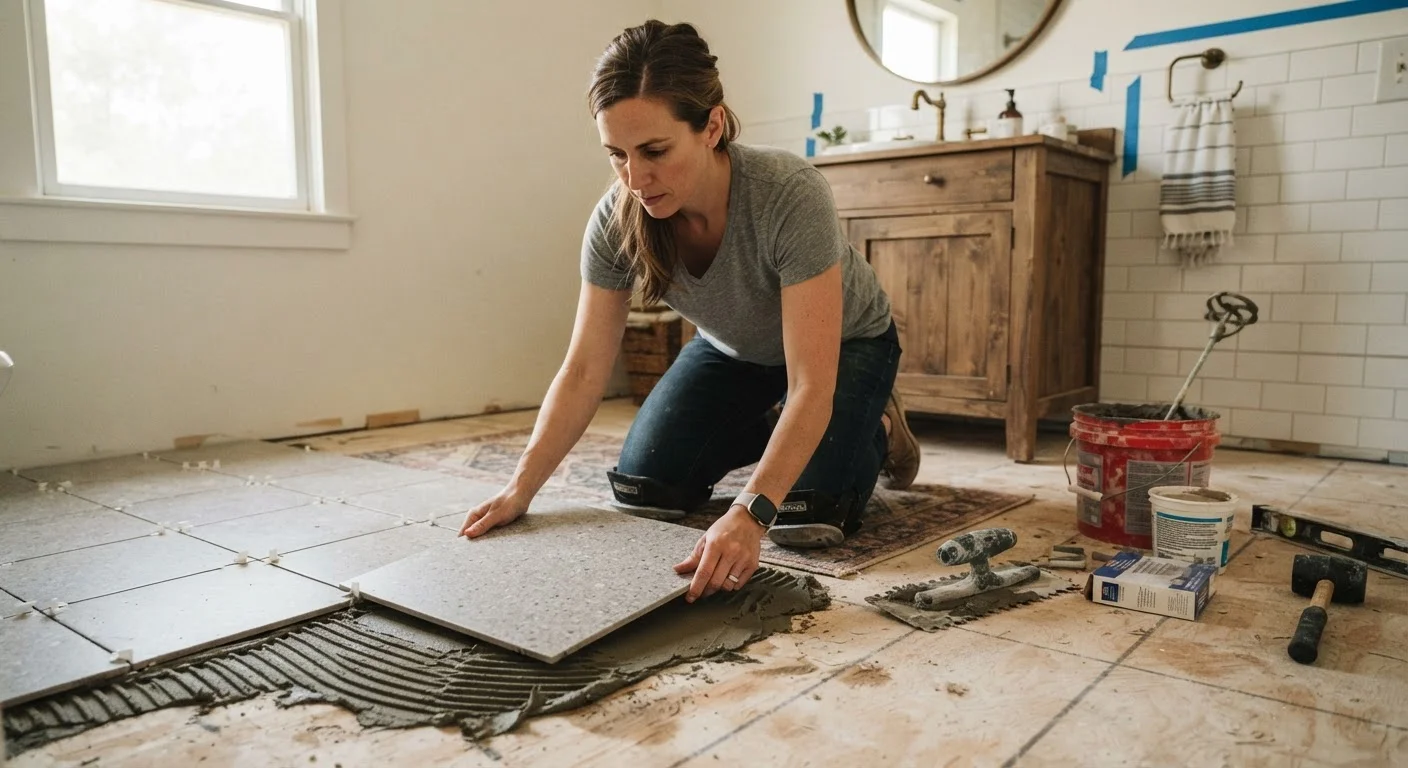
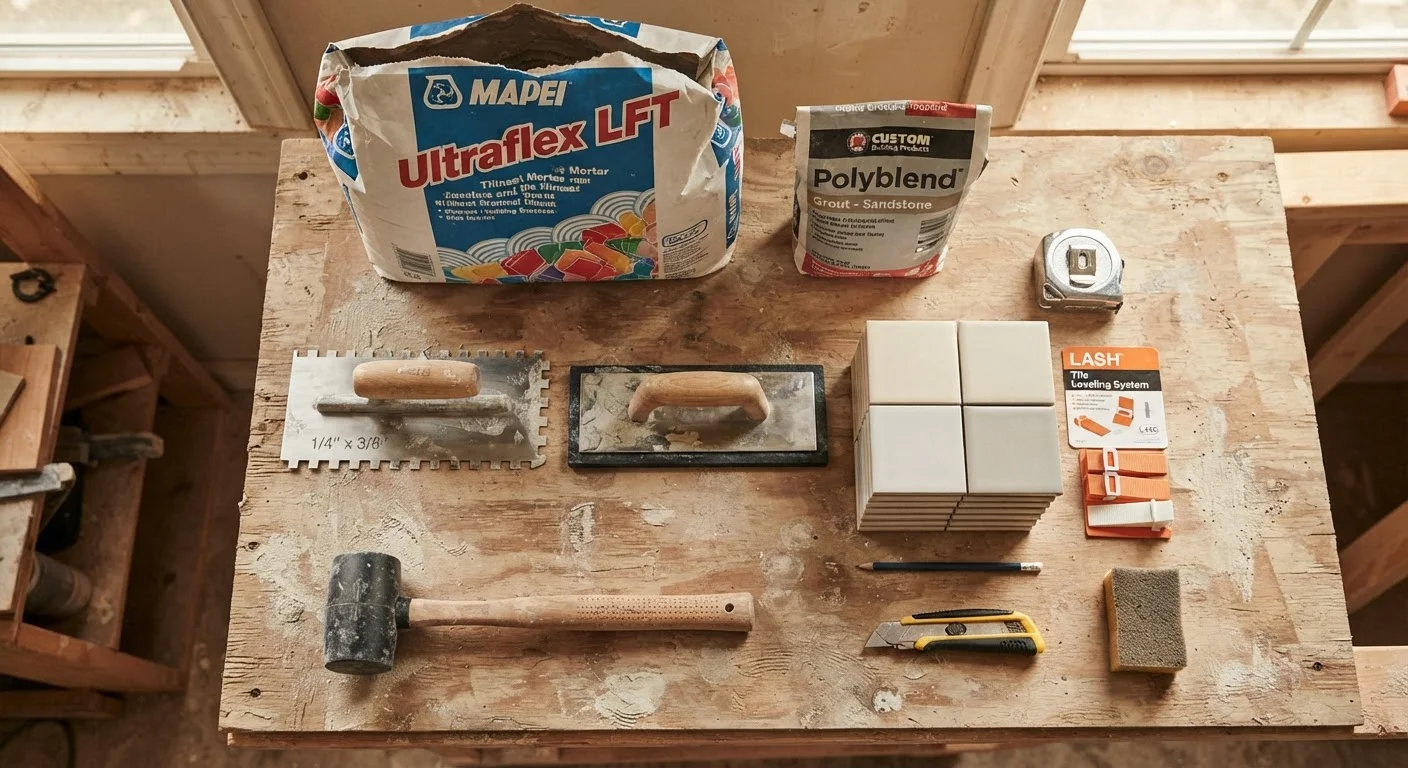
The workhorse of modern tile installation. Thinset is a cement-based adhesive mixed with fine sand and a water-retention agent. You mix it with water (or a latex additive) to a peanut-butter consistency, then comb it onto the substrate with a notched trowel before pressing tiles in. It bonds to concrete, cement board, and other solid surfaces and is moisture-resistant once cured - making it suitable for showers, floors, and outdoor use.
Modified vs. Unmodified Thinset
Modified thinset contains polymer additives (either dry-blended in or added via a liquid latex additive) that improve flexibility and bond strength. It's the standard choice for most wall and floor applications. Unmodified thinset contains no polymers and is required under large-format tiles with uncoupling membranes, because the polymers in modified versions can interfere with proper curing in low-airflow situations. Always check the membrane manufacturer's instructions.
Mastic (Organic Tile Adhesive)
Mastic is a premixed, non-cement adhesive sold ready to use. It's easier to spread than thinset and works well for light-duty wall applications in dry areas - like a kitchen backsplash above the countertop. Its critical limitation: mastic softens and loses bond strength when exposed to prolonged moisture, so it should never be used in showers, steam rooms, or on floors.
Epoxy Mortar
A two- or three-part system (resin, hardener, and sometimes a powder filler) that cures to an extremely hard, chemical-resistant bond. Epoxy mortar is used in commercial kitchens, laboratories, or anywhere that exposure to grease, acids, or heavy traffic demands maximum durability. It requires fast, careful installation because working time is short and cleanup is difficult once it begins to set.
Grout and Substrate Terms You'll See on Every Package
Grout
Grout fills the joints between tiles after the setting material has cured. It is not a structural adhesive - it keeps debris and moisture out of the gaps and provides a finished appearance. The right grout type depends on joint width.
Sanded Grout
Contains fine sand aggregate, which prevents shrinkage cracking in wider joints. Use sanded grout for joints 1/8 inch or wider. It's the standard choice for most floor tiles.
Unsanded (Non-Sanded) Grout
A smoother mix without sand. Use it for joints narrower than 1/8 inch and for polished stone or glass tile where sand particles could scratch delicate surfaces.
Epoxy Grout
Like epoxy mortar, this two-part grout cures extremely hard and resists stains, chemicals, and moisture. It's an excellent choice for shower floors and countertops. The tradeoff: it's more expensive, harder to work with, and must be cleaned from tile faces quickly before it hardens.
Grout Haze
The cloudy film left on tile faces after grouting and initial cleanup. It's a normal byproduct of the grouting process. If left to cure fully, it becomes very difficult to remove. Wipe tiles with a damp sponge during installation and buff with a dry cloth once the haze dries to a light film - but before it fully hardens.
Substrate
The surface onto which tile is installed. Common substrates include concrete slabs, cement board (also called backer board), and uncoupling membranes. Drywall is generally unsuitable in wet areas because moisture will degrade it over time.
Cement Board (Backer Board)
A sheet product made of cement and reinforcing fibers, installed over wall studs or subfloor before tiling in wet areas. Unlike drywall, it won't swell, rot, or lose structural integrity when exposed to moisture. It must still be waterproofed in showers with a membrane or waterproofing product.
Mortar Bed
A thick layer of sand-and-cement mortar floated onto a floor or wall to create a perfectly flat, level setting surface before tile is applied. Once common in all tile work, it's now mainly used by professionals for shower pans or when a floor needs significant leveling. This type of work is best left to experienced installers.
This article is for informational purposes only. Always verify local building codes and consult a licensed contractor for structural, plumbing-adjacent, or complex tile work.