
Why Outdated Advice Keeps Costing Drivers
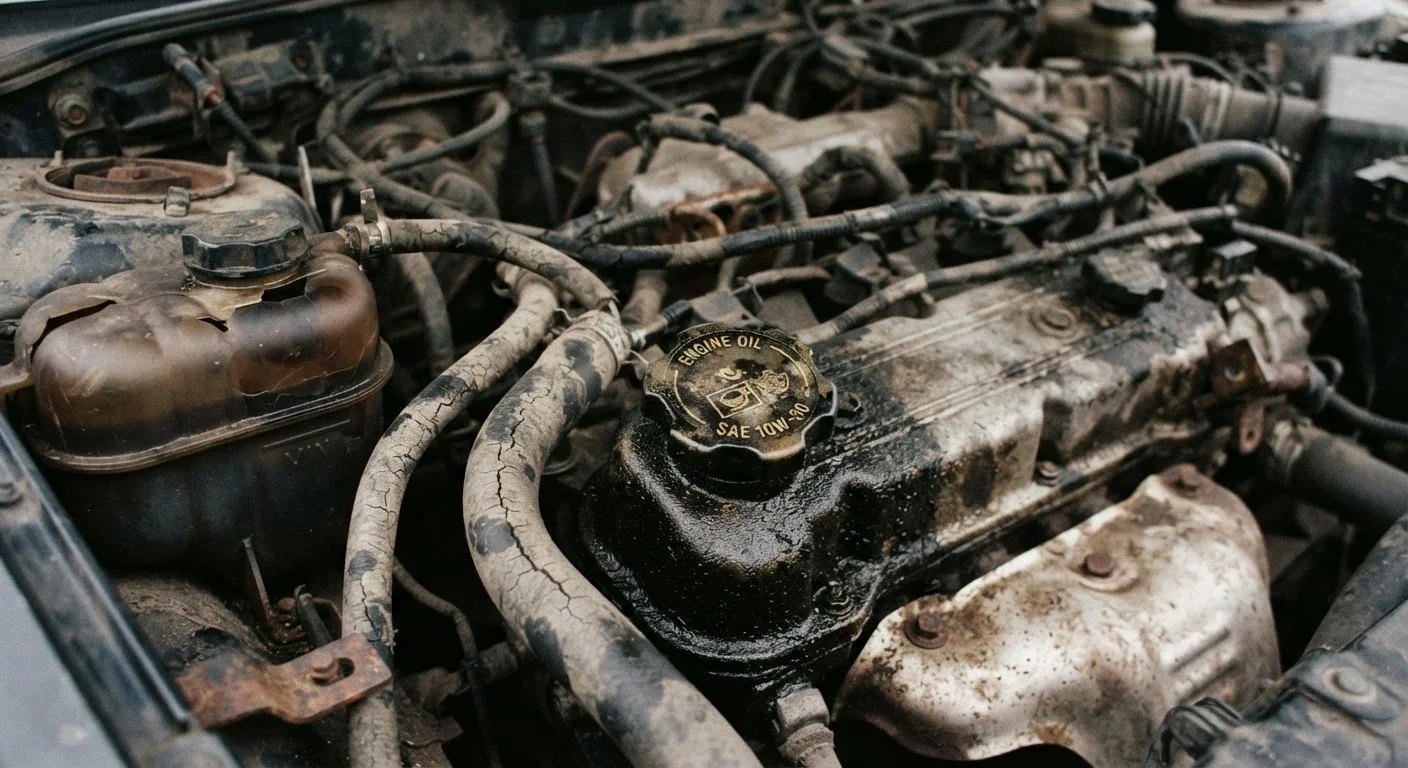
Car maintenance myths don't persist because drivers are careless - they persist because the advice once made sense. Recommendations that were accurate for carbureted engines, early motor oils, or older tire compounds have outlived their relevance, yet they continue circulating as gospel. Following them doesn't just waste money; it can sometimes lead to unnecessary wear or skipped service that actually matters.
This article addresses the most widely repeated myths, explains why they took hold, and gives you the grounded information your owner's manual - and modern engineering - supports. For a broader look at how corner-cuts compound, see our piece on maintenance shortcuts that quietly shorten a car's life.
Myth
You need to change your oil every 3,000 miles, no exceptions.
Fact
Most modern vehicles with conventional oil can go 5,000 to 7,500 miles, and many using full synthetic can safely extend to 10,000 miles or more between changes.
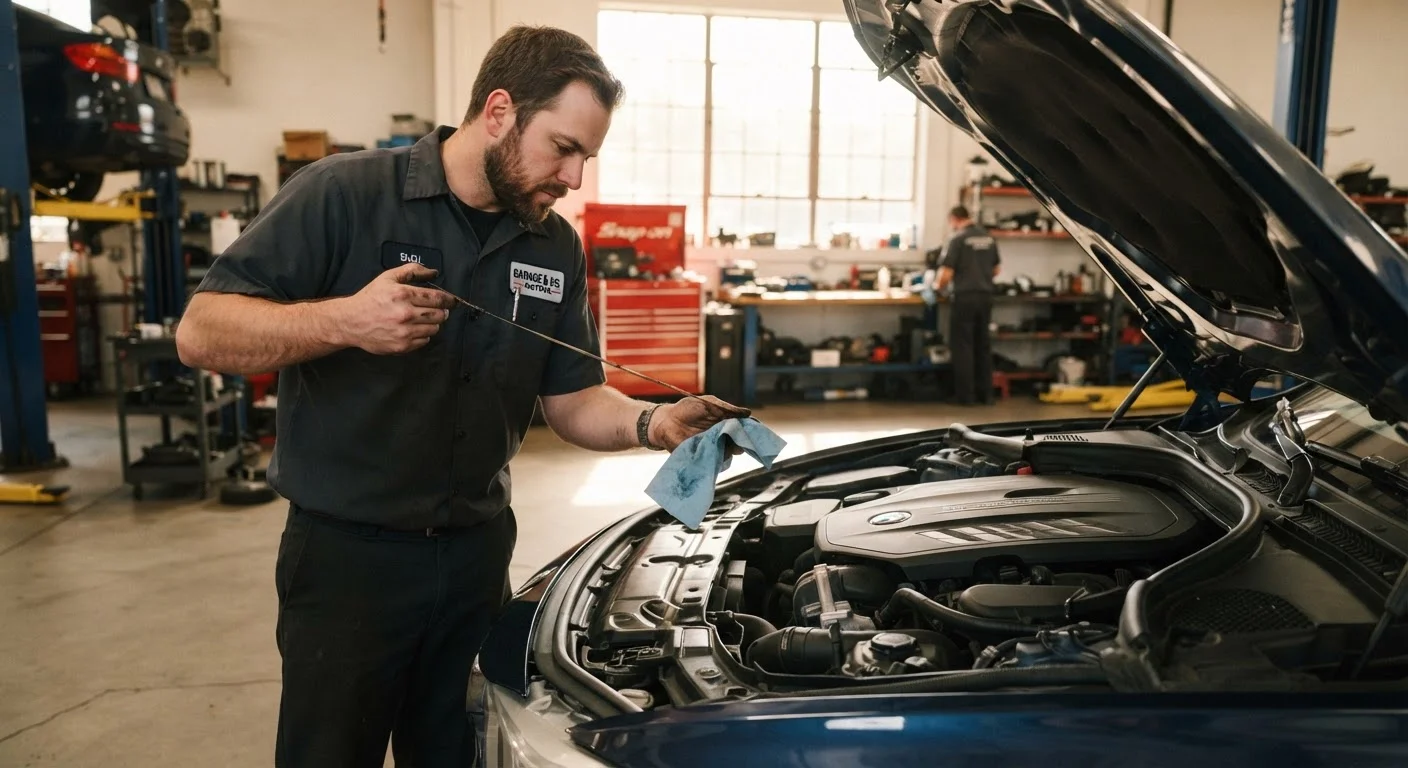
The 3,000-mile rule dates to an era of older engine tolerances and earlier motor oil formulations. Today's synthetic and synthetic-blend oils are engineered to resist breakdown far longer, and engine manufacturing precision has improved dramatically. Your owner's manual will specify the correct interval for your vehicle - following it protects your engine without the added expense of unnecessary changes. For a deeper look at how oil types differ, see our guide to conventional, synthetic, and blend oils.
Myth
You must let your engine idle for several minutes in cold weather before driving.
Fact
Fuel-injected engines - standard on virtually all vehicles built in the last 30-plus years - warm up faster and more efficiently under a light driving load than they do at idle.
Extended cold idling made sense for carbureted engines, which needed time to adjust fuel mixture manually. Modern engines use electronic fuel injection and closed-loop sensors that manage the warm-up process automatically. Prolonged idling in cold weather actually delays the engine reaching optimal operating temperature, increases fuel consumption, and can wash oil off cylinder walls with unburned fuel. A brief 30-second idle before gentle driving is sufficient for most drivers in most climates.
Myth
Premium fuel will make any car run better and last longer.
Fact
Premium fuel benefits only engines specifically designed or calibrated to require it. Using it in a standard engine provides no measurable performance or longevity advantage.
Premium gasoline has a higher octane rating, which resists pre-ignition (knock) in high-compression or turbocharged engines. If your vehicle's manual says "premium recommended" or "premium required," there's a valid reason. If it simply says "regular unleaded," spending more at the pump delivers no benefit - the engine management system has no mechanism to capitalize on the higher octane. Check the fuel door or owner's manual for the correct specification for your vehicle.
Myth
Inflate your tires to the maximum PSI printed on the sidewall.
Fact
The sidewall figure is the tire's maximum rated pressure - not the recommended inflation pressure for your vehicle.
The correct tire pressure for your specific vehicle is found on a sticker inside the driver's door jamb or in the owner's manual. Overinflating to the sidewall maximum reduces the contact patch between tire and road, leading to uneven wear, reduced traction, and a harsher ride. Underinflation carries its own risks including increased heat buildup and poor fuel economy. Check tire pressure monthly when tires are cold, and always use the vehicle manufacturer's specification.
Myth
You have to replace all four tires at the same time.
Fact
While replacing tires in matched sets is often ideal, the actual requirement depends on your drivetrain type and how much tread difference exists between tires.
All-wheel-drive vehicles are the most sensitive to mismatched tire diameters - even significant tread-depth differences can stress differentials and transfer cases on some AWD systems, and manufacturers often specify replacing tires in pairs at minimum. On front-wheel-drive and rear-wheel-drive vehicles, replacing in pairs on the same axle is the more practical standard. When replacing fewer than four, newer tires should generally go on the rear axle to aid stability in wet conditions. Consult your vehicle's documentation and a qualified tire professional for your specific situation.
Myth
A car battery only needs replacing when the car won't start.
Fact
Battery health degrades gradually, and waiting for a no-start event is one of the costliest ways to discover a problem - often at an inconvenient time.
Most automotive batteries have a service life of three to five years depending on climate and usage patterns. Many auto parts stores and service shops offer free load-testing that measures actual battery capacity, not just surface voltage. A battery showing significant capacity loss is a predictable failure waiting to happen. Proactive testing after three years - especially before winter, when cold temperatures reduce battery output - is far less disruptive than a roadside failure. This is one area where the DIY vs. shop question is relatively straightforward: testing is simple, but replacement involves safely handling lead-acid chemistry.
What Your Owner's Manual Actually Says
The single most underused resource in car ownership is the owner's manual sitting in your glove box. Automakers publish specific service intervals based on extensive testing of that exact engine, transmission, and operating environment - and those intervals are nearly always longer and more nuanced than blanket myths suggest.
Modern vehicles also include onboard maintenance monitors that calculate oil life based on actual driving conditions rather than mileage alone. If your car has one, that system is generally more accurate than any rule of thumb. For a full breakdown of what scheduled maintenance really means, our car maintenance schedule guide walks through the key intervals and why they matter.
Don't Skip Intervals Based on Myth
Stretching service intervals beyond what your owner's manual specifies - based on a myth or anecdote - can void powertrain warranty coverage and lead to damage that far exceeds any short-term savings. If you're uncertain about what your vehicle needs, the dealership service department or a trusted independent mechanic can clarify based on your specific make, model, and mileage.
Building sound habits - rather than reacting to myths - is also the foundation of long-term vehicle reliability. Our guide to maintenance habits that extend the life of any vehicle covers the fundamentals that hold up across vehicle types and ages.