Why Washing Technique Matters More Than You Think
Most paint damage on everyday vehicles doesn't come from rock chips or accidents - it accumulates through repeated washing mistakes. Swirl marks, fine scratches, and dull clear coats are the cumulative result of using the wrong materials or rushing through a wash. For drivers who take pride in their vehicle's appearance, understanding the mechanics of paint care is just as important as any other aspect of upkeep covered in a full maintenance schedule.
Modern vehicles have a multi-layer paint system: a primer coat, a color coat, and a transparent clear coat on top. That clear coat is what gives paint its shine and depth - and it's also what your wash mitt, towels, and brushes are constantly in contact with. Protecting it requires deliberate habits, not just good intentions.
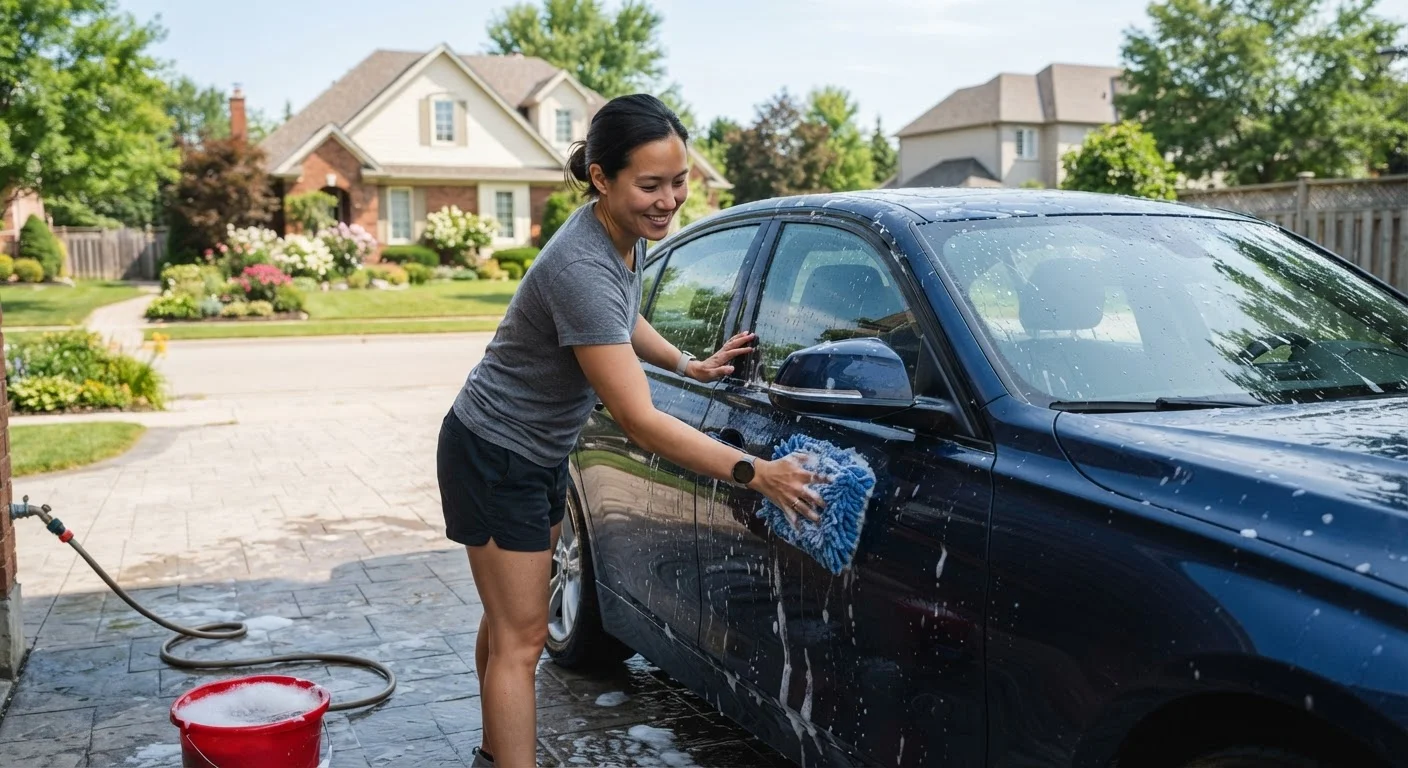
Best Practices for a Safe, Effective Car Wash
Following a consistent, paint-safe routine keeps your car looking its best without introducing damage over time.
Always use the two-bucket wash method
A single wash bucket becomes contaminated with dirt and grit after the first few passes. Dunking the mitt back into contaminated water and then applying it to the paint grinds those particles into the clear coat, creating swirl marks. Separating your rinse water from your soap water keeps the wash solution clean throughout the process.
Wash in the shade and never let soap dry on the surface
Heat accelerates evaporation, causing soap and water to dry on the paint before you can rinse it off. This leaves behind residue that can spot or streak the clear coat and is difficult to remove without additional cleaning.
Use only microfiber wash mitts and microfiber drying towels
Microfiber's structure lifts and traps particles rather than dragging them across the paint surface. Sponges, terrycloth rags, and paper towels lack this property and are significantly more abrasive on clear coat.
Dry the car immediately and completely after rinsing
Allowing water to air-dry on paint causes mineral deposits from tap water to bond to the clear coat, eventually forming water spots. Immediate, thorough drying with a clean microfiber towel or a dedicated car dryer prevents this.
Apply a wax or paint sealant several times per year
A protective layer of wax or sealant acts as a barrier between the clear coat and environmental contaminants like UV rays, bird droppings, and road grime. Without this layer, contaminants contact the clear coat directly.
Wash the wheels and lower panels last, using separate tools
Wheels and lower body panels accumulate brake dust, road tar, and heavy grit - the most abrasive contaminants on your vehicle. Using the same mitt on wheels and paint transfers these particles directly to your clear coat.
If you're new to maintaining your own vehicle, our first-time car owner's maintenance primer covers the broader habits that protect your investment from day one.
Quick Wins You Can Apply Right Now
You don't need to overhaul your entire routine to start protecting your paint better. A few immediate changes make a measurable difference.
For a broader view of how seasonal factors affect your car's exterior - including road salt in winter and UV exposure in summer - see our seasonal car care checklist.
Common Mistakes That Quietly Damage Your Finish
Even well-meaning drivers fall into habits that steadily degrade their paint. Washing in direct sunlight is one of the most frequent offenders - soap and water evaporate quickly on a hot surface, leaving behind mineral residue that etches into the clear coat. Similarly, using a single bucket for washing means you're repeatedly dunking a contaminated mitt back into your clean soapy water and dragging grit across the paint.
Paper towels, old bath towels, and household sponges all have surfaces that are too abrasive for automotive clear coat. They trap particles and drag them across the paint surface with each pass. The same logic applies to automatic car washes that use spinning brushes - their bristles can hold debris from the previous vehicle and transfer it to yours.
Skipping the drying step is another subtle but real problem. Tap water contains dissolved minerals that, when left to evaporate on paint, leave behind water spots that can be difficult to remove if they bond to the surface repeatedly over time. These kinds of incremental shortcuts are explored in depth in our article on maintenance habits that quietly shorten a car's life.
Protecting Your Paint Between Washes
Washing correctly is only half the equation. Between washes, your car's paint is exposed to UV radiation, bird droppings, tree sap, industrial fallout, and road grime - all of which can chemically bond to or etch through the clear coat if left untreated.
Applying a carnauba wax or synthetic paint sealant a few times per year creates a sacrificial barrier that takes the brunt of these contaminants. Quick detailer sprays are useful between full washes for removing light dust without scratching. And if you notice bird droppings or tree sap, remove them promptly - both are acidic and can cause permanent etching if allowed to sit, especially in warm weather.
Parking in a garage or under cover when possible also dramatically slows UV-related clear coat degradation. These paint-care habits fit naturally into the broader set of maintenance habits that extend the life of any vehicle.