
Why Purchase Agreement Language Matters
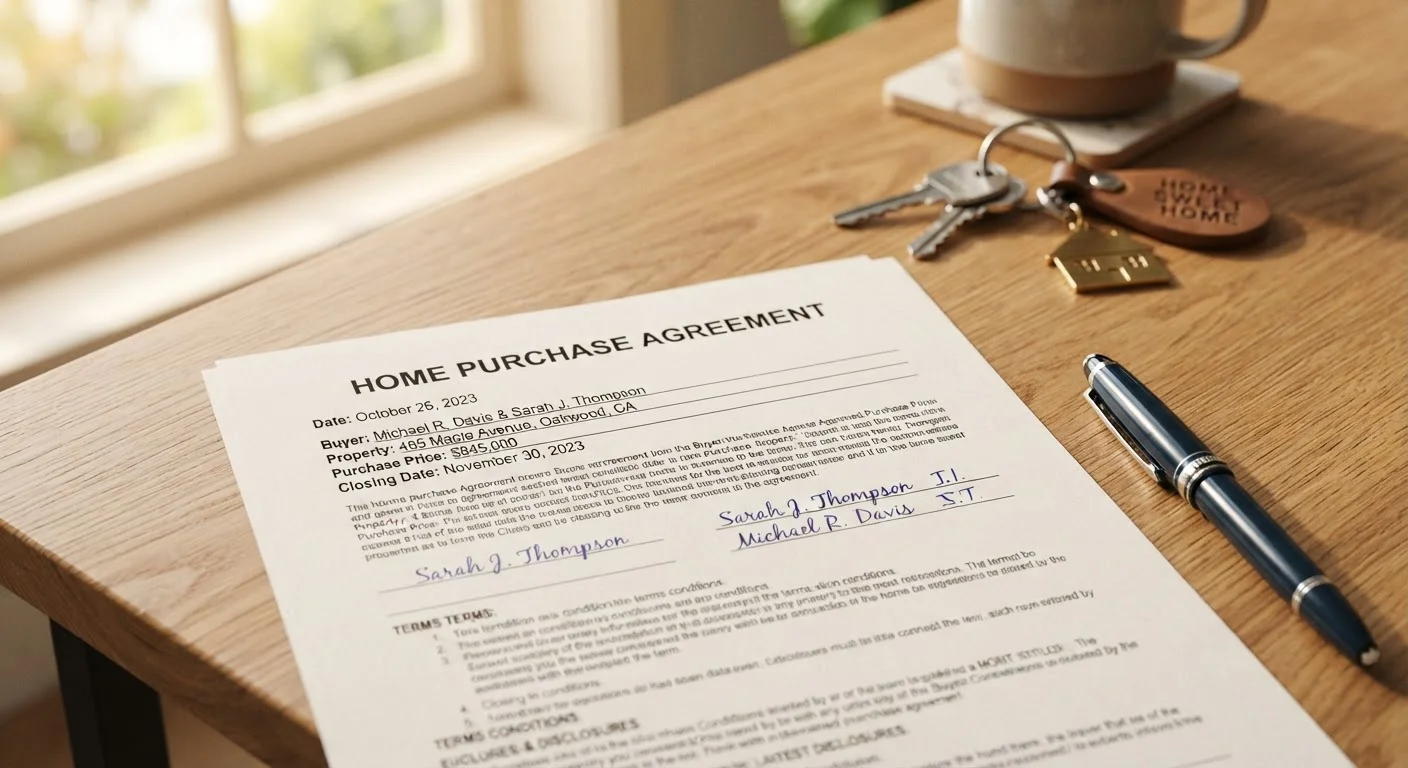
A home purchase agreement is a legally binding contract. Once both parties sign, its terms govern everything from when you can walk away to who pays closing costs. Yet most buyers encounter this document for the first time under time pressure, relying on their agent or attorney to explain what they're committing to.
This reference strips away the legalese. Each term below is defined in plain language, organized by where it tends to appear in the contract. For broader housing market vocabulary, see the Housing Market Glossary - and for general market context, the Housing Market hub offers ongoing plain-language breakdowns.
Purchase Agreement
The legally binding contract between buyer and seller that sets the terms of a home sale, including price, contingencies, timelines, and closing conditions.
Earnest Money Deposit
A good-faith deposit made by the buyer to demonstrate serious intent. It is held in escrow and typically applied toward the purchase at closing.
Escrow
A neutral account managed by a third party that holds funds, documents, and assets until all conditions of the purchase contract are fulfilled.
Contingency
A condition written into the contract that must be met for the sale to proceed. Common contingencies cover inspections, financing, and appraisals.
Clear Title
Legal ownership of a property that is free from liens, claims, or encumbrances that could challenge the buyer's right to own it after closing.
Appraisal
An independent estimate of a property's fair market value, required by most lenders before approving a mortgage. It protects the lender from lending more than the home is worth.
Prorations
The proportional division of ongoing property costs between buyer and seller, calculated based on each party's ownership period up to and after the closing date.
Kick-Out Clause
A seller-protective provision allowing the seller to keep marketing a home and accept a new offer even after accepting an offer with a sale contingency, subject to giving the original buyer notice.
Key Financial and Procedural Terms
Understanding the financial mechanics of a purchase agreement helps you evaluate offers, negotiate with confidence, and avoid surprises at the closing table.
| Typical Earnest Money Range | 1-3% of purchase price (Industry convention; varies by market) |
| Standard Inspection Window | 7-14 days after contract execution (Common contract language; varies by state) |
| Typical Closing Costs | 2-5% of loan amount (General industry range; state-specific fees vary) |
| Document Type | Legally binding contract |
| Escrow Held By | Neutral third party (title company or escrow agent) |
Earnest Money Deposit (EMD): A good-faith payment made by the buyer, typically 1-3% of the purchase price, held in escrow until closing. If the deal closes, it applies toward your down payment or closing costs. If you back out without a valid contractual reason, you may forfeit it.
Escrow: A neutral third-party account that holds funds and documents during the transaction. Neither buyer nor seller can access these funds until all contract conditions are met. Escrow closes when the deed transfers.
Prorations: The division of ongoing costs - property taxes, HOA dues, prepaid utilities - between buyer and seller based on the closing date. Sellers pay for the days they owned the home; buyers take over from closing day forward.
Closing Costs: Fees and charges due at settlement, separate from the down payment. These commonly include lender origination fees, title insurance premiums, recording fees, and prepaid homeowners insurance. They typically range from 2-5% of the loan amount, though this varies by state and transaction.
This article is for general informational and educational purposes only and does not constitute legal or financial advice. Consult a licensed real estate attorney or qualified financial professional for guidance specific to your transaction.
Contingencies: Your Built-In Exit Ramps
Contingencies are conditions that must be satisfied for the sale to proceed. If a contingency isn't met - and you invoke it properly and within the deadline - you can generally withdraw and recover your earnest money. Missing a contingency deadline can cost you that protection.
Inspection Contingency: Gives the buyer the right to have the property professionally inspected within a set window, typically 7-14 days. After reviewing the report, the buyer may request repairs, renegotiate the price, or walk away.
Financing Contingency (Mortgage Contingency): Protects the buyer if their loan falls through. If you cannot secure financing under the terms specified in the contract by the deadline, this clause lets you exit without penalty. Waiving it is risky unless you have strong certainty of approval.
Appraisal Contingency: If the lender's appraiser values the home below the agreed purchase price, this contingency allows renegotiation or cancellation. Without it, you'd need to cover the gap between appraised value and purchase price out of pocket.
Title Contingency: Ensures the seller can convey clear title - meaning no undisclosed liens, ownership disputes, or encumbrances. A title search and title insurance protect the buyer once the sale closes.
Sale Contingency: Allows the buyer to back out if their current home does not sell by a specified date. Sellers often negotiate a kick-out clause, which lets them continue marketing the property and accept another offer if the buyer's home doesn't sell in time.