The Case for Doing It Yourself
For routine, low-complexity jobs, DIY maintenance offers clear advantages - and not just financial ones. Completing basic tasks yourself builds familiarity with your vehicle, so you're more likely to notice when something changes. It also puts you in control of the parts and fluids going into your car.
Significant cost savings on routine labor
Shop labor rates commonly range from $80 to $150 per hour. Simple jobs like air filter replacements or wiper swaps that take 10 minutes at a shop can cost $30-$60 in labor alone.
Control over parts and fluid quality
When you source your own parts, you choose the brand and specification. This is particularly relevant for oil, where using the manufacturer-specified grade matters for engine longevity.
Builds working knowledge of your vehicle
Drivers who handle basic maintenance tend to notice changes - unusual sounds, unfamiliar smells, or early wear - earlier than those who only see their car at service intervals.
Flexible scheduling on your own time
DIY maintenance happens when it suits you, not around shop availability. This removes a common barrier to staying current on routine service items.
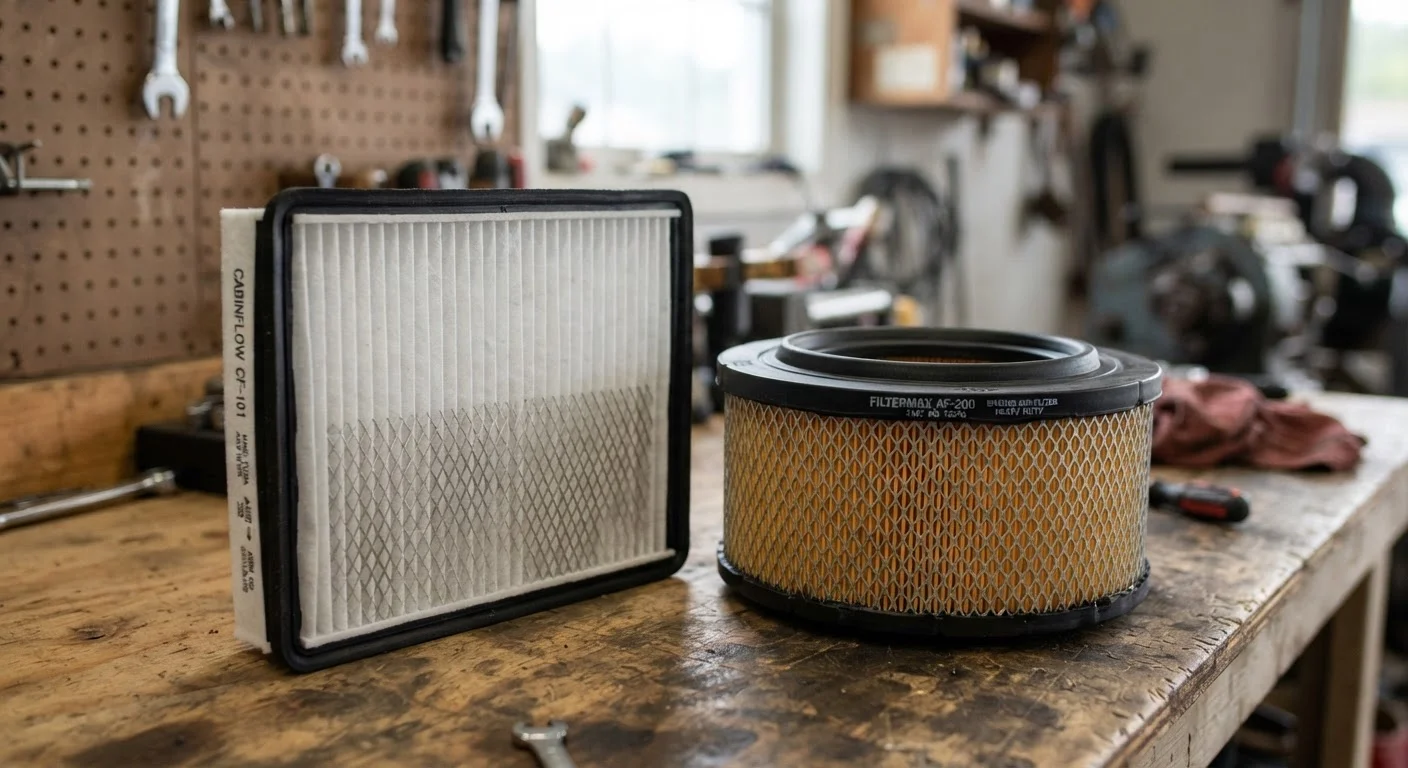
The most accessible DIY tasks share a few common traits: they require minimal specialized tools, they involve components that are easy to access, and a mistake is unlikely to create a safety hazard. Air filter swaps, wiper blade replacements, cabin filter changes, and battery terminal cleaning all fall into this category. The engine and cabin air filter guide explains what each filter does and how to inspect it - a useful starting point for first-timers.
Fluid checks and top-offs (coolant, windshield washer fluid, power steering fluid) are also reasonable DIY territory. So is checking and adjusting tire pressure, which costs nothing beyond a quality gauge.
Where DIY Gets Complicated - or Risky
The list of things you can technically do yourself is long. The list of things you should is shorter. The distinguishing factor is usually consequence: what happens if something goes wrong?
Mistakes on critical systems carry serious risk
Errors in brake, steering, or tire systems can directly compromise vehicle safety. Unlike a botched paint job, a brake bleed done incorrectly may not reveal itself until an emergency stop.
Upfront tool investment can erode savings
Quality jack stands, a torque wrench, and a socket set represent a real upfront cost. For infrequent jobs, the break-even point against shop labor may take years.
Modern vehicles add complexity
Many newer cars require software resets, specialized adapters, or dealer-level scan tools for tasks that were once purely mechanical - limiting what can realistically be done at home.
Improper disposal of fluids is an environmental and legal issue
Used motor oil, coolant, and brake fluid must be disposed of correctly. Pouring them down drains or into trash is illegal in most US states and harmful to local water systems.
Warranty considerations on newer vehicles
While the Magnuson-Moss Warranty Act generally protects your right to perform your own maintenance, using incorrect parts or procedures - and not documenting work - can complicate warranty claims.
Brake system work is the most frequently cited example. Pads and rotors are physically accessible, and many drivers do replace them successfully. But incorrect installation - improper torque, contaminated rotors, or a stuck caliper that goes unnoticed - can compromise stopping performance. This is a safety-critical system, and the margin for error is low.
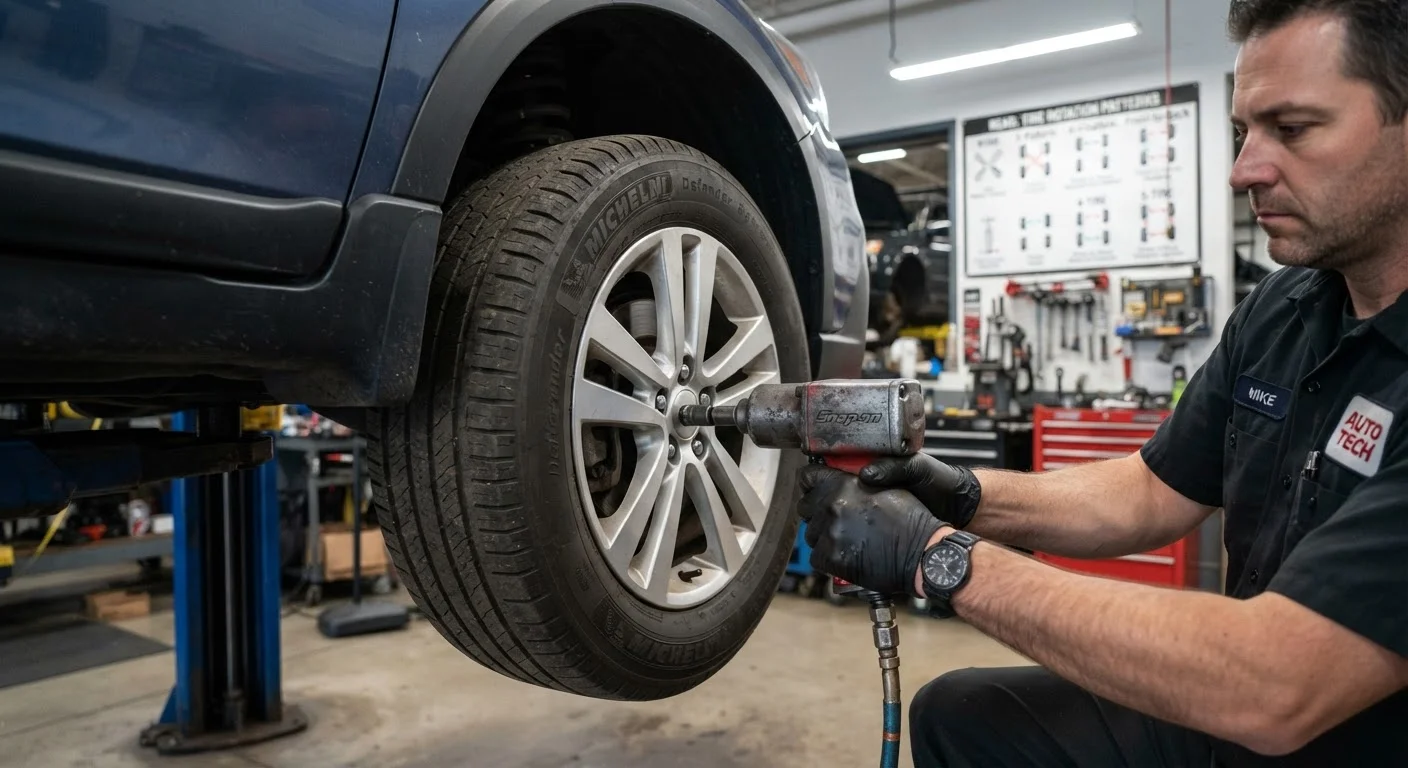
Wheel alignment and suspension components fall into the same category. Even if you can physically reach the parts, these systems require precision measurement equipment to set correctly. Misaligned suspension causes uneven tire wear and can affect vehicle handling in ways that aren't immediately obvious. The tire rotation and wheel balancing explainer covers related concepts worth understanding before attempting any wheel-area work.
Hybrid and electric vehicle high-voltage systems are a firm boundary. These components carry voltages that can be lethal and require certified training and insulated tools to work on safely.
The Middle Ground: Tasks That Depend on Your Setup
A meaningful category of maintenance jobs sits between "obvious DIY" and "leave it to a professional." Spark plug replacement is a good example. On many four-cylinder engines, the plugs are easy to reach and the job takes under an hour with a torque wrench. On some V6 and V8 configurations, rear-bank plugs require removing intake manifolds - a multi-hour job that demands mechanical confidence.
Always Consult Your Owner's Manual First
Manufacturer specifications for oil type, filter part numbers, torque values, and fluid capacities are specific to your vehicle's engine and model year. Generic online guides may not reflect your car's actual requirements. Your owner's manual - and in many cases the manufacturer's website - is the most reliable first reference before starting any maintenance job.
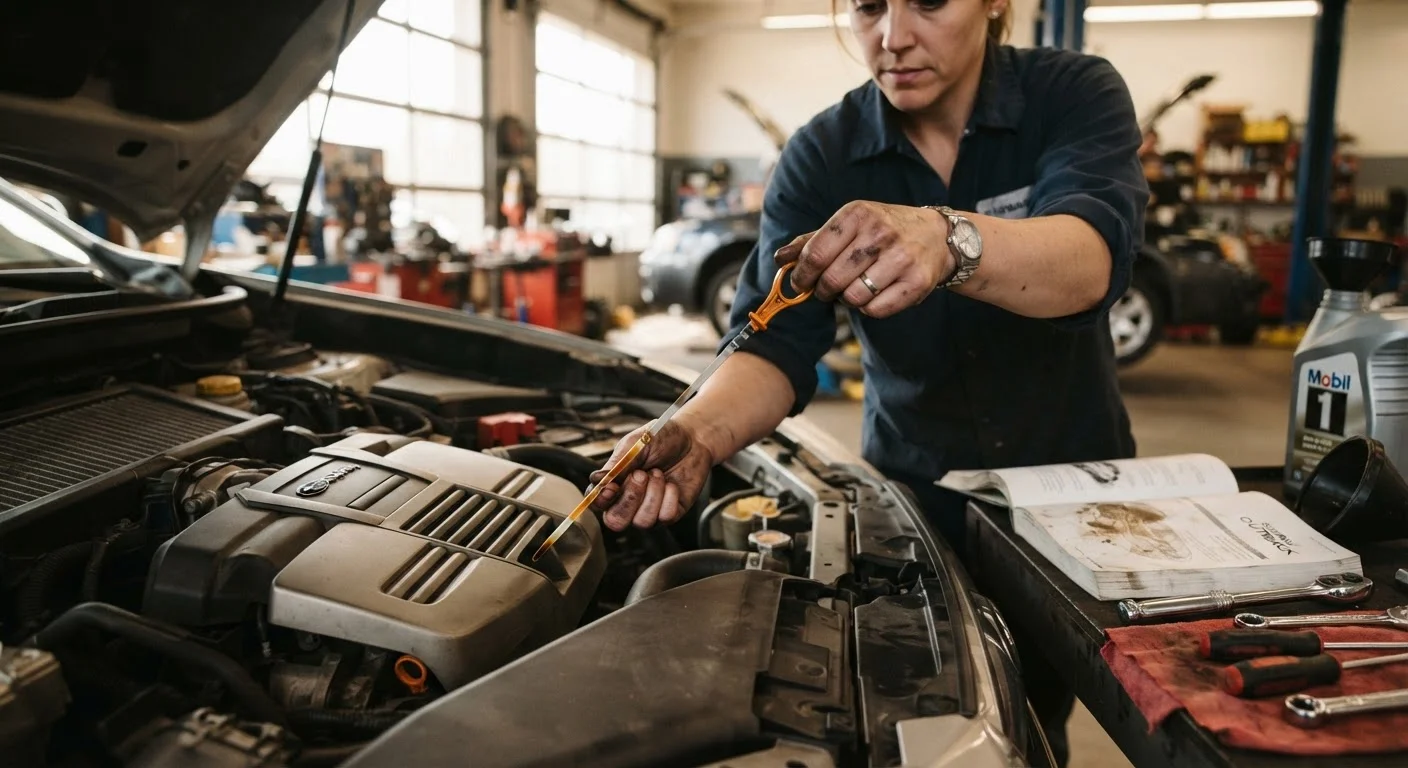
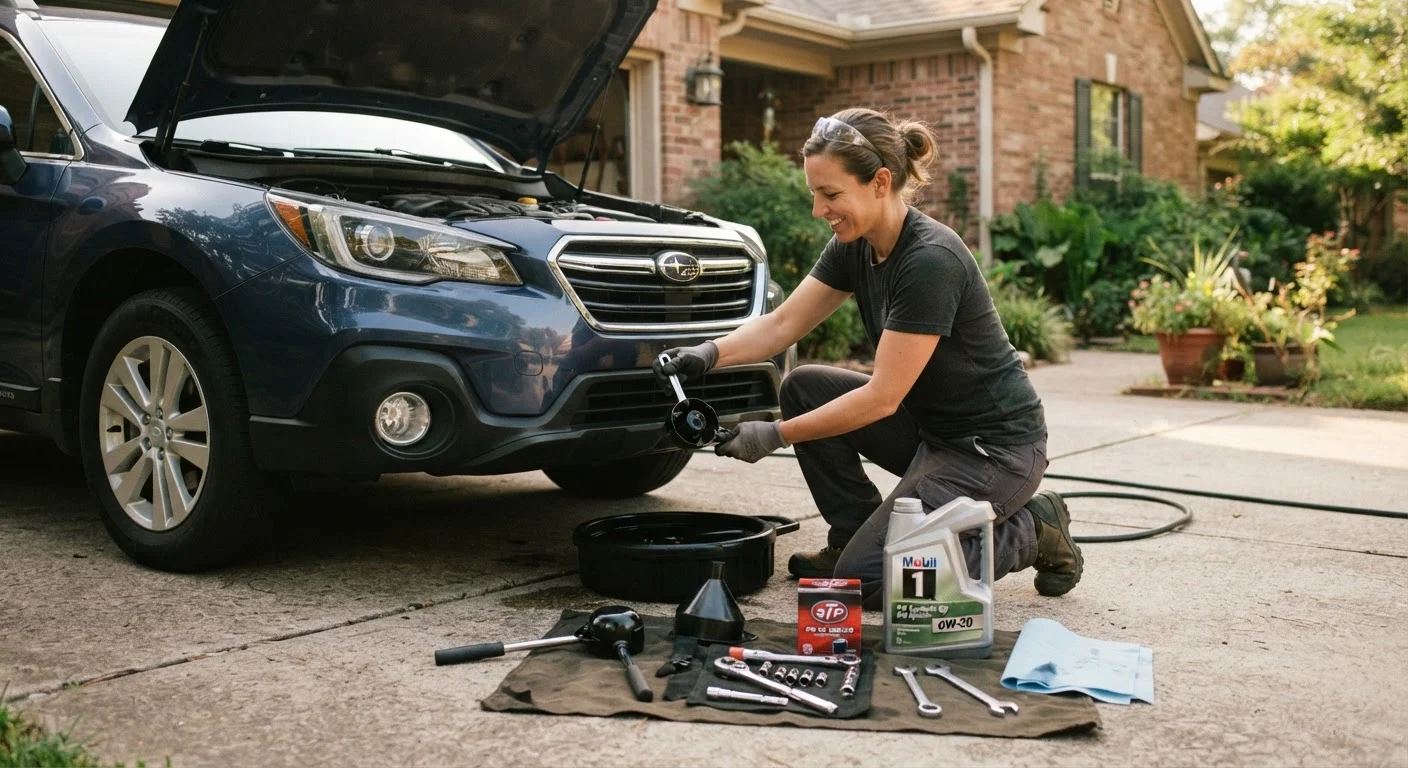
Oil changes are similar. Straightforward in principle, they require safely lifting and supporting the vehicle, disposing of used oil responsibly, and using the correct oil specification for your engine. First-timers should consult their owner's manual before starting. Common misconceptions about oil change intervals are addressed in the car maintenance myths article.
Battery replacement is generally DIY-friendly on older vehicles but increasingly complex on newer ones, where the battery management system may need to be reset by a scan tool after installation. Check your owner's manual or a model-specific forum before assuming it's plug-and-play.
If you're new to hands-on maintenance, the first-car maintenance primer provides a practical vocabulary and task overview worth reading before tackling anything mechanical.
Making the Call: A Practical Framework
Before starting any job, apply a simple three-question check:
- Do I have the right tools? Substituting tools or skipping torque specs is a common source of DIY errors.
- Is this safety-critical? Brakes, steering, tires, and lighting all affect your ability to control the vehicle and protect others on the road.
- What does a mistake cost? A torn air filter housing is a minor setback. A stripped brake bleeder valve or a damaged ABS sensor can quickly exceed what a shop would have charged.
The maintenance habits that extend vehicle life article outlines the routine tasks that matter most over the long term - useful for building a realistic DIY schedule. And for a broader perspective on recognizing when a job genuinely exceeds DIY scope, the guide on when to call a professional applies the same logic across different types of projects.
Staying informed about shortcuts that shorten a car's life is equally important - some skipped steps seem harmless until they compound into expensive repairs.