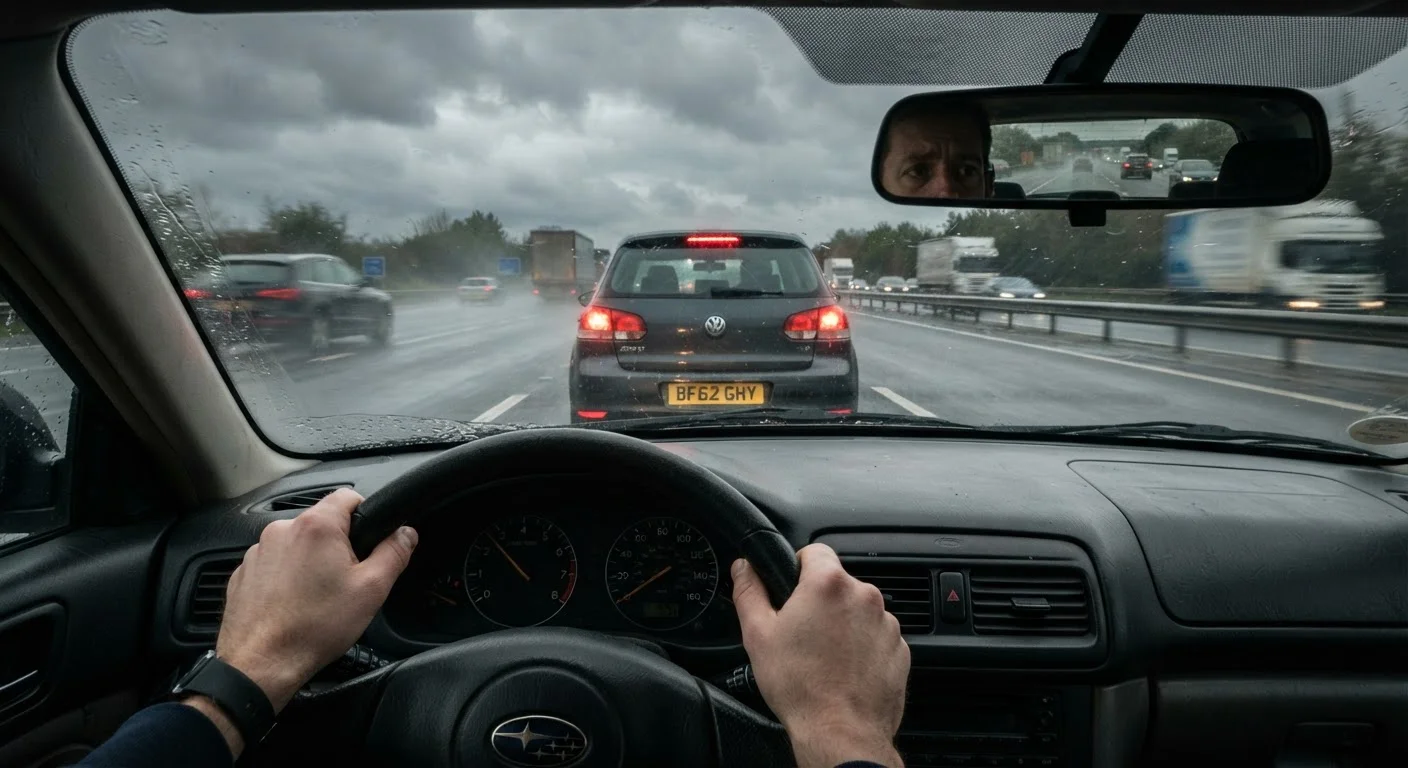

More Than Staying Alert
Most drivers think of "being careful" as the same thing as driving safely. But defensive driving is a more structured discipline - one built on specific, teachable habits rather than general caution. The National Highway Traffic Safety Administration (NHTSA) recognizes it as a foundational road safety framework, and driving educators across the US use it as the basis for both new-driver training and refresher courses.
At its core, defensive driving rests on one key assumption: you cannot control what other drivers do, but you can control your own position, speed, and awareness. That shift in mindset - from passive rule-following to active risk management - is what separates defensive drivers from average ones.
It also contrasts sharply with aggressive driving behavior, which prioritizes speed and convenience over safety margins.
The Core Principles in Practice
Defensive driving isn't a single technique - it's a cluster of habits applied together. Here are the principles that matter most on everyday roads:
- Scan well ahead. Experienced defensive drivers look 12-15 seconds ahead of their vehicle - roughly a block in city driving or a quarter mile on the highway. This gives time to identify hazards before they require emergency action.
- Manage your following distance. The three-second rule is the standard: if it takes fewer than three seconds to reach a point the car ahead just passed, you're too close. Tailgating dramatically shortens reaction time and is a leading cause of rear-end collisions.
- Adjust speed for conditions. Posted speed limits reflect ideal conditions. Rain, fog, heavy traffic, or road construction all call for reducing speed below the posted limit - not simply staying at it.
- Expect the unexpected. Assume that a car at an intersection may roll through the stop sign, or that a pedestrian may step off the curb. Anticipating errors by others gives you time to avoid them.
- Eliminate distractions. Defensive driving requires sustained attention. A glance at a phone or an in-car screen can eliminate the scanning advantage that makes the rest of these principles effective.
Practice the Commentary Drive Technique
One method driving instructors use to build scanning habits is the commentary drive: narrate out loud what you observe as you drive - parked cars that could pull out, pedestrians near curbs, brake lights two cars ahead. Verbalizing what you see forces active observation rather than passive looking. Even doing this for 10 minutes on a familiar route can sharpen your hazard perception over time.
Why Fatigue and Night Driving Demand Extra Vigilance
Two conditions that compromise defensive driving more than most drivers realize are fatigue and darkness. Drowsy driving impairs judgment as seriously as alcohol, yet many drivers underestimate how quickly tiredness degrades their scanning ability and reaction time.
Similarly, night driving raises crash risk significantly due to reduced visibility and glare. In both situations, the defensive solution is the same: increase following distance, reduce speed, and - when fatigue is the issue - recognize that no driving technique fully compensates for a driver who needs to rest.
94%
Crashes attributed to human choice or error
According to NHTSA research, approximately 94% of serious crashes involve driver behavior as a critical reason - underscoring why driver habits matter so much.
3x
Higher fatality rate at night vs. daytime
NHTSA data indicates that while less driving occurs at night, the fatality rate per mile traveled is roughly three times higher than during daylight hours.
3 sec
Minimum recommended following distance
The three-second following rule is taught in driver education programs across the US as the baseline gap for safe highway following under ideal conditions.
Building the Habit Over Time
Defensive driving isn't something you do once and forget. It requires consistent reinforcement because road conditions, traffic patterns, and personal factors (like stress or fatigue) change constantly. New drivers can find structured guidance in resources like a complete road safety introduction, but even experienced drivers benefit from periodic self-assessment.
Formal defensive driving courses - offered by organizations like AAA, AARP, and through many state DMVs - provide structured refreshers and may qualify you for insurance discounts. The real payoff, though, is the reduction in crash risk that builds up over years of consistent, alert, anticipatory driving.
Good vehicle awareness also plays a supporting role. A driver who knows their vehicle's condition - including what warning indicators mean - is better positioned to make safe decisions. Understanding dashboard warning lights is one practical piece of that broader ownership awareness.