How the Law Draws the Line
Many drivers use the terms interchangeably, but aggressive driving and road rage are legally distinct categories in the United States. The distinction matters both for how incidents are prosecuted and how you should respond when you encounter them.
Aggressive driving is generally defined under traffic law as a pattern of moving violations that endangers other people or property. The National Highway Traffic Safety Administration (NHTSA) identifies common aggressive driving behaviors as speeding, following too closely, erratic lane changes, running red lights, and failing to yield. These are traffic offenses - civil infractions handled through fines and license points in most states.
Road rage, by contrast, involves a driver's deliberate attempt to intimidate, threaten, or harm another person. Examples include purposely cutting someone off in retaliation, blocking a vehicle from merging, brandishing a weapon, or exiting a vehicle to confront another driver. Many states classify these acts as criminal misdemeanors or felonies, not mere traffic violations.
| Criterion | Aggressive Driving | Road Rage |
|---|---|---|
| Legal classification | Traffic offense / civil infraction | Criminal misdemeanor or felony |
| Intent | Reckless or negligent behavior | Deliberate, targeted hostility |
| Common examples | Speeding, tailgating, unsafe lane changes | Threatening gestures, blocking, assault |
| Typical consequence | Fines, license points, insurance impact | Arrest, criminal record, civil liability |
| Escalation potential | Can escalate if unchecked | Already an escalated situation |
| Appropriate response | Create distance, stay calm | Disengage and contact law enforcement |
The boundary between the two is escalation. Aggressive driving that goes unchecked - either by the driver themselves or by circumstance - can slide into road rage. Understanding where one ends and the other begins is the first step toward staying safe.
What Triggers These Behaviors
Neither aggressive driving nor road rage emerges from nowhere. Research from the AAA Foundation for Traffic Safety consistently identifies high stress, time pressure, and perceived disrespect from other drivers as primary triggers. Anonymity inside a vehicle also plays a role - people may behave in ways they never would face-to-face.
Common situational triggers include heavy traffic congestion, being cut off unexpectedly, slow-moving vehicles in passing lanes, and perceived slights like a honked horn. For some drivers, these moments activate a strong emotional response that bypasses their usual self-regulation.
It's important to recognize that anyone can exhibit aggressive driving under certain conditions. Fatigue, personal stress unrelated to driving, and even physical discomfort are contributing factors. This doesn't excuse dangerous behavior, but it does explain why de-escalation - rather than retaliation - is almost always the right response.
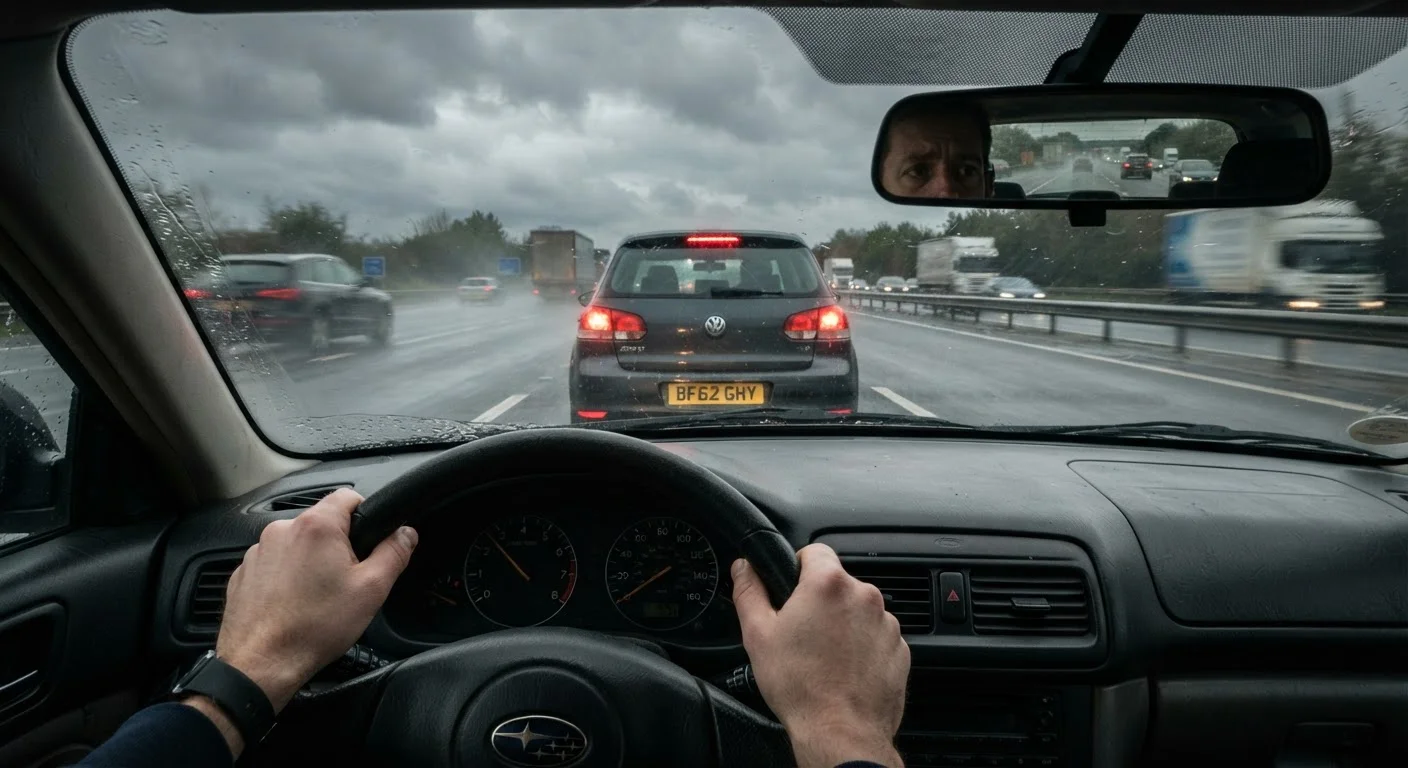
Behaviors like tailgating are particularly worth understanding in depth. Tailgating is more dangerous than most drivers realize - it compresses your reaction time and can quickly signal aggression to the driver ahead, potentially provoking an escalating exchange.
How to Respond Safely on the Road
When you encounter an aggressive driver, your goal is simple: create distance and reduce interaction. Avoid making eye contact, do not return gestures, and resist the urge to match their speed or behavior. Retaliating almost always makes the situation worse and can pull you into legal jeopardy of your own.
Practical steps when facing an aggressive or enraged driver:
- Allow extra space between your vehicle and the aggressive driver ahead.
- If someone is tailgating you, signal and move to a different lane when it is safe to do so.
- Do not brake-check or deliberately slow down to antagonize a following driver.
- If a situation feels threatening, drive to a populated public location - not home - and contact law enforcement.
- Use your horn sparingly and only as a safety signal, not as an expression of frustration.
On a broader level, defensive driving principles provide the most reliable framework for staying out of dangerous situations altogether. Anticipating hazards and maintaining situational awareness reduces the likelihood you'll become either a target or a participant in an escalating exchange.
Finally, it helps to check your own habits. If you find yourself frequently frustrated behind the wheel, building in extra travel time, avoiding high-traffic periods when possible, and using calming strategies before you drive can meaningfully reduce the likelihood of contributing to these situations.
This article is for general informational and educational purposes. For specific legal questions about traffic violations or criminal charges, consult a licensed attorney in your state.