Why Tailgating Is a Bigger Problem Than Most Drivers Acknowledge
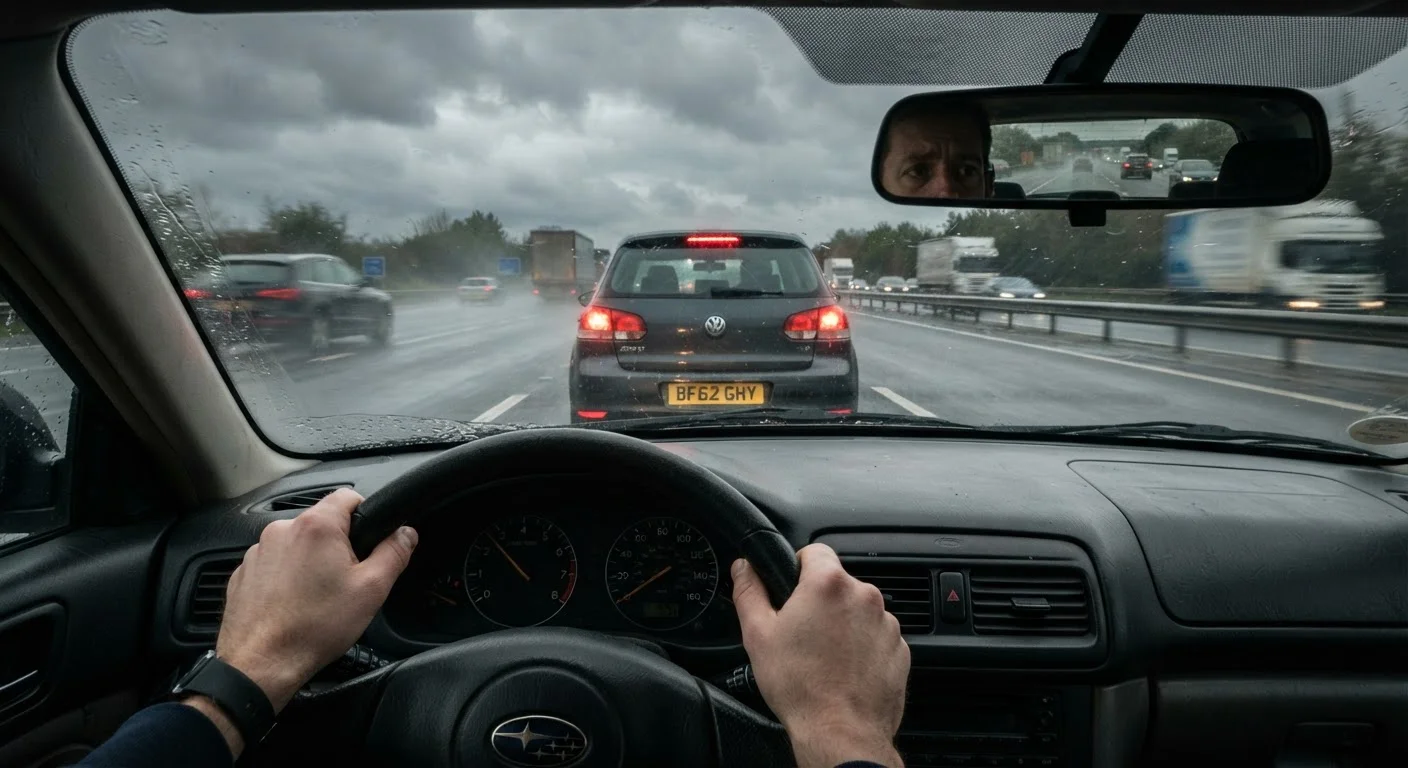
Most drivers have been tailgated - and many have tailgated others without fully thinking through the consequences. Following too closely feels like a minor bad habit, but it is one of the most consistent contributors to rear-end collisions on American roads. According to the National Highway Traffic Safety Administration (NHTSA), rear-end crashes represent approximately 29% of all reported traffic collisions, making them one of the most common crash types in the U.S.
What makes tailgating particularly dangerous is that it eliminates the buffer every driver needs to respond to sudden changes ahead. That buffer isn't just about braking distance - it's also about the time your brain requires to perceive a hazard and send a signal to your foot. Understanding how those fractions of a second add up is the first step toward driving more safely.
For a broader foundation on avoiding collisions, see our guide to defensive driving principles.
Myth
If you can stop in time, you're following at a safe distance.
Fact
Safe following distance must account for reaction time before braking begins - not just the physical stopping distance of your vehicle.
Drivers often judge following distance by feel, assuming their brakes are fast enough to compensate for a short gap. But braking doesn't begin the moment a hazard appears - it begins after your brain registers the danger, decides to act, and your foot physically moves to the pedal. At highway speeds, this reaction phase alone can consume 100 feet or more. A gap that feels adequate may leave virtually no margin once reaction time is factored in.
Myth
The two-second rule is enough for safe following distance.
Fact
Two seconds is often cited but widely considered insufficient - three seconds is the more commonly recommended minimum under ideal conditions.
The two-second rule was an older guideline that has been revised by many road safety organizations. Most current guidance, including recommendations aligned with defensive driving programs, uses three seconds as a baseline on dry roads at normal speeds. At highway speeds above 60 mph, or in any adverse conditions, even three seconds may be inadequate. Conditions including rain, darkness, and heavy vehicle loads all require a larger buffer.
Myth
Tailgating only matters at high speeds - in slow city traffic, it's not really dangerous.
Fact
Low-speed rear-end collisions still cause significant injuries, particularly whiplash, and city tailgating routinely contributes to chain-reaction crashes.
Even a collision at 15-20 mph can produce enough force to cause cervical spine injuries (whiplash) or injure unrestrained passengers. In dense city traffic, tailgating creates chain-reaction risks: if the third or fourth car in a line is following too closely, a single sudden stop can ripple into a multi-vehicle pileup. Close following at any speed also reduces your ability to spot hazards like pedestrians or cyclists entering the roadway.
Myth
Experienced drivers can follow closer because their reaction times are faster.
Fact
Human reaction time varies little with driving experience; even trained drivers cannot reliably beat the physiological limits of perception and response.
Experience improves hazard anticipation - recognizing risky situations before they develop - but it does not meaningfully shorten the neurological time required to process a sudden stimulus and respond. Research on reaction times consistently shows that the perception-reaction sequence takes roughly 1.5 seconds for most alert drivers. Fatigue, distraction, or age can extend this significantly. Confidence born of experience can actually lead drivers to underestimate risk, making overconfident close-following a genuine danger.
Myth
If you're rear-ended, it's always the other driver's fault.
Fact
While the following driver typically bears primary liability, sudden or unexpected braking by the lead driver can affect how fault is determined.
In the vast majority of rear-end crashes, the trailing driver is found at fault for following too closely or failing to maintain adequate stopping distance. However, traffic law and insurance liability analysis can be more nuanced - for example, if a lead vehicle's brake lights are non-functional or if a driver cuts off another vehicle without sufficient gap. Maintaining a safe following distance protects you legally as well as physically, by ensuring you can stop even for unexpected slowdowns without being considered negligent.
Stopping Distance: The Physics Drivers Underestimate
Stopping a vehicle involves two distinct phases: reaction distance (the distance traveled while your brain processes a threat and your foot reaches the brake) and braking distance (the distance needed once braking begins). At 60 mph, reaction distance alone can exceed 80 feet before any deceleration starts.
~29%
Share of all U.S. crashes that are rear-end collisions
According to NHTSA crash data, rear-end collisions consistently rank among the most common crash types on American roads.
1-1.5 sec
Average driver perception-reaction time before braking
Traffic safety research broadly places alert driver reaction time in the 1.0-1.5 second range, covering substantial distance before the brakes engage.
3x longer
Stopping distance increase on ice vs. dry pavement
Road safety organizations note that stopping distances on ice or packed snow can be three or more times greater than on dry asphalt at the same speed.
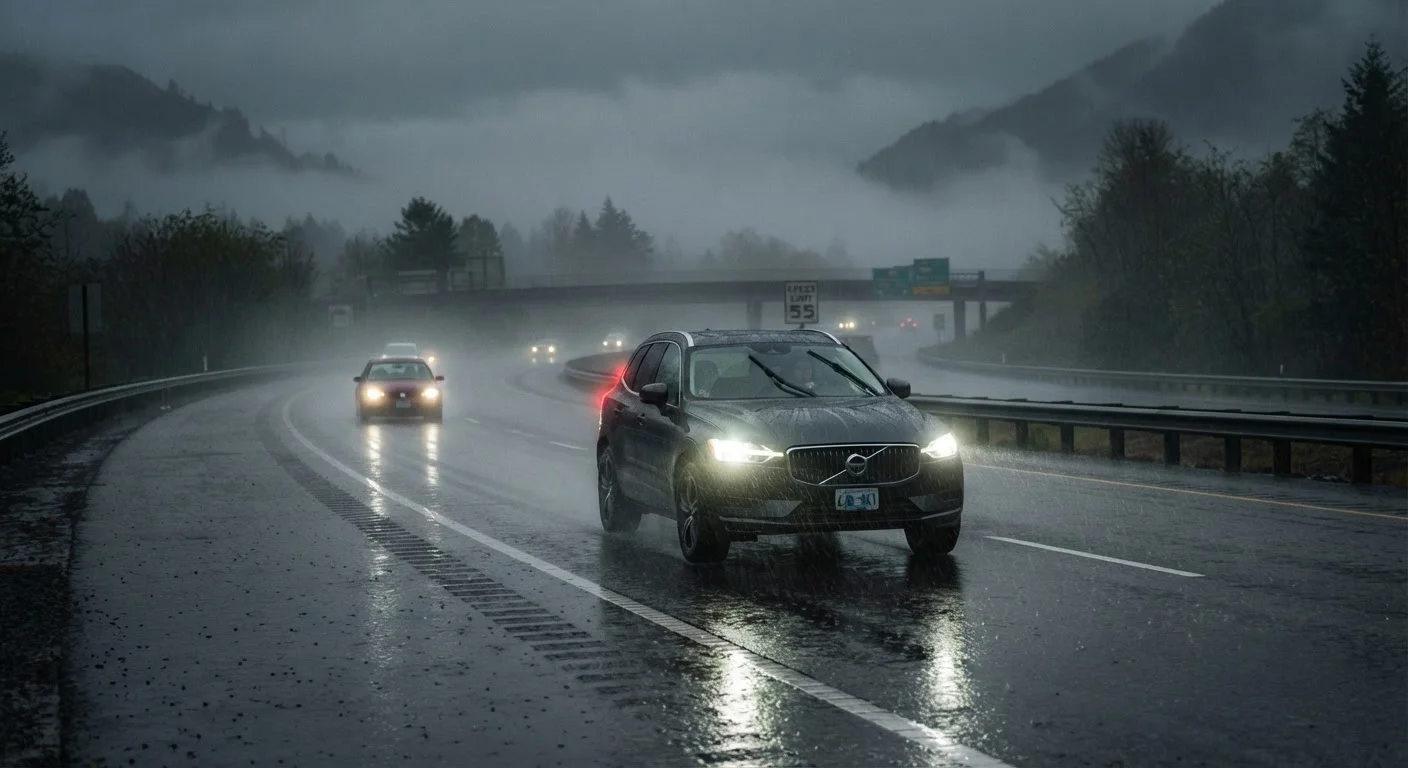
Road conditions dramatically change this equation. Wet pavement can double stopping distances; ice or snow can extend them by three times or more. If you're following at two seconds in dry weather, you may think you have room - but switch to a wet road and that gap shrinks to a genuinely dangerous margin. See how recommended gaps shift across road types in our article on safe following distance in city vs. highway driving, and how weather compounds the challenge in our piece on driving in rain, fog, and snow.
Tailgating as Aggressive Driving - and What to Do When It Happens to You
Intentional tailgating - using proximity to pressure another driver to move or accelerate - is legally considered a form of aggressive driving in most U.S. states. It can escalate into road rage incidents that put everyone on the road at risk. If someone is tailgating you, the safest response is to allow them to pass by easing slightly toward the right lane or gradually reducing speed to create space ahead of you. Do not brake-check or engage.
Understanding the legal and behavioral line between aggressive driving and road rage is useful context - our article on aggressive driving vs. road rage covers exactly that distinction.
For your own following behavior, use the three-second rule as a baseline: pick a fixed point ahead, and count three full seconds from when the car in front passes it to when you do. In poor conditions, extend that to four or five seconds. This simple habit, combined with the broader awareness framework described in blind spots and mirror positioning, meaningfully lowers your crash risk every time you drive.
This article is for general informational purposes only. Always follow applicable traffic laws and consult official driving resources or law enforcement guidance for questions about specific regulations in your state.