Why Following Distance Is Not One-Size-Fits-All
Most drivers learn the three-second rule during driver's education: pick a fixed point ahead, watch the car in front pass it, then count to three. If you reach that point before finishing your count, you're too close. It's a simple, practical guideline - but it was never intended to be a universal answer for every road situation.
Following distance is, at its core, about reaction time plus braking distance. At 30 mph, a vehicle travels roughly 44 feet per second. At 65 mph, that jumps to about 95 feet per second. A driver with a typical reaction time of 1.5 seconds will travel nearly 143 feet before even pressing the brakes at highway speed. Add braking distance on top of that, and the gap required to avoid a collision becomes substantial.
Understanding how speed, environment, and conditions change this equation is central to defensive driving - the practice of anticipating hazards before they become emergencies.
City Traffic: Short Distances, High Complexity
Urban driving introduces hazards that highways generally don't - pedestrians stepping off curbs, cyclists weaving between lanes, buses pulling in and out, and traffic signals creating frequent stops. Speeds are lower, typically between 25 and 45 mph, but the environment is more unpredictable.
At city speeds, a two-to-three-second gap remains generally appropriate in steady-moving traffic. However, drivers should be prepared to extend that gap near intersections, school zones, and areas with heavy foot traffic. A lower speed doesn't automatically mean a safer stopping scenario when a child darts into the street or a door swings open from a parked car.
Stop-and-go traffic also creates a specific risk: multiple-vehicle chain-reaction crashes. When traffic slows suddenly, a driver following too closely may stop in time - but the driver behind them may not. Leaving adequate space in front also gives you room to ease off the brakes gradually, reducing the risk of being struck from behind.
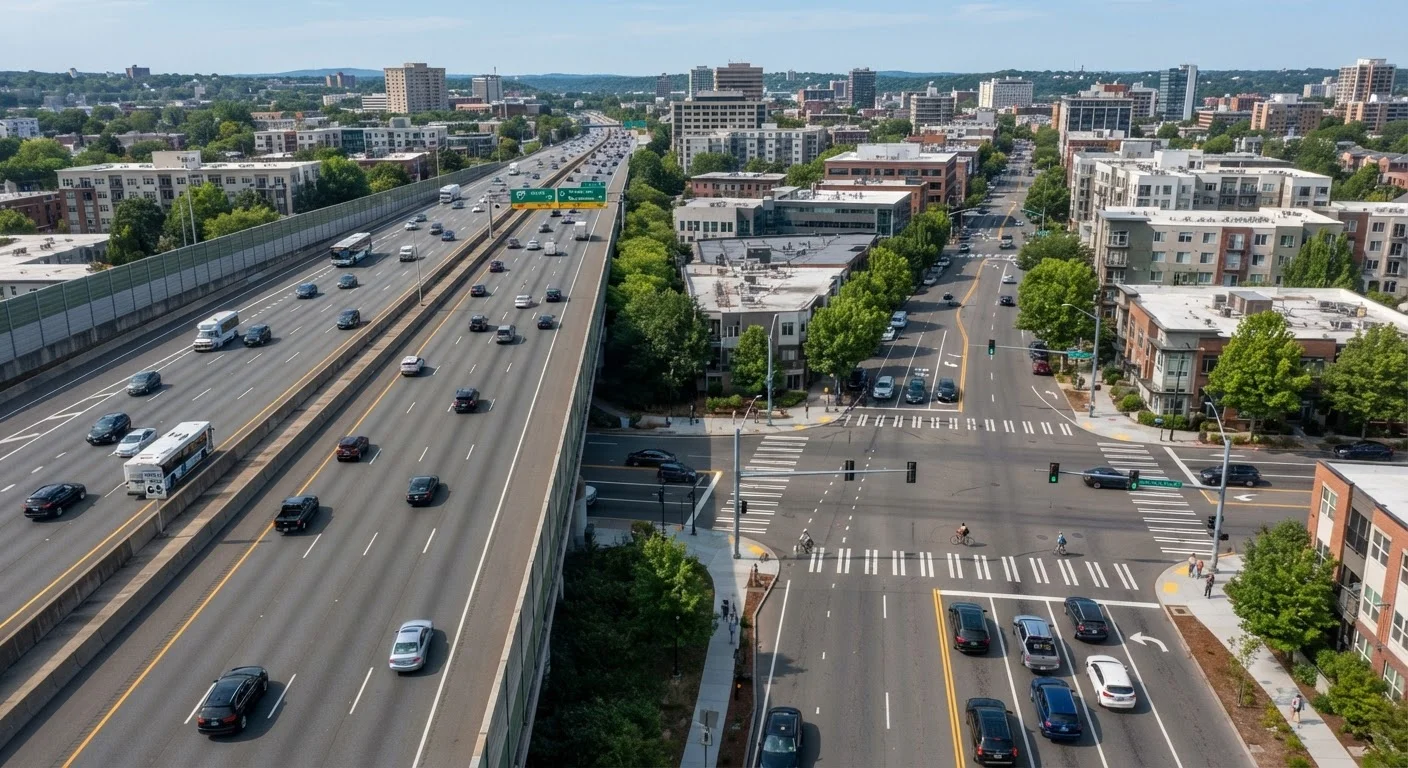
| City Traffic | Highway Driving | |
|---|---|---|
| Typical speed range | 25-45 mph | 55-75 mph |
| Recommended time gap | 2-3 seconds | 4+ seconds |
| Stopping distance (dry road) | ~100-150 feet | ~250-350+ feet |
| Key hazard types | Pedestrians, signals, cyclists | High-speed merges, large trucks |
| Impact of wet conditions | Moderate increase needed | Significant increase needed |
| Risk of chain-reaction crashes | High in stop-and-go | High at speed differentials |
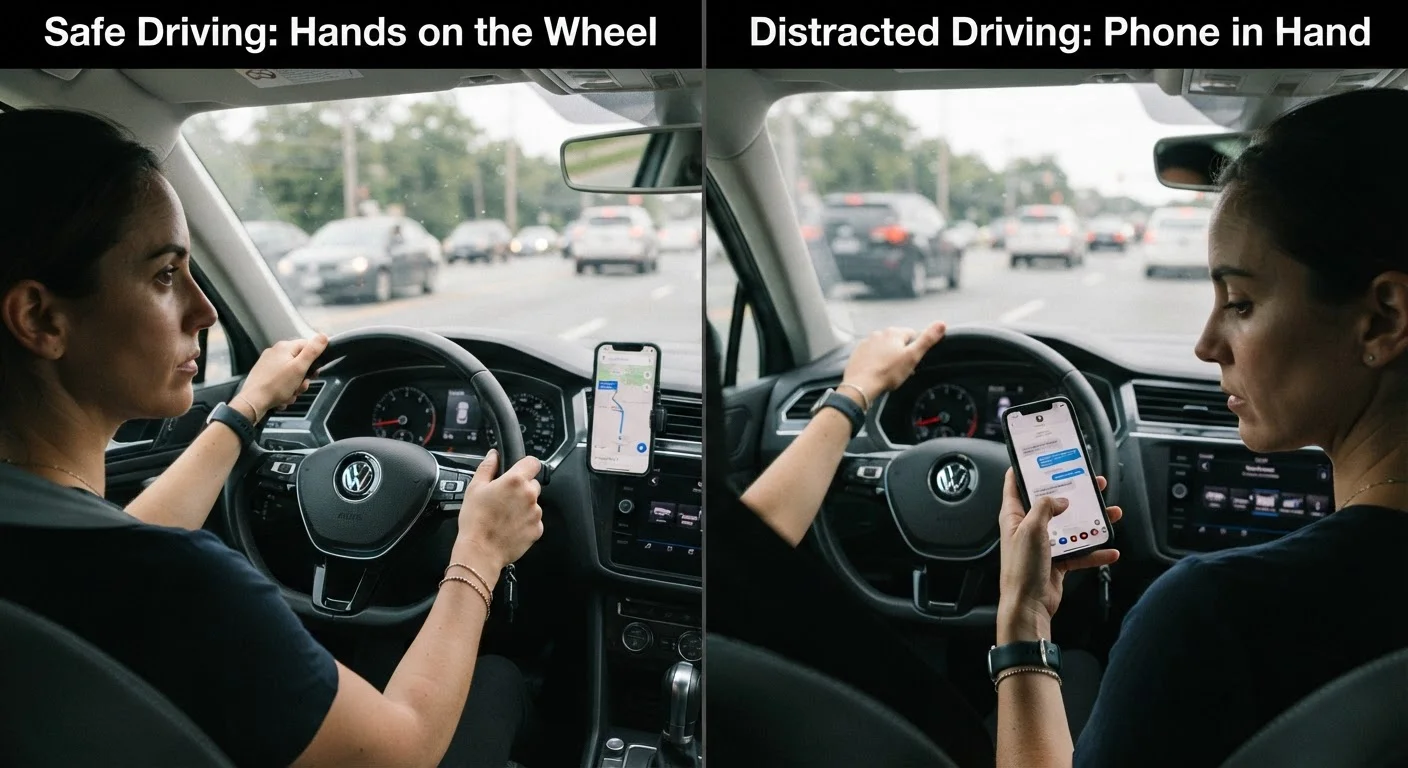
Distraction is amplified in urban environments. Phone use, navigation glancing, and in-car conversations compete for attention at exactly the moments when road conditions change fastest. See how handheld vs. hands-free phone use stacks up in terms of crash risk while driving.
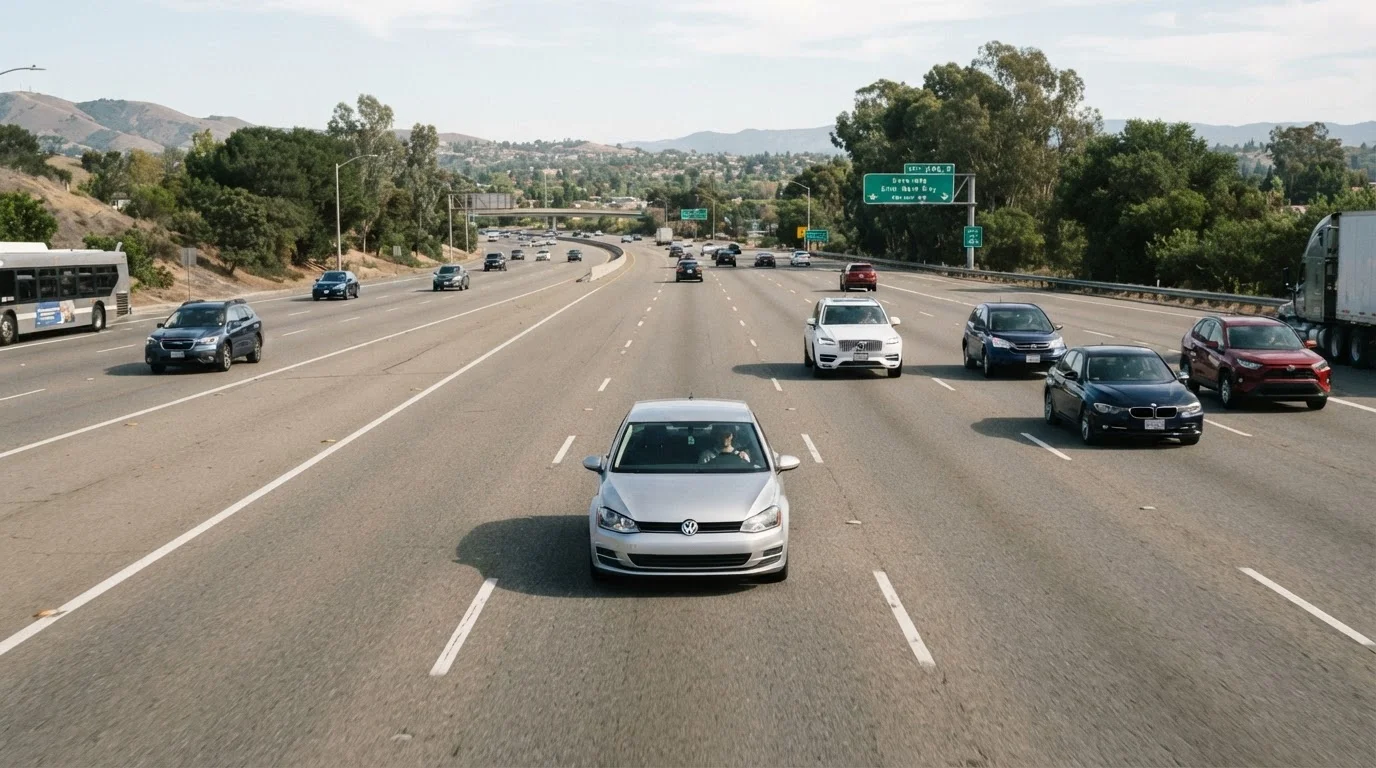
Highway Driving: Higher Speeds, Longer Gaps Required
On the highway, the stakes of following too closely rise sharply. At 65-70 mph, total stopping distance - reaction time plus braking - can exceed 300 feet under ideal conditions. On wet pavement or with worn tires, that figure climbs further.
Safety guidance from organizations such as the National Safety Council recommends increasing the following gap to at least four seconds at highway speeds, and more in poor conditions. At 70 mph, four seconds translates to roughly 410 feet of buffer - the length of more than one football field.
Large trucks and vehicles towing trailers require even greater distances. A fully loaded commercial truck can take up to 40% longer to stop than a passenger car at the same speed, meaning drivers who pull in tightly behind a semi are operating with almost no safety margin.
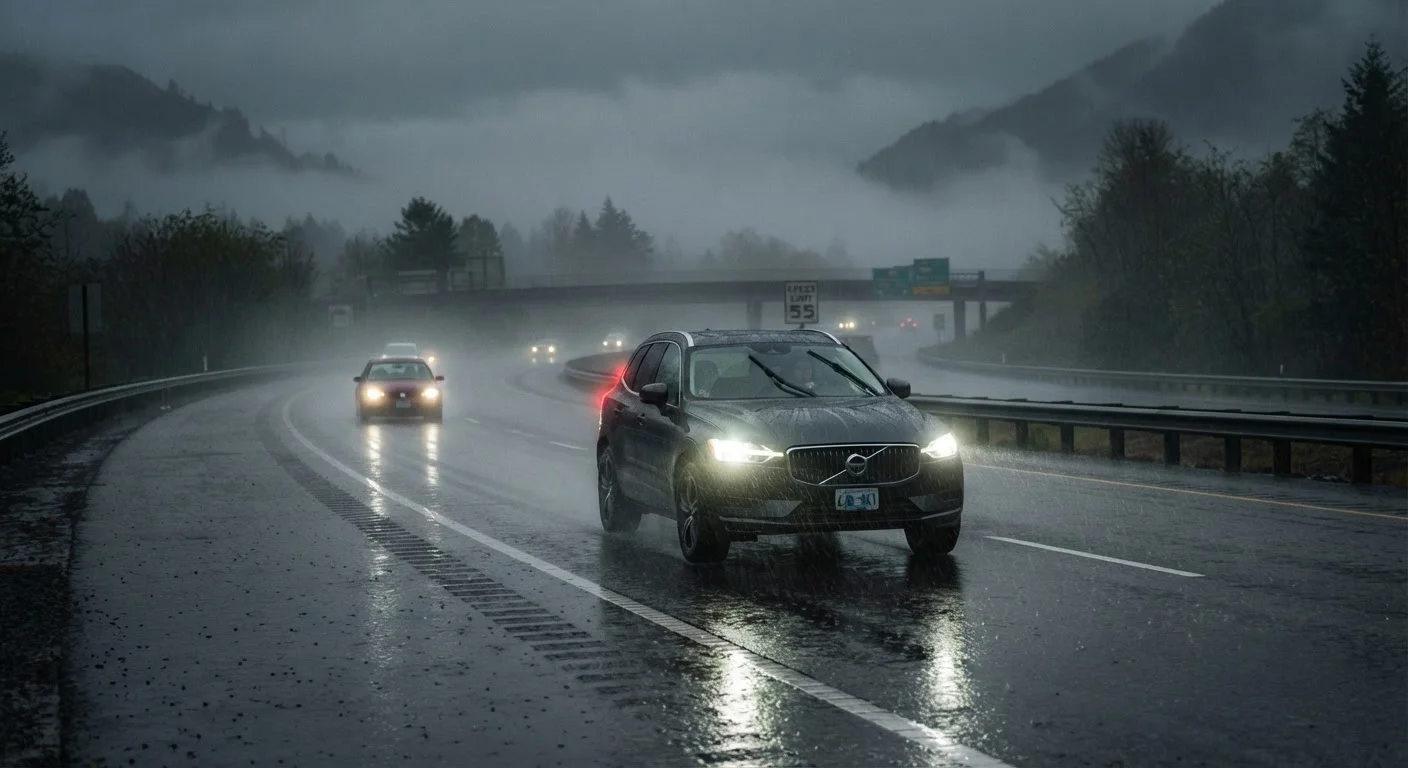
Conditions like rain, fog, and snow further compromise traction and visibility, demanding additional buffer. The adjustments needed in hazardous weather go beyond just slowing down - spacing out becomes equally critical. Similarly, fatigue - which peaks at night - slows reaction time measurably. Night driving risks compound the need for extended following distances after dark.
When to Extend Your Buffer Beyond the Baseline
Several factors consistently warrant adding time to your baseline following distance, regardless of whether you're in the city or on the highway:
- Wet or icy roads: Stopping distances can double or triple on slick surfaces.
- Reduced visibility: Fog, heavy rain, glare, or darkness limit how early you can detect a hazard ahead.
- Towing or carrying heavy loads: Added weight increases the distance needed to stop.
- Older or heavily worn brakes and tires: Degraded components extend stopping distance significantly.
- Driver fatigue: Tired drivers have reaction times comparable to impaired drivers.
- Following large vehicles: Trucks and buses block sightlines, eliminating the warning time you'd otherwise have.
Use the Three-Second Count Correctly
When checking your following distance, choose a stationary reference point - a sign, overpass, or road marking - not the vehicle ahead of you. Start counting when the rear of the car in front passes that point. If you reach it before three (or four, on the highway) seconds elapse, ease off the accelerator. Repeat this check periodically, especially after merges or lane changes shift the traffic flow around you.
The common thread is this: any factor that delays your awareness of a developing hazard or slows your vehicle's response to braking should prompt a wider gap. Adjusting proactively - rather than reactively - is what separates confident drivers from those who are simply fortunate.