The Legal Landscape: Where Each Option Stands
As of the most recent legislative tracking, 48 states and Washington D.C. prohibit handheld phone use while driving. Many of these states have adopted distracted driving laws that treat any manual phone interaction - texting, scrolling, or holding the phone to your ear - as a primary offense, meaning officers can stop you for it alone without any other traffic violation.
Hands-free use occupies a grayer zone. While it is generally permitted for adult drivers, several states including California, Oregon, and Washington have enacted broader restrictions, and many states separately prohibit all phone use - hands-free included - for teen drivers and commercial vehicle operators. Laws evolve frequently, so drivers should verify their own state's current statutes directly.
The practical takeaway: hands-free is the legally compliant choice for most adults in most states, but it is not universally unrestricted. Assuming you're covered simply because you're using a Bluetooth earpiece or speakerphone on your dashboard may be incorrect depending on where you drive or what license class you hold.
| Criterion | Hands-Free Phone Use | Handheld Phone Use |
|---|---|---|
| Legal status (most U.S. states) | Permitted for adult drivers | Banned in 48 states + D.C. |
| Manual distraction | Minimal - hands stay on wheel | High - one hand occupied |
| Visual distraction | Low for voice calls | High - eyes move to screen |
| Cognitive distraction | Significant - still present | Significant - also present |
| Penalty risk | Generally low for adults | Fines, license points, surcharges |
| Teen/CDL driver restrictions | Often banned - check state law | Banned virtually everywhere |
| Overall crash risk vs. undistracted driving | Elevated - reaction time slowed | Higher - all three distraction types |
Cognitive Distraction: The Risk Hands-Free Doesn't Eliminate
The common assumption is that freeing your hands solves the distraction problem. Research from the AAA Foundation for Traffic Safety and the National Safety Council challenges that view directly. Both organizations have documented that hands-free phone conversations impose a measurable cognitive load - sometimes called inattention blindness - where drivers visually scan the road but mentally process less of what they see.
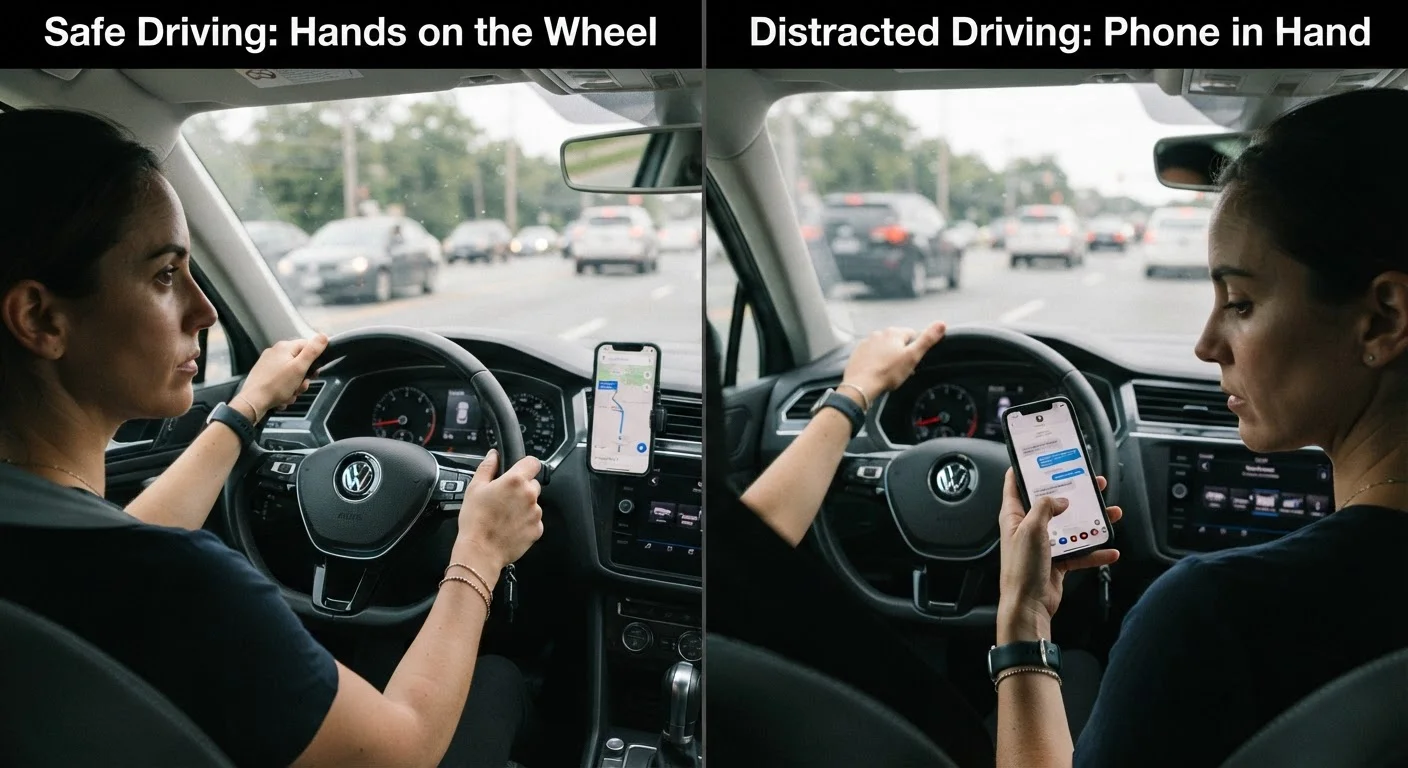
The key distinction is between three types of distraction: manual (hands off the wheel), visual (eyes off the road), and cognitive (mind off the task of driving). Handheld use triggers all three simultaneously. Hands-free use eliminates the first two but preserves the third - and cognitive distraction alone is enough to meaningfully slow reaction times and reduce hazard detection.
Notably, talking to a passenger creates less distraction than a phone call. Passengers naturally pause conversation during complex driving moments and share the driver's situational context; a remote caller does neither. This distinction matters when evaluating how much hands-free actually helps. For a broader look at how mental impairment affects driving performance, see our article on the real risks of driving drowsy.
Crash Data and Real-World Risk
The National Highway Traffic Safety Administration (NHTSA) consistently identifies distracted driving as a significant contributor to traffic fatalities. While isolating phone-specific crashes within distraction data is methodologically complex, studies using naturalistic driving data - cameras and sensors in real vehicles during actual commutes - have found that handheld phone manipulation, including texting, substantially increases crash risk compared to undistracted driving.
The picture for hands-free is more nuanced. Some studies find little meaningful difference in crash rates between handheld and hands-free conversations, suggesting the cognitive load, not the physical act of holding the phone, is the primary danger. Others indicate handheld use carries higher risk, particularly when it involves visual tasks like dialing or reading notifications.
4x
Increased crash risk from handheld phone use
The National Safety Council cites research showing handheld phone use while driving quadruples crash risk compared to undistracted driving.
~27%
Drivers using phones at any given time
NHTSA observational studies have found a significant share of U.S. drivers using a phone at any given daytime moment.
5 sec
Eyes-off-road time when reading a text at 55 mph
According to NHTSA, reading or sending a text at highway speed is equivalent to crossing the length of a football field with your eyes closed.
What the data consistently supports: reaction times during phone conversations - regardless of hands-free status - are slower than during undistracted driving and comparable in some measures to driving at the legal alcohol limit. This framing from the National Safety Council underscores why public health and safety advocates continue to push for reduced phone use overall, not just a shift from handheld to hands-free.
Understanding stopping distances and reaction time is equally relevant here - just as with the dangers of tailgating, any impairment to your response speed reduces your margin for error in traffic.
Practical Guidance for Everyday Drivers
Given the evidence, a few actionable principles stand out for American drivers navigating this issue daily:
- Use Do Not Disturb While Driving features available on both iOS and Android. These auto-silence calls and texts and can send automatic replies, removing the temptation entirely.
- Pre-program navigation and music before you pull out of a parking spot. Voice commands during driving still demand attention, even if less than manual interaction.
- Pull over safely if a call is urgent. A parking lot or legal stopping spot takes 60 seconds to reach and eliminates all risk for the duration of the call.
- Know your state's specific rules, especially if you drive across state lines regularly, hold a CDL, or are a new driver. A hands-free setup legal in one state may carry a fine in another.
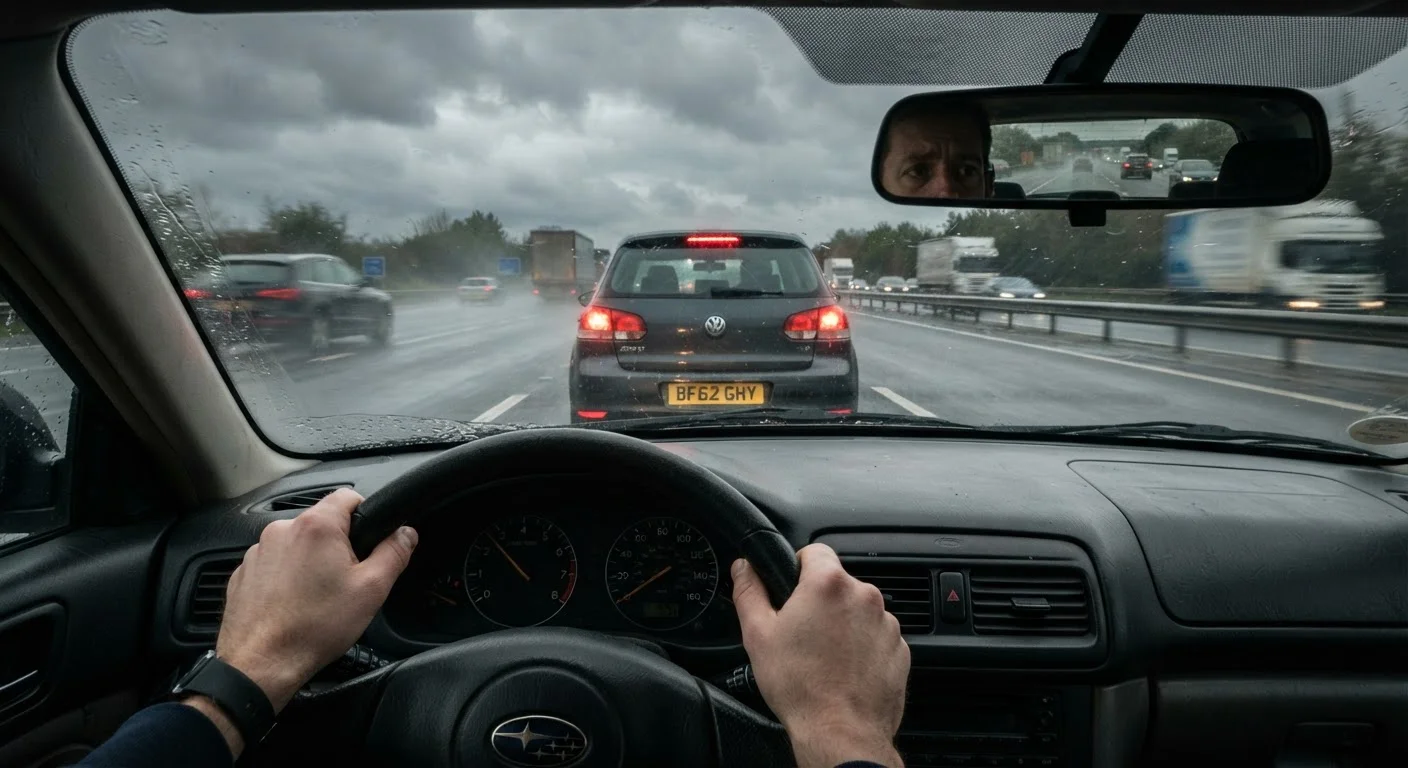
Distraction doesn't operate in isolation. Combining phone use with other factors - fatigue, poor weather, heavy traffic - compounds risk significantly. Consider the full picture of your driving environment, not just whether your hands are on the wheel. Related safety habits are covered in our guide on passenger safety habits drivers often overlook.
This article is for general informational purposes only. Traffic laws vary by state and change over time. Drivers should verify current regulations in their jurisdiction and consult authoritative sources such as their state DMV or department of transportation for the most current guidance.