Safety Isn't Just the Driver's Job
Most road safety conversations focus on the person behind the wheel - their speed, alertness, and reaction time. But the decisions made by everyone in the vehicle, and how the vehicle is loaded before departure, play a measurable role in crash outcomes. Many of these habits are overlooked simply because they feel minor or inconvenient until something goes wrong.
The following habits are easy to underestimate. Some involve passengers, some involve cargo, and some involve how the driver interacts with the people riding along. For a fuller picture of pre-departure preparation, the pre-trip safety checklist covers the exterior and mechanical checks that complement the interior habits below.
Seatbelt Positioning Is Frequently Wrong
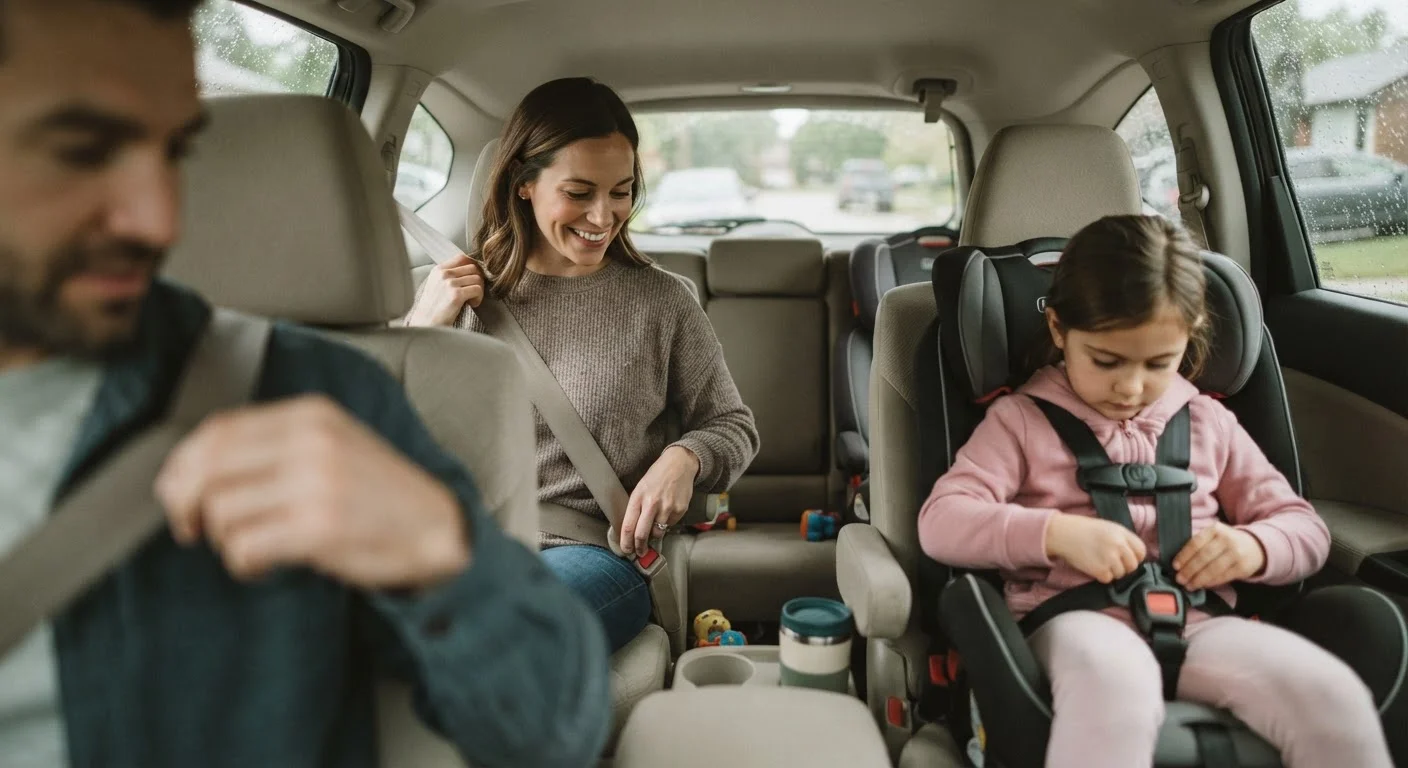
Wearing a seatbelt is non-negotiable, but how it's worn matters enormously. The lap belt should sit snugly across the hips and upper thighs - not the stomach. The shoulder strap should cross the chest and rest against the collarbone, not tucked under the arm or behind the back.
Tucking the shoulder strap away is a common shortcut, particularly on longer trips, but it eliminates much of the upper-body restraint the belt provides. In a frontal crash, the torso then bears uncontrolled force. If a seatbelt feels uncomfortable, the first fix is adjusting the vehicle's height-adjustable anchor point rather than repositioning the belt itself.
Tucking the shoulder strap eliminates upper-body restraint exactly when it's needed most.
Rear-Seat Passengers Underestimate Their Risk
Unbelted rear-seat passengers are a disproportionate source of serious injuries in multi-occupant crashes. Studies by the Insurance Institute for Highway Safety have found that rear occupants are significantly less likely to buckle up than front-seat riders - and yet the physics of a crash affects them just as severely.
An unbelted rear passenger can also become a secondary hazard, impacting front-seat occupants with substantial force during a collision. Drivers have a direct role in addressing this: the vehicle shouldn't move until everyone is buckled, regardless of where they're sitting.
An unbelted rear passenger can strike front-seat occupants with dangerous force in a crash.
Child Seat Installation Errors Are More Common Than Expected
Research from the National Highway Traffic Safety Administration (NHTSA) has consistently found that a large proportion of child safety seats on the road are installed incorrectly. Common errors include insufficient tightening of the harness, incorrect recline angle for rear-facing seats, and using LATCH anchors and a seatbelt simultaneously when the vehicle manual advises against it.
Child passenger safety technicians (CPSTs) are certified to inspect and correct installations at no charge at many fire stations, hospitals, and community events. Using this free resource is one of the highest-value safety checks available to parents and caregivers.
Most child seat errors can be corrected in minutes by a certified child passenger safety technician.
Loose Cargo Becomes a Projectile in a Crash
A 20-pound object sitting unsecured in the rear seat or cargo area doesn't stay in place during a sudden stop. At highway speeds, physics means that object can strike a passenger with force equivalent to hundreds of pounds. Groceries, gym bags, tools, and even water bottles become hazards when left loose in the cabin.
The best practice is to use the trunk for any significant load, place small items on the floor rather than on seats, and use cargo nets or dividers for SUVs and wagons with open cargo areas. This is especially important when the rear hatch area is adjacent to passengers without a physical barrier.
At highway speeds, even small unsecured objects can strike passengers with devastating force.
Sitting Too Close to an Airbag Creates Its Own Risk
Airbags deploy in milliseconds and are calibrated to protect occupants seated at a normal distance from the dashboard or steering wheel. A passenger who braces their feet against the dashboard or sits extremely close to the glove box reduces the system's ability to function as designed and may sustain serious injuries from the deployment itself.
The recommended minimum distance from the steering wheel for drivers is approximately 10 inches, measured from the center of the wheel to the breastbone. Passengers should keep feet on the floor and avoid positioning limbs in the deployment zone in front of them.
Airbags are designed for occupants at a specific distance - sitting too close changes that calculation.
Passengers Can Distract Drivers More Than They Realize
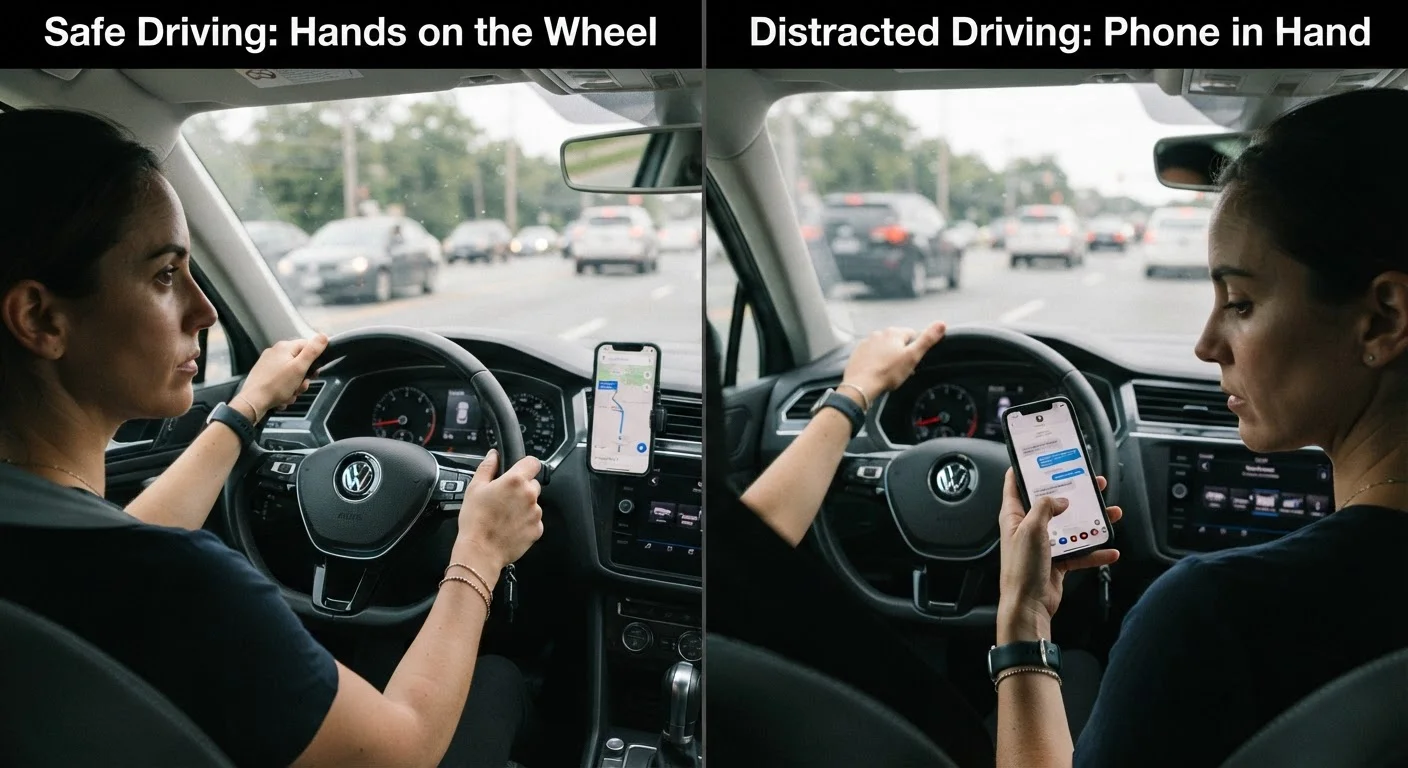
Conversation is a natural part of sharing a vehicle, but certain types of passenger behavior meaningfully increase crash risk. Passing objects to the driver, pointing out things outside the window, adjusting the radio or navigation, or engaging in emotionally charged conversations all divert cognitive or visual attention from the road.
Drivers should feel comfortable asking passengers to hold off on non-essential interactions during complex driving situations - merging, navigating intersections, or driving in poor weather. Front-seat passengers can also actively help by managing navigation or climate controls to reduce driver distraction. For more on how distractions compound during driving tasks, see our article on cognitive distraction while driving.
Passengers engaging drivers during complex maneuvers create a distraction risk comparable to device use.
Making Every Ride Safer for Everyone Inside
Passenger safety doesn't require special equipment or extensive knowledge - it requires consistent attention to a handful of habits before and during every trip. A driver who addresses seatbelt fit, child seat placement, cargo stowage, and cabin distraction is already ahead of the majority of everyday road users.
Check Your State's Child Seat Laws
Age, weight, and height requirements for child safety seats vary by state, and many states have updated their guidelines in recent years. Check your state's Department of Motor Vehicles or traffic safety authority for current rules, and use NHTSA's online resources to verify your child's appropriate seat type and installation method.
For drivers looking to build a comprehensive safety routine, understanding how your vehicle's surroundings affect risk is just as important as what happens inside the cabin. Our guide to blind spots and mirror use addresses the equally overlooked risks on the outside of the vehicle.