Why Darkness Multiplies Crash Risk
The numbers are striking: the National Highway Traffic Safety Administration (NHTSA) has consistently found that roughly half of all traffic fatalities occur in darkness, despite nighttime hours accounting for far less total driving. Per mile traveled, the fatal crash rate at night is approximately three times higher than during daylight.
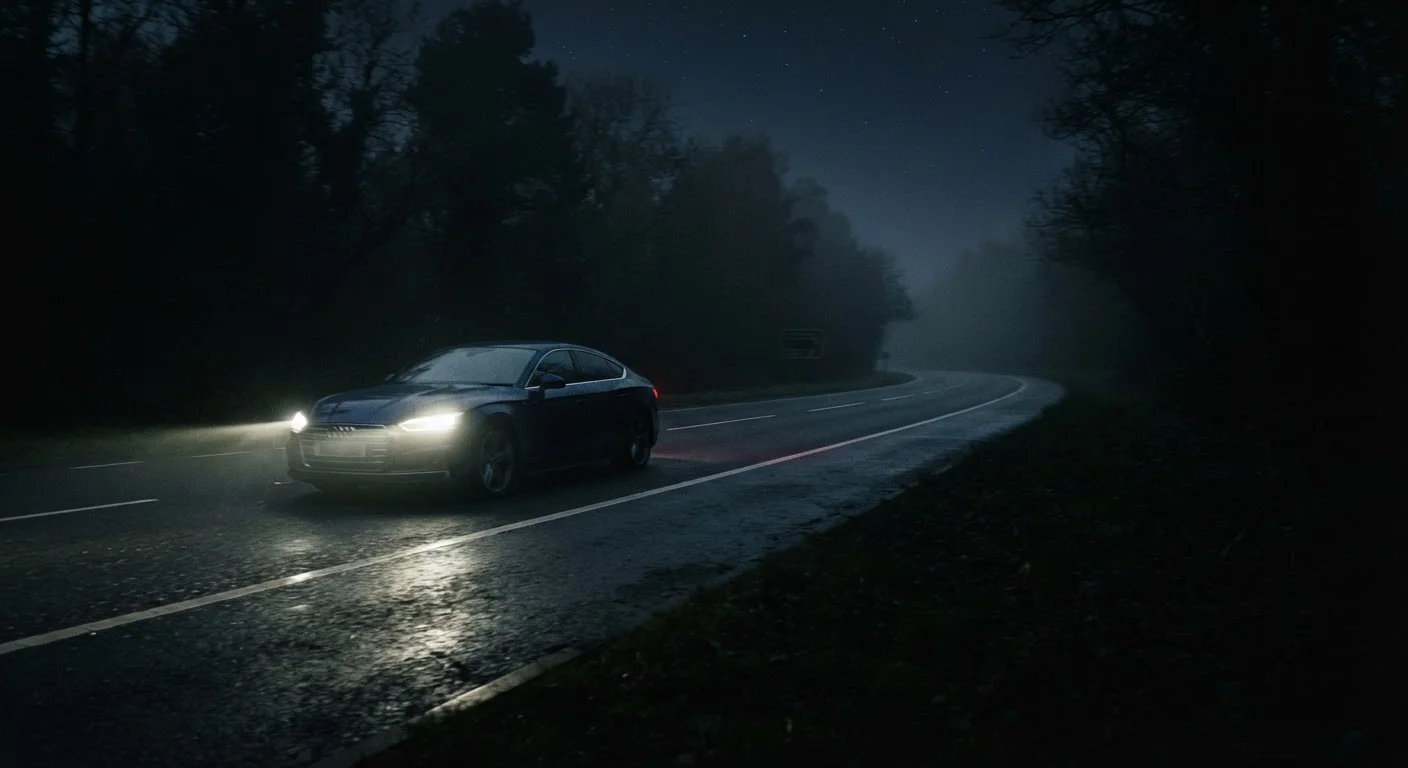
Three interlocking factors drive this disparity. First, human vision degrades substantially in low light. The eye shifts from sharp cone-based daylight vision to rod-based scotopic vision, which sacrifices acuity and color perception for sensitivity to dim light. Peripheral vision - critical for detecting movement at intersections - also narrows. Second, headlight range creates a structural problem: most drivers travel faster than their headlights allow them to safely stop. This is sometimes called overdriving your headlights, and it turns even a modest hazard like a stopped vehicle or a deer into a potentially unsurvivable collision. Third, nighttime hours overlap heavily with the body's natural sleep window, meaning fatigue compounds everything else.
~3×
Higher fatal crash rate at night vs. daytime
Per mile traveled, nighttime fatal crash rates are roughly three times those recorded during daylight, according to NHTSA data.
~50%
Share of traffic fatalities occurring in darkness
Despite representing a minority of total vehicle miles traveled, dark-condition crashes account for roughly half of all U.S. traffic fatalities.
160 ft
Typical low-beam headlight range
Standard low-beam headlights illuminate approximately 160 feet ahead - less than the stopping distance needed at highway speeds.
Glare, Adaptation, and the Hidden Cost of Oncoming Lights
Glare from oncoming headlights is more than an annoyance - it temporarily overwhelms the eye's light-adapted state and creates a recovery period during which a driver's effective vision is severely reduced. Modern adaptive headlights and LED high-intensity systems, while offering genuine benefits to their users, can intensify this effect for oncoming drivers.
When facing bright oncoming lights, shifting your gaze to the right edge of the lane (the white fog line, if present) rather than looking directly at the source helps preserve your lane position without staring into the glare. Your eyes need several seconds - sometimes up to ten - to partially readapt after a bright light passes, a window during which hazards are easily missed.
Keeping your windshield clean, inside and out, is underappreciated here. Interior film on the glass scatters incoming light dramatically, turning minor glare into a visual whiteout. Similarly, headlights that are yellowed, fogged, or misaimed reduce your own forward illumination while doing nothing to reduce the glare you receive from others.
Maintaining a safe following distance becomes even more important at night because your stopping distance may effectively exceed what you can see.
Fatigue: The Compounding Factor Most Drivers Underestimate
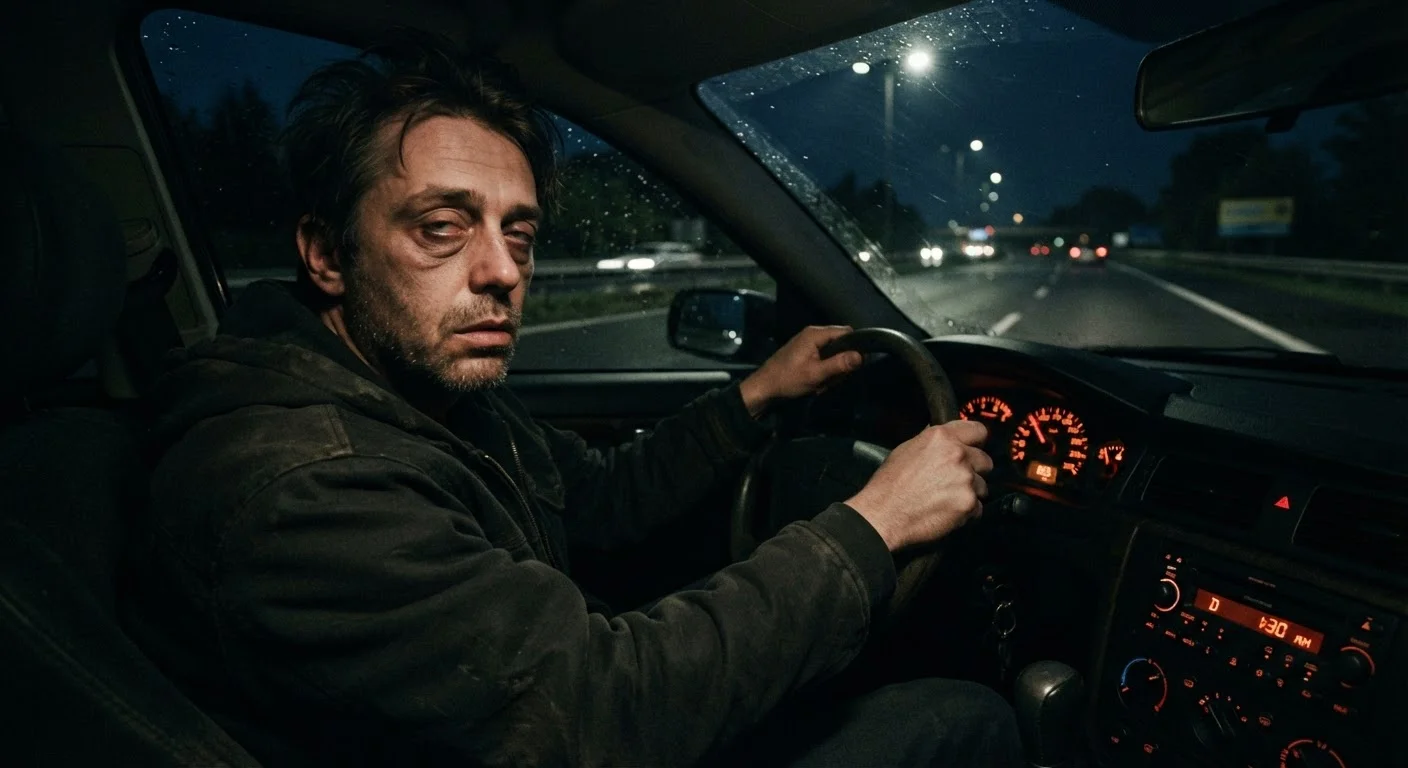
Fatigue and darkness are a dangerous pairing. The body's circadian rhythm - the internal clock governing sleep-wake cycles - naturally suppresses alertness between roughly midnight and 6 a.m. Driving during this window, even after a full night's sleep the previous day, carries elevated risk simply because of when it occurs on the body's biological schedule.
What makes drowsy driving particularly insidious is that impaired drivers are often poor judges of their own impairment. Research has shown that going without sleep for 18 hours produces impairment levels comparable to a 0.05% blood-alcohol concentration. At 24 hours, that comparison rises to approximately 0.10% - above the legal driving limit in every U.S. state. For a detailed look at the warning signs and crash data, see our article on the real risks of drowsy driving.
Recognize Drowsiness Before It Takes Over
Warning signs include frequent yawning, difficulty keeping your eyes open, drifting out of your lane, and missing exits or signs. If you experience these, the safest response is to pull off the road in a well-lit, safe location rather than push through. A 20-minute nap can restore alertness more reliably than continuing to drive.
Practical countermeasures include scheduling long drives to avoid the midnight-to-dawn window, taking breaks every two hours on extended trips, and having a second driver available when possible. Caffeine can provide temporary alertness but is not a substitute for sleep and is not reliable over extended periods.
Practical Adjustments That Actually Reduce Risk
Improving your nighttime safety does not require expensive equipment - most high-impact adjustments are behavioral and habitual.
- Slow down deliberately. Reducing speed extends the time between detecting a hazard and reaching it, making your headlight range more appropriate for your stopping distance.
- Use high beams on unlit roads. Switch to low beams within 500 feet of oncoming traffic or when following another vehicle closely enough that your high beams would reflect in their mirrors.
- Keep your eyes moving. Fixating on the road directly ahead reduces peripheral awareness. Regularly scanning the full width of your headlight cone, the road edges, and mirrors maintains situational awareness. Good mirror habits matter at night just as much as during the day - understanding blind spots and mirror positioning is a useful foundation.
- Maintain larger following gaps. Because both your visibility and reaction margins are reduced, following too closely is more consequential at night than during daylight. Add at least one additional second to your normal following distance after dark.
- Service your headlights. Restoration of oxidized headlight lenses and correct aiming of headlight beams can meaningfully improve forward illumination without any other changes to the vehicle.
This article is for general informational and safety education purposes. Always consult applicable traffic laws and qualified professionals for specific vehicle maintenance or safety concerns.