
Why a Monthly Reset Matters
Most budgeting advice focuses on setup - creating categories, assigning dollars, choosing a method. Far less attention goes to the follow-up review that turns a budget from a one-time exercise into a living financial habit. A monthly reset closes the loop: it tells you what actually happened, not just what you planned.
Research from behavioral economics consistently finds that awareness of past spending changes future behavior - but only when that awareness is specific and timely. Reviewing a month's spending while it's still fresh lets you connect decisions to outcomes in a way that vague annual reviews cannot. If you haven't yet built a baseline budget, our beginner's guide to budgeting is a good starting point before working through this checklist.
This checklist is designed to take 30 to 60 minutes, ideally on the last day of the month or the first day of the new one. You don't need specialized software - a spreadsheet, a notebook, or a free budgeting app all work equally well.
Income Review
Spending Audit
Savings and Debt Check
Pattern Recognition
Next Month Planning
What to Gather Before You Start
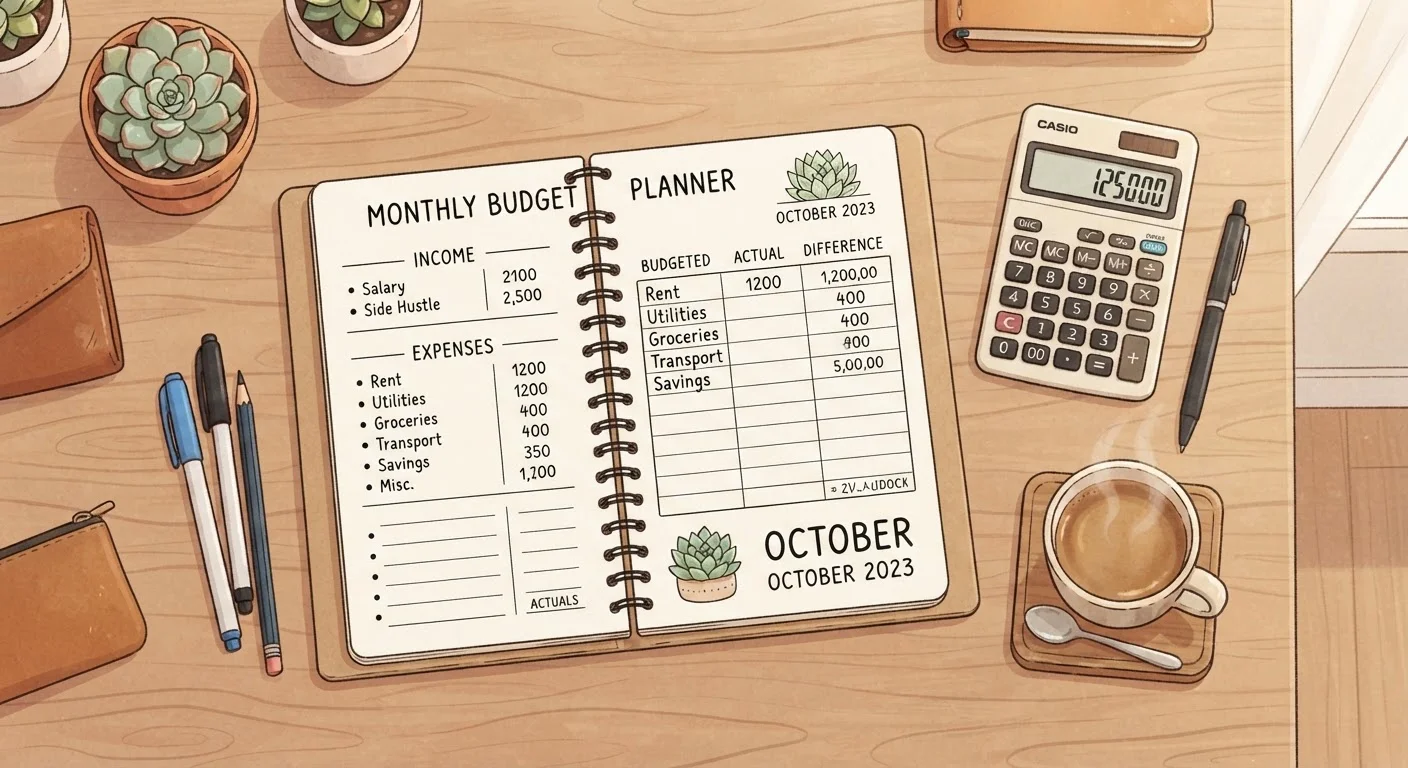
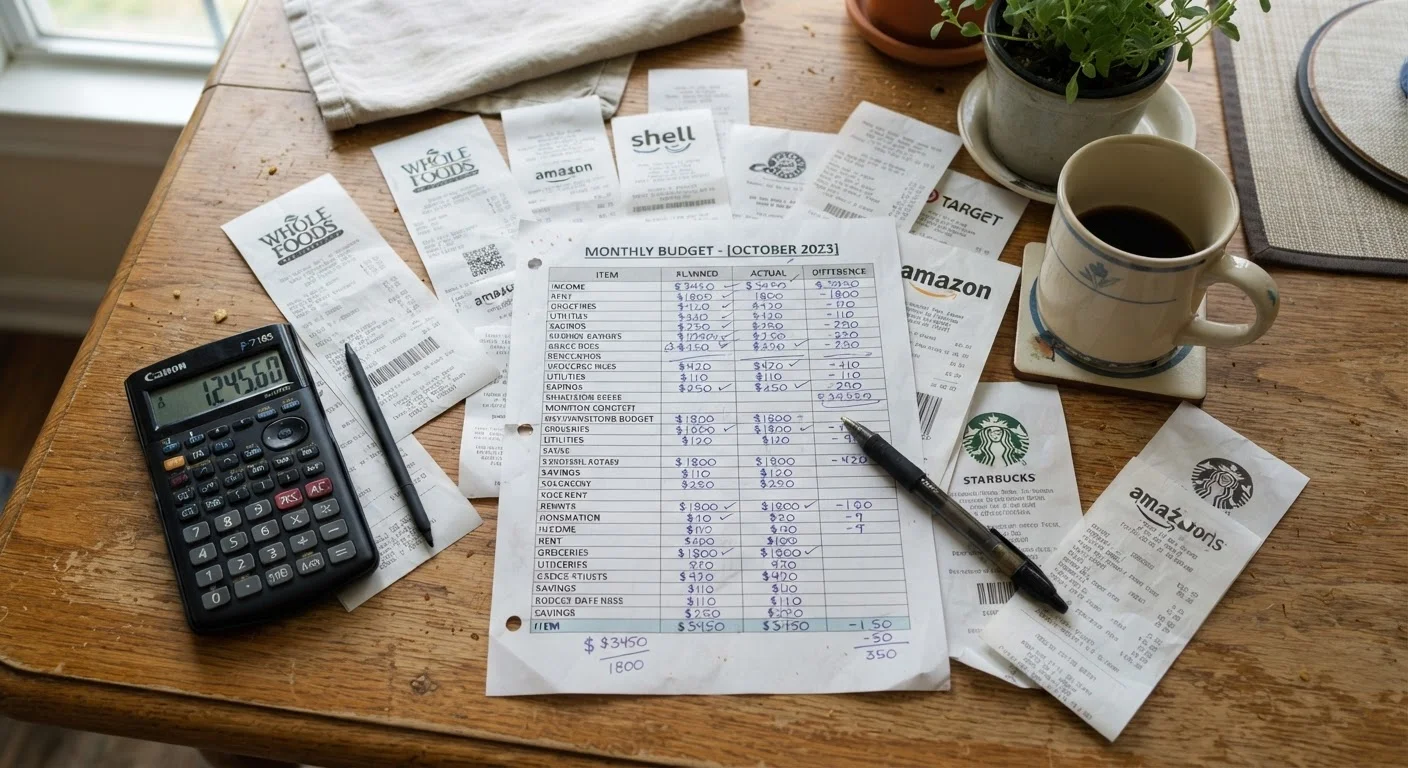
A productive reset depends on having the right information at hand. Before sitting down to review, collect your bank and credit card statements for the month, any receipts you've saved, and the budget plan or spending targets you set at the start of the month. If you track spending digitally, pull up your transaction history now.
Having all your tools accessible in one session prevents interruptions and keeps the review focused. See below for a quick summary of what you'll need.
Bank and credit card statements
Provides a complete, accurate record of all transactions for the month being reviewed.
Spreadsheet or budgeting notebook
Used to record category totals, compare planned versus actual spending, and draft next month's plan.
Previous month's budget plan
Serves as the baseline for comparing what you intended to spend versus what you actually spent.
Free budgeting app (e.g., your bank's built-in tracker)
Can automate transaction categorization, reducing the manual work of sorting expenses by category.
Debt account statements
Confirms current balances and minimum payments due so your debt tracking stays accurate.
If you haven't settled on a tracking method yet, our comparison of envelope budgeting versus digital spending trackers can help you choose an approach that fits how you actually manage money day-to-day.
After the Review: Setting Up Next Month
The second half of a budget reset is forward-looking. Once you've assessed last month, use what you learned to draft a realistic plan for the month ahead. This is where the review pays off - not as a judgment of past behavior, but as data informing better decisions.
Pay particular attention to categories that consistently run over. These may reflect genuine underestimation rather than overspending - a distinction worth making before you cut. Our article on spending categories most budgets underestimate outlines the line items that tend to catch people off guard, from car maintenance to irregular subscriptions.
If your income varies month to month, reset planning requires an extra step: estimating a conservative income floor before assigning dollars to categories. Our guide on budgeting on an irregular income walks through practical approaches for freelancers, gig workers, and anyone with inconsistent pay cycles.
Finally, consider the behavioral side of the process. Consistency matters more than perfection. If last month's review reveals you skipped tracking for two weeks, that's useful data too - it suggests your current system may have more friction than it needs. Building a budgeting habit that sticks often means simplifying the system, not tightening the rules.
Avoid Treating the Reset as Punishment
A monthly budget review is a neutral data-gathering exercise, not a performance review of your worth or discipline. Framing it as punishment for overspending creates the kind of shame-based relationship with money that research links to avoidance - the opposite of the habit you're building. If a month went sideways, note what happened, adjust the plan, and move on. Consistency over time matters far more than any single month's outcome.
This article is for general informational and educational purposes only and does not constitute personalized financial, tax, or legal advice. Consult a qualified financial professional for guidance specific to your situation.