Why Tomatoes Crack in the First Place
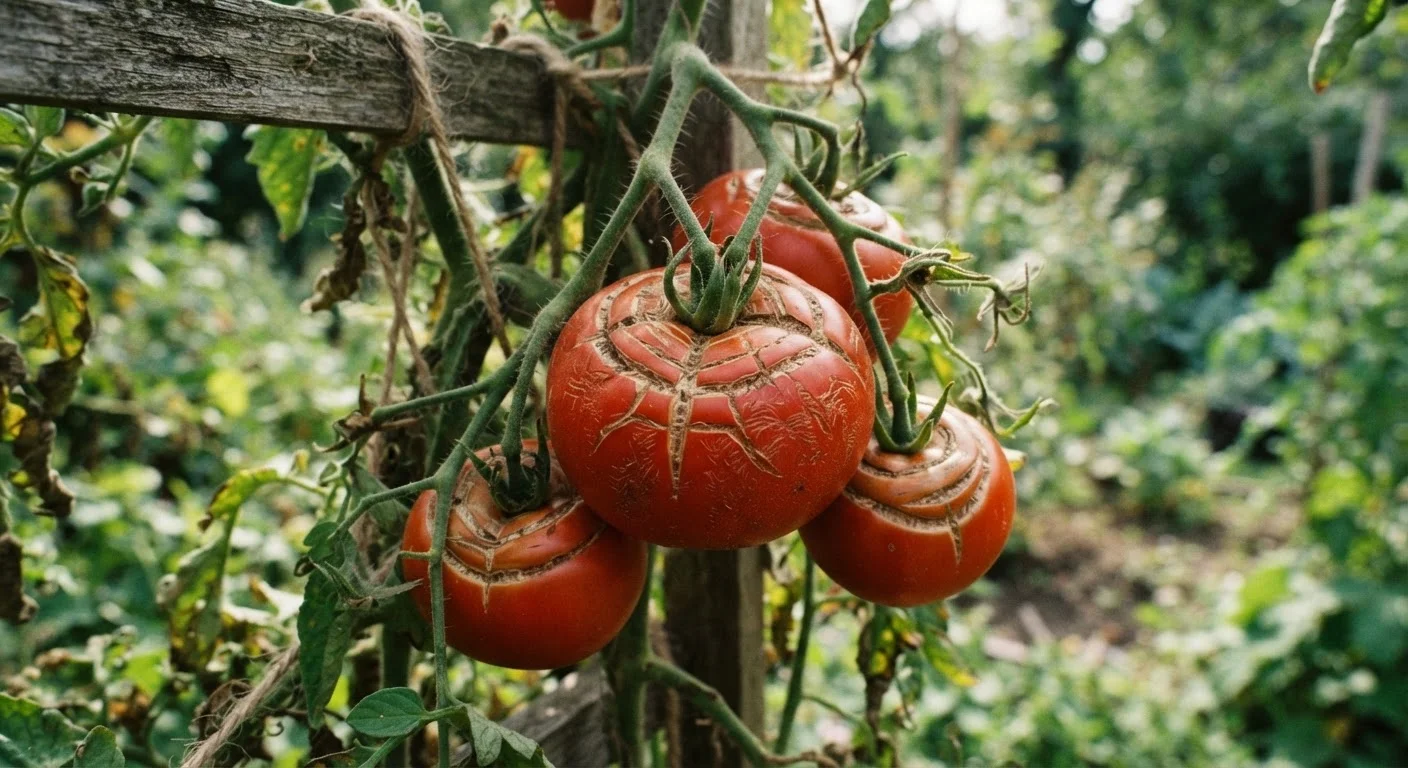
Tomato cracking feels discouraging, especially after months of careful tending. The good news is that cracks are rarely a sign of disease - they're almost always a response to sudden changes in soil moisture. When a tomato plant absorbs water rapidly after a dry spell, the inner flesh expands faster than the outer skin can stretch, and the skin splits.
There are two common crack patterns. Radial cracks run from the stem end down toward the blossom end, while concentric cracks form rings around the stem. Both stem from the same underlying cause. Heavy rainfall after a dry stretch is the classic trigger, but erratic hand-watering can produce the same result.
Understanding this mechanism is the foundation for every fix that follows. The goal isn't to keep plants dry - it's to keep moisture steady.
~30%
Tomato yield lost to cracking and splitting
University extension programs commonly cite cracking as one of the top causes of yield loss in home tomato gardens, often affecting 20-30% of fruit in poorly managed plots.
2-3 inches
Recommended mulch depth for moisture control
Cooperative extension guidelines from multiple U.S. land-grant universities consistently recommend a 2-3 inch mulch layer as the practical standard for vegetable garden moisture retention.
Common Mistakes That Lead to Cracking (and How to Avoid Them)
Most gardeners are making at least one of the following errors without realizing it. Correcting even a couple of them can dramatically reduce the number of cracked fruits you find at harvest.
Watering on an irregular or sporadic schedule, especially after letting the soil dry out completely.
Why it happens: Many gardeners water based on how the weather looks or how busy their week is, rather than monitoring actual soil moisture. A few dry days followed by a generous soaking is exactly the scenario that triggers cracking.
Skipping mulch entirely or applying too thin a layer around tomato plants.
Why it happens: Mulching can feel like an optional finishing step rather than a functional necessity. Many beginners skip it to save time or because they underestimate how quickly bare soil dries out between waterings.
Leaving fully ripe tomatoes on the vine during or after a period of heavy rain.
Why it happens: It's tempting to wait for picture-perfect color, but a mature tomato's skin is already stretched thin. Even a moderate rain event can push that skin past its limit.
Over-fertilizing with high-nitrogen products late in the growing season.
Why it happens: Gardeners sometimes apply fertilizer hoping to boost a late-season crop, not realizing that excess nitrogen pushes rapid vegetative growth - including fast fruit-flesh expansion - which stresses the skin.
Planting crack-prone varieties in areas with unpredictable rainfall without any additional planning.
Why it happens: Seed packets and plant tags rarely highlight cracking susceptibility. Gardeners choose varieties based on flavor or size and don't discover the vulnerability until harvest season.
Harvesting at the Right Time
One often-overlooked strategy is adjusting when you pick. Tomatoes don't need to be fully red on the vine. The breaker stage - when the fruit has turned roughly 30-50% color - is the point at which a tomato will ripen successfully off the vine without any loss of flavor. At this stage, the skin is less likely to crack under pressure from continued water uptake.
Once picked, tomatoes ripen well at room temperature, away from direct sunlight. Refrigerating unripe tomatoes halts flavor development, so keep them on the counter until fully ripe. This simple timing shift removes your best fruits from the risk window before heavy rains or an irregular watering day can split them.
If a particular variety consistently cracks despite good watering habits, consider trialing a cultivar described by seed suppliers as having crack-resistant characteristics. Many modern and heirloom hybrids have been developed specifically for this trait, giving the skin more elasticity to accommodate fluctuating moisture.