What Each Product Is Actually Made Of
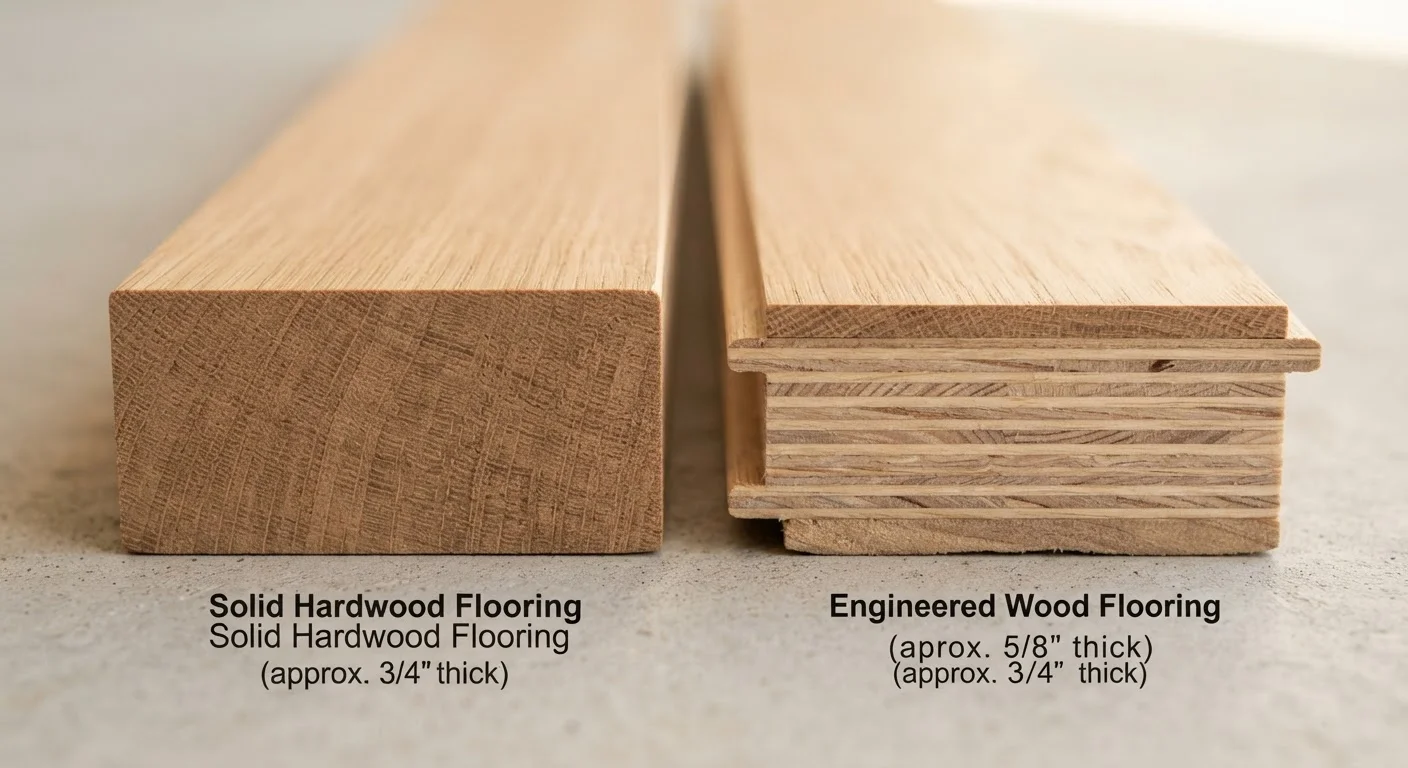
The most important difference between these two flooring types is structural, not cosmetic. Solid hardwood planks are milled from a single piece of timber - typically oak, maple, hickory, or another hardwood species - from top to bottom. What you see on the surface is the same material all the way through, usually three-quarters of an inch thick.
Engineered wood, by contrast, is a manufactured panel. It bonds together multiple thin layers of wood - called plies - under heat and pressure, much like plywood. The top layer is a genuine hardwood veneer, typically ranging from about 1/16 inch to 1/6 inch thick depending on the product grade. The core layers alternate the grain direction of each ply, which is precisely what gives engineered wood its dimensional stability.
This is worth emphasizing: engineered wood contains real wood. It is not laminate flooring, which uses a photographic image of wood printed on a fiberboard core. Both solid and engineered products feel, smell, and look like authentic wood because they are.
| Criterion | Solid Hardwood | Engineered Wood |
|---|---|---|
| Core construction | Single solid timber plank | Multi-ply wood layers bonded together |
| Surface material | Same species throughout | Genuine hardwood veneer on top |
| Typical thickness | ¾ inch standard | ⅜ to ¾ inch, varies by product |
| Moisture resistance | Low - prone to expansion and warping | Higher - stable in humid conditions |
| Below-grade installation | Not recommended | Generally suitable |
| Radiant heat compatibility | Limited - check with manufacturer | Generally compatible |
| Refinishing potential | Multiple times over decades | Once or twice for most products |
| DIY installation ease | Moderate - nail-down required | Higher - floating option available |
How Each Flooring Type Performs in Real-World Conditions
Wood is a hygroscopic material - it absorbs and releases moisture from the surrounding air. That characteristic determines where each product succeeds and where it struggles.
Solid hardwood expands across the grain when humidity rises and contracts when the air dries out. In a stable, climate-controlled living room or bedroom, this movement is manageable with proper acclimation and installation gaps. But in a basement, bathroom, or kitchen where humidity swings regularly, solid hardwood risks warping, cupping, or gapping over time. It also cannot be glued directly to a concrete subfloor, which limits installation options.
Engineered wood handles moisture-driven movement far better. Because the alternating core plies pull against each other, expansion and contraction are greatly reduced. This allows it to be installed below grade (basements), over concrete slabs, and in rooms where solid hardwood would be risky. It's also generally compatible with radiant floor heating systems, which subject flooring to repeated temperature and humidity cycles.
On refinishing, solid hardwood holds a clear edge. Its thick planks typically allow three to five or more sandings across a lifetime. Most engineered products - particularly those with thinner veneers - can be lightly sanded and refinished once or twice before the veneer layer becomes too thin to work with safely.
¾"
Standard solid hardwood plank thickness
This consistent thickness is what gives solid hardwood its multi-refinish advantage over thinner engineered veneers.
3-5+
Lifetime refinishes for solid hardwood
Industry guidance generally suggests solid hardwood can be sanded and refinished multiple times, extending its usable life significantly.
1-2
Refinishes typical for engineered wood
Thinner veneer layers on many engineered products limit how many times the surface can be safely sanded without exposing the core.
Installation, Maintenance, and Long-Term Considerations
Solid hardwood is installed by nail- or staple-down methods over a wood subfloor. It requires a period of acclimation - typically several days in the room where it will be installed - before being fastened in place. Flooring grade and subfloor condition matter significantly; installation over an uneven or damp subfloor can compromise the finished result. For any subfloor concerns or large-scale installations, consulting a licensed flooring professional is worthwhile.
Engineered wood offers more flexibility. It can be nailed, glued, or floated (clicked together without adhesive) depending on the product and subfloor type. The floating method is particularly accessible for confident DIYers in appropriate spaces.
Both types require similar day-to-day care: sweep or vacuum regularly, wipe up spills promptly, and avoid excessive water during cleaning. Neither should be mopped with a soaking-wet mop.
When weighing cost, engineered wood often carries a lower upfront price point per square foot, though material prices vary widely by species, veneer thickness, and finish quality. Factor in the long game: a solid hardwood floor properly maintained in the right environment can last the life of a house. Engineered wood installed in the right conditions can perform for several decades as well, making both legitimate long-term investments.
This article is for general informational purposes only. Consult a licensed flooring professional before making installation decisions, particularly in rooms with existing moisture concerns or unusual subfloor conditions.