
Why the Order of Operations Matters
Many people assume that investing and saving are simply two separate things to tackle whenever possible. In practice, they are closely connected - and starting in the wrong order can undermine both goals. Financial educators broadly agree that having accessible, liquid savings before you begin investing is not just a preference; it's a structural necessity.
The core issue is what happens when life disrupts your plan. If you're contributing to an investment account but have no savings buffer and your car needs a major repair, you face a difficult choice: carry high-interest debt, or pull money out of investments. Neither outcome is neutral. Understanding why emergency savings come first is one of the most important concepts in investing for the first time.
What an Emergency Fund Actually Does for Your Portfolio
An emergency fund - typically defined as three to six months of essential living expenses held in an accessible account - serves a specific protective function for your investments. For a deeper look at how these savings work, see our guide on emergency fund basics.
When markets decline (which they do, regularly), the worst time to withdraw from an investment account is during a downturn. Investors who are forced to sell during a dip lock in losses that would otherwise recover over time. A fully funded emergency reserve means that a job loss or medical bill doesn't automatically translate into a forced sale of investments.
Establish a dedicated emergency savings account before opening an investment account.
Mixing emergency savings with investment accounts blurs their purpose and exposes your financial cushion to market risk. Keeping them separate ensures your safety net is always accessible and stable in value.
Target three to six months of essential expenses as your baseline fund amount.
This range is a widely cited benchmark from consumer finance educators and reflects average job-search timelines and common emergency costs. Households with variable income or dependents may benefit from holding closer to six months.
Keep emergency savings in a liquid, low-risk account - not in the market.
The defining feature of an emergency fund is that it must be available quickly and reliably, regardless of market conditions. Placing this money in stocks or funds defeats its purpose.
Once your emergency fund is established, begin investing simultaneously rather than waiting for a 'perfect' moment.
Waiting until everything feels settled is a common delay tactic that costs years of compounding. The goal is to reach a stable baseline first, then run both goals in parallel.
Replenish your emergency fund promptly after using it.
An emergency fund that gets depleted and stays depleted loses its protective function. Treating replenishment as a financial priority maintains the buffer that protects your investments.
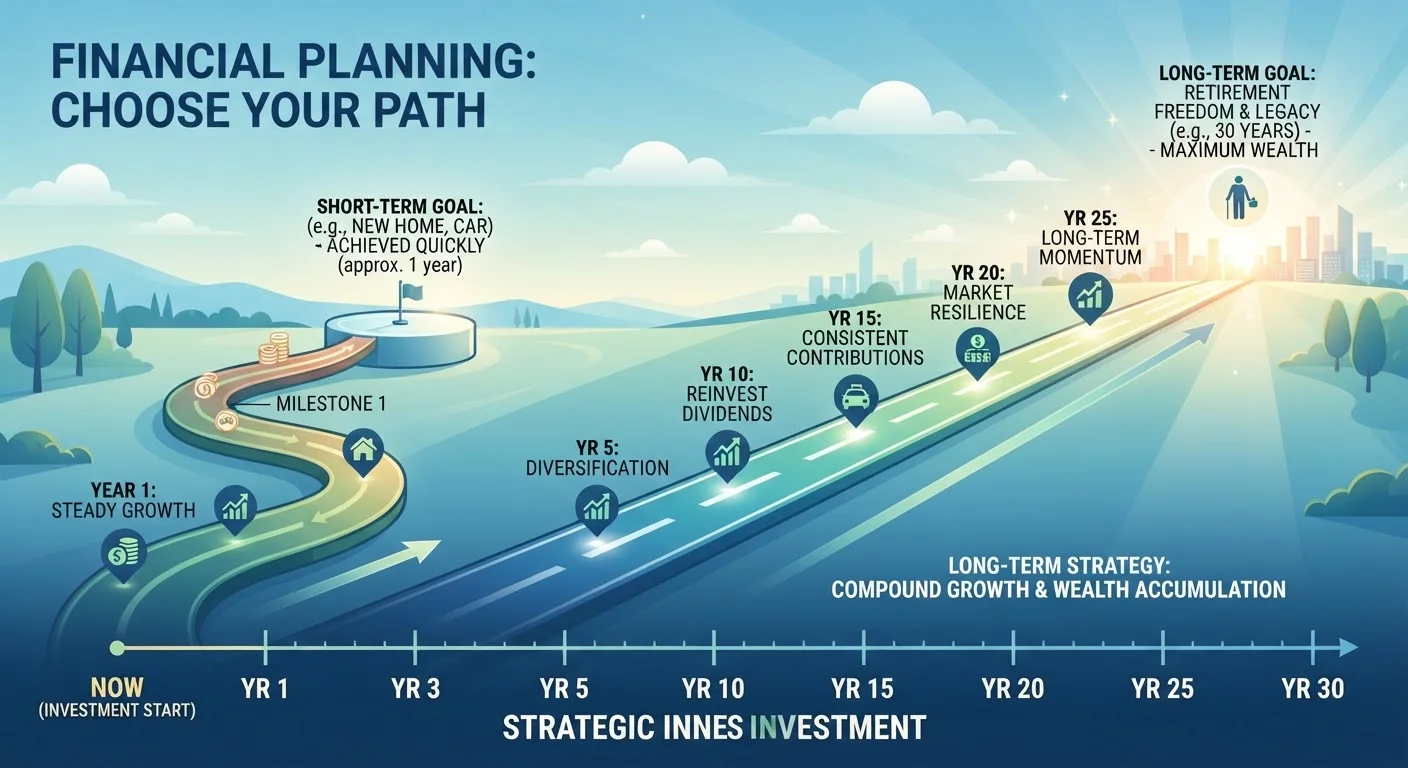
This also connects directly to the concept of time horizon. Investments are generally designed to grow over years or decades, not to be available next month. If you need money in the near term, it shouldn't be in the market at all. Your time horizon changes which strategies make sense - and a missing emergency fund effectively shortens your real investment horizon whether you intend it to or not.
Best Practices for Building Both Goals Together
Once you understand the connection, the practical question becomes: how do you move forward? Here are the approaches most commonly recommended by financial educators and consumer protection agencies such as the Consumer Financial Protection Bureau (CFPB).
It's also worth being aware of the most common missteps beginners make at this stage. Many new investors underestimate how much volatility they'll actually feel comfortable with - a topic covered in detail in our article on things first-time investors get wrong about risk. Having an emergency fund in place before investing can meaningfully reduce emotional decision-making during market swings, because you're less financially exposed to short-term turbulence.
This article is for general informational and educational purposes only and does not constitute personalized financial, investment, tax, or legal advice. Consult a qualified financial professional before making decisions based on your individual circumstances.