
What Landlords Look for in a Rental Application
Before you can get the keys, you have to get approved. Most landlords evaluate applicants across four main areas: credit history, income, rental history, and references. Understanding what's being assessed lets you prepare a stronger application and address weaknesses proactively.
Security deposit
A sum of money paid upfront to the landlord, held as financial protection against unpaid rent or damage you cause to the unit. It is generally returned when you move out, minus any lawful deductions.
Credit check
A landlord's review of your credit report to assess how reliably you've repaid debts in the past. It typically includes your credit score and a history of loans, credit cards, and any collections or late payments.
Co-signer
A person - often a parent or close relative - who agrees to be legally responsible for rent payments if the primary tenant fails to pay. Landlords often require a co-signer when an applicant has limited credit history.
Lease term
The length of time covered by your rental agreement, most commonly 12 months. During this period, both you and the landlord are bound by the agreed terms unless the contract specifies otherwise.
Habitability
A legal standard requiring rental units to be safe and livable, including functioning heat, plumbing, and structural integrity. Landlords are generally required to maintain habitability throughout your tenancy.
Normal wear and tear
The gradual, expected deterioration of a property through everyday use - such as minor scuffs or carpet fading. Landlords cannot charge tenants for normal wear and tear when deducting from a security deposit.
Income requirements commonly follow a guideline that monthly rent should not exceed 30% of your gross monthly income - meaning a $1,500/month apartment may require documented income of $4,500 or more. Gather recent pay stubs, an offer letter, or bank statements before you start applying. If you're self-employed or have irregular income, additional documentation such as tax returns is often required.
No rental history yet? Offer a personal reference from an employer, professor, or community leader. Some landlords will also accept a co-signer - typically a parent or trusted adult - who agrees to be financially responsible if you default.
Understanding Your Lease Before You Sign
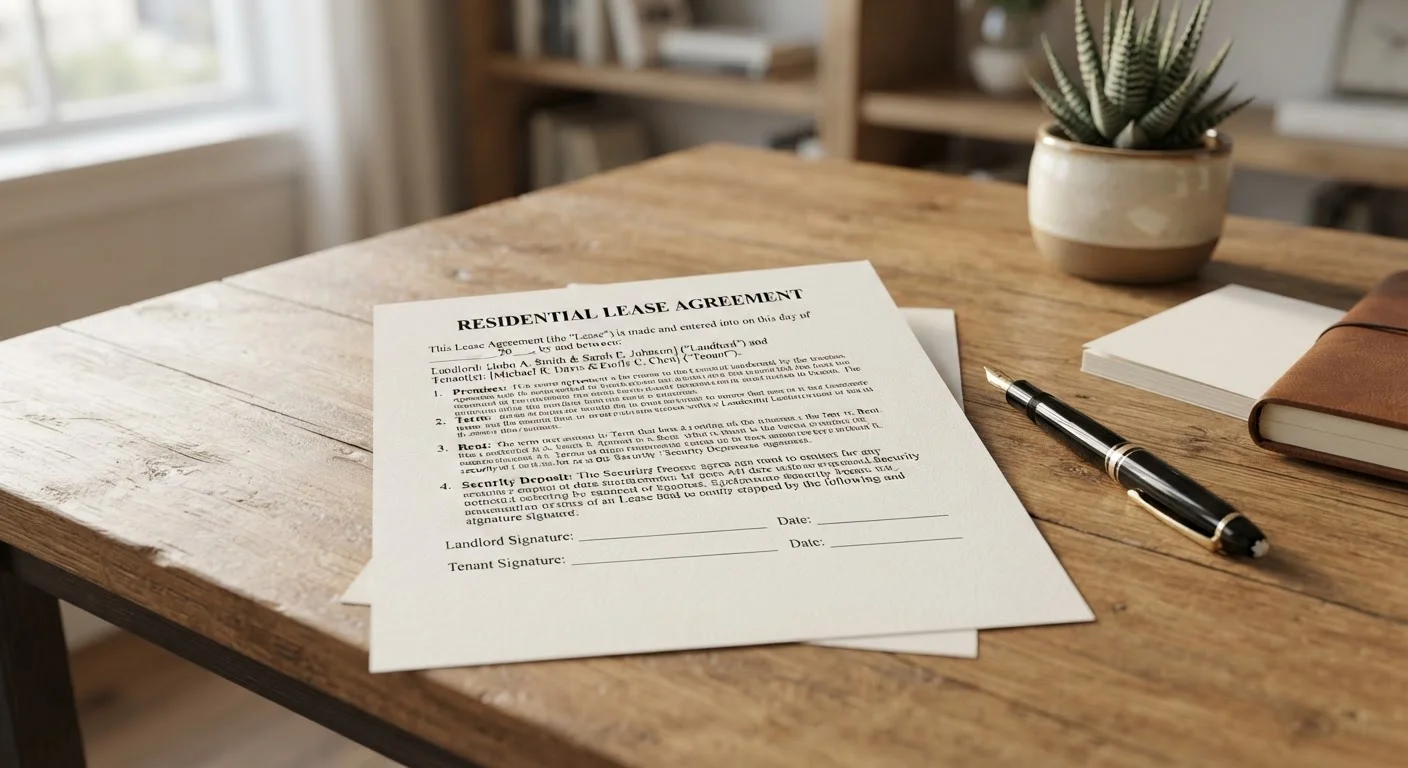
The lease is a binding legal contract, and every clause in it matters. First-time renters often skim or skip it entirely - a mistake that frequently leads to unexpected charges or restricted rights. The full breakdown of what a lease actually says is worth reading alongside any agreement you're evaluating.
Key sections to scrutinize include:
- Lease term and renewal terms: Does the lease auto-renew? How much notice must you give before moving out?
- Rent escalation clauses: Can your rent increase during the lease term, and by how much?
- Early termination penalties: What's the cost if you need to break the lease before the end date?
- Guest and subletting policies: Restrictions here can affect everything from having a roommate to short-term hosting.
- Maintenance responsibilities: Which repairs are the landlord's obligation, and which fall to you?
If anything is unclear, ask for clarification in writing before you sign. Verbal promises from a landlord are very difficult to enforce - everything that matters must be in the document itself.
Budgeting Beyond Monthly Rent
Rent is only one line item. First-time renters routinely underestimate total move-in costs and ongoing monthly expenses. A realistic budget accounts for all of the following:
- Security deposit: Typically equal to one month's rent, held against damages or unpaid rent.
- First and last month's rent: Some landlords require both upfront, which can mean two months of rent before you've spent a single night there.
- Application fees: Usually $25-$75 per application, often non-refundable.
- Utilities not included in rent: Electricity, gas, internet, and renter's insurance are common add-ons. Always confirm which utilities the lease covers.
- Moving costs: Truck rental, movers, supplies, and storage if there's a gap between leases.
Renter's insurance deserves special mention. While not always legally required, it is frequently mandated by landlords and is broadly recommended. It protects your personal belongings and provides liability coverage - typically for a modest monthly premium.
Planning to own a vehicle too? The full picture of car ownership costs is another budget dimension worth mapping out early.
The Move-In Inspection: Your Financial Safety Net
One of the most overlooked steps in renting is conducting - and documenting - a thorough move-in inspection. This is your primary protection when it comes time to recover your security deposit.
On or before your first day in the unit, walk through every room with the landlord (or property manager) and note any existing damage: scuffs on walls, stained carpet, broken fixtures, malfunctioning appliances. Photograph and video everything with timestamps. Many states have formal move-in checklist requirements; even where they don't, creating your own written record - signed by both parties - is essential.
Submit your completed checklist to the landlord in writing and keep a copy. This documentation establishes a clear baseline. When you move out, landlords can only charge you for damage that occurred during your tenancy, not pre-existing conditions. Without documentation, that distinction is nearly impossible to prove.
Knowing Your Rights as a Tenant
Renters have meaningful legal protections at both the federal and state level, though many first-time tenants aren't aware of them. The Fair Housing Act prohibits landlords from discriminating based on race, color, national origin, religion, sex, familial status, or disability. Many states and cities extend these protections further.
Beyond fair housing, tenants generally have the right to a habitable unit - one with functioning heat, plumbing, and structural safety. Landlords typically must provide advance notice (commonly 24-48 hours) before entering your unit except in emergencies. Our overview of tenant rights every U.S. renter should understand covers these protections in detail.
Misunderstandings about tenant rights are common. The rental myths that cost tenants money and peace of mind walks through the most prevalent misconceptions - from verbal agreements to landlord entry rules - so you can spot them before they affect you.
If you're weighing whether to rent or eventually buy, see homebuying myths that trip up first-timers for a grounded look at how renting and ownership compare beyond the surface-level assumptions.
This article is for informational purposes only and does not constitute legal or financial advice. Tenant rights vary by state and locality - consult a qualified attorney or tenant advocacy organization for guidance specific to your situation.