
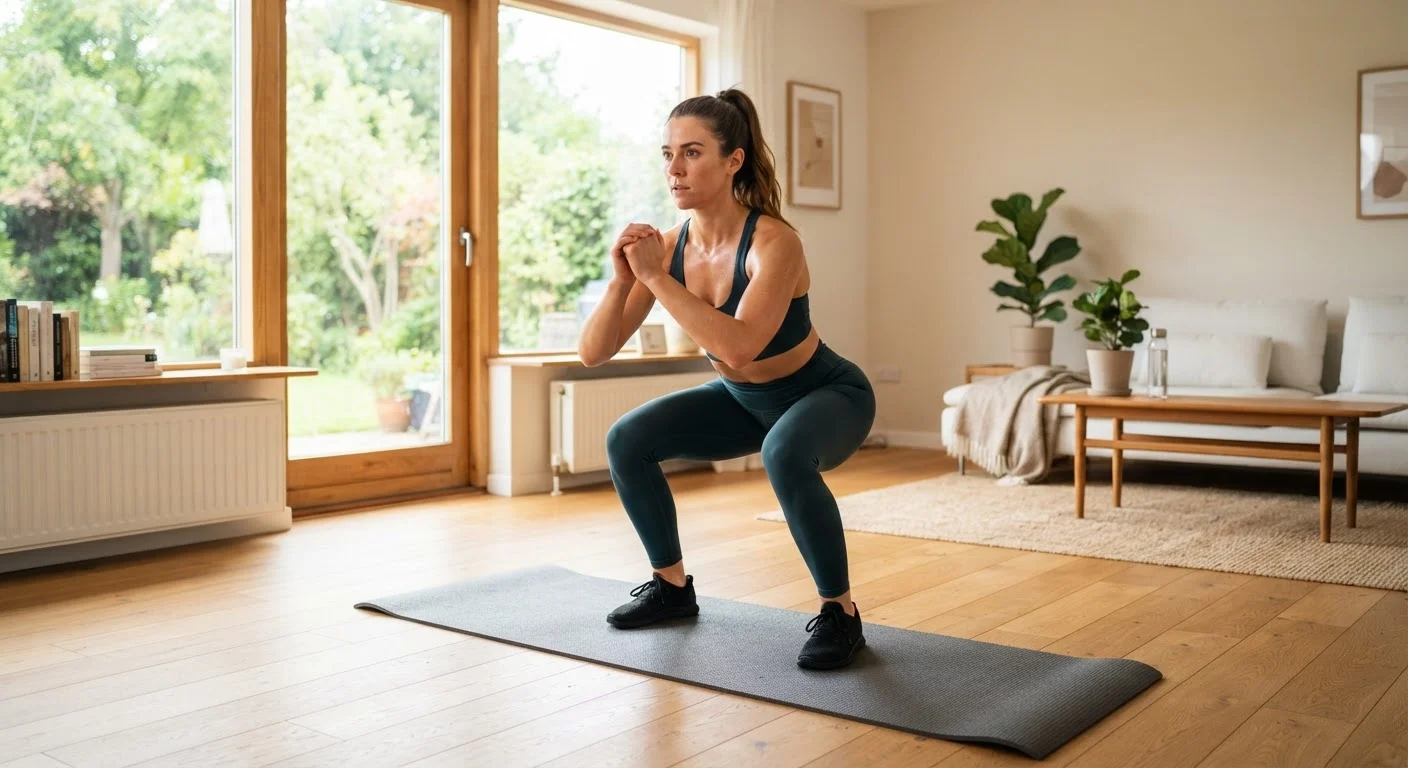
Why Bodyweight Training Works
The idea that you need a gym membership or specialized equipment to get fit is one of the most persistent myths in fitness. In reality, bodyweight exercises - movements that use your own weight as resistance - can build strength, improve cardiovascular health, and increase flexibility when performed consistently and with good form.
Foundational movements like squats, push-ups, lunges, and planks engage multiple muscle groups simultaneously, making them efficient and adaptable for all fitness levels. Whether you're completely new to exercise or returning after time away, a structured bodyweight routine gives you a sustainable entry point. If you've been sedentary for a while, the guide to starting exercise after a long break offers useful context for easing back in without overdoing it.
This article provides general fitness education and is not a substitute for personalized medical advice. Consult a qualified healthcare professional before beginning any new exercise program, especially if you have an existing health condition.
What you will need
How to Structure Each Session
A well-structured session has three distinct phases: a warm-up, a main workout block, and a cool-down. Skipping any of these phases increases injury risk and slows adaptation.
Warm-Up (5-10 Minutes)
Begin with light, dynamic movements - arm circles, leg swings, marching in place, and gentle hip rotations. The goal is to gradually raise your heart rate and loosen your joints, not to tire yourself out. A proper warm-up primes your nervous system for the work ahead.
Main Workout Block (15-25 Minutes)
Focus on compound movements that engage your entire body. A beginner-friendly structure is a circuit format: perform each exercise for a set number of repetitions or a timed interval, then move to the next with minimal rest. Sample exercises include:
- Squats - builds lower body strength and mobility
- Push-ups (modify on knees if needed) - targets chest, shoulders, and triceps
- Reverse lunges - develops balance and single-leg stability
- Glute bridges - activates the posterior chain, including the hips and lower back
- Plank hold - trains core stability without spinal compression
Complete two to three rounds of the circuit. Rest for 60-90 seconds between rounds.
Form Before Speed or Volume
When learning a new movement, prioritize controlled, full-range-of-motion repetitions over how many you can complete. Poor form under fatigue is one of the leading causes of home workout injuries. If your form breaks down, stop the set and rest - quality repetitions deliver better results than sloppy high counts.
Cool-Down (5 Minutes)
End every session with slow, held stretches targeting the muscles you worked. Focus on your hips, hamstrings, chest, and shoulders. Slow diaphragmatic breathing during this phase also supports recovery and reduces post-exercise cortisol.
Making Progress Over Time
One of the most common reasons home routines stall is failing to apply progressive overload - the principle of gradually increasing the challenge placed on your body. Without it, your muscles adapt and stop growing stronger. Our article on why workout routines stall covers this concept in greater depth.
You don't need heavier weights to progress. With bodyweight training, progression can look like:
- Adding one more repetition per exercise each week
- Reducing rest time between rounds
- Advancing to a harder movement variation (e.g., standard push-up instead of a modified one)
- Increasing total session duration gradually
Aim to exercise three to four days per week, allowing at least one full rest day between sessions. Recovery is when your muscles repair and strengthen - training every day without adequate rest is counterproductive for most people. A similarly structured approach to daily wellbeing can be found in our guide to building a daily mental wellness routine, which complements the physical work you're doing here.
Before diving in, it's worth completing the self-assessment checklist for new exercise programs to identify any considerations specific to your situation.