Why Your Tool Selection Matters More Than Its Size
Many homeowners accumulate tools over years without a strategy - ending up with duplicate gadgets they rarely use and missing the basics they need constantly. A more deliberate approach pays off quickly. If you're just getting started, see our foundation guide for new homeowners for a broader look at where to begin.
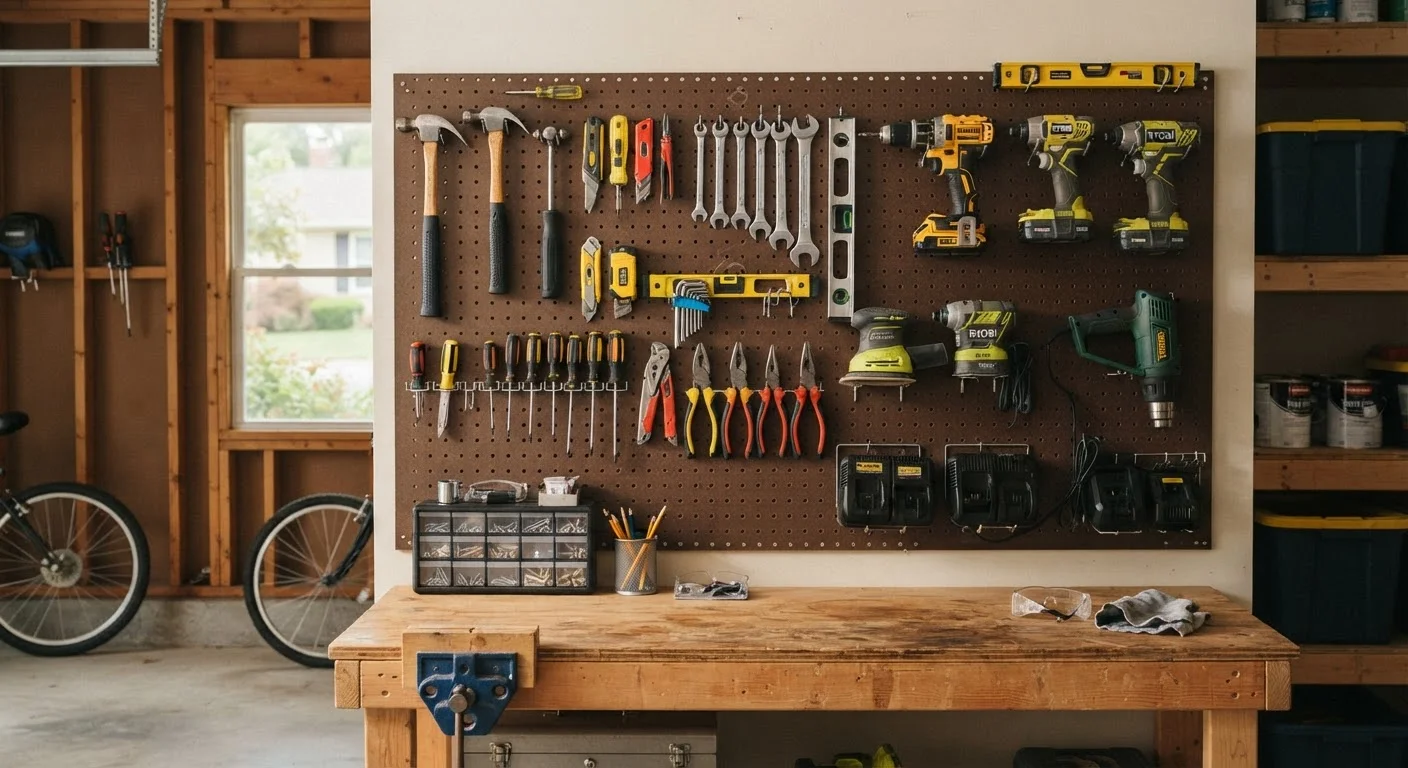
The tools listed below were chosen because they handle the widest range of everyday repair and improvement tasks - hanging things, patching surfaces, fixing squeaks, assembling furniture, and maintaining your home through the seasons. Each one rewards the time spent learning to use it properly.
Start With What You'll Actually Use
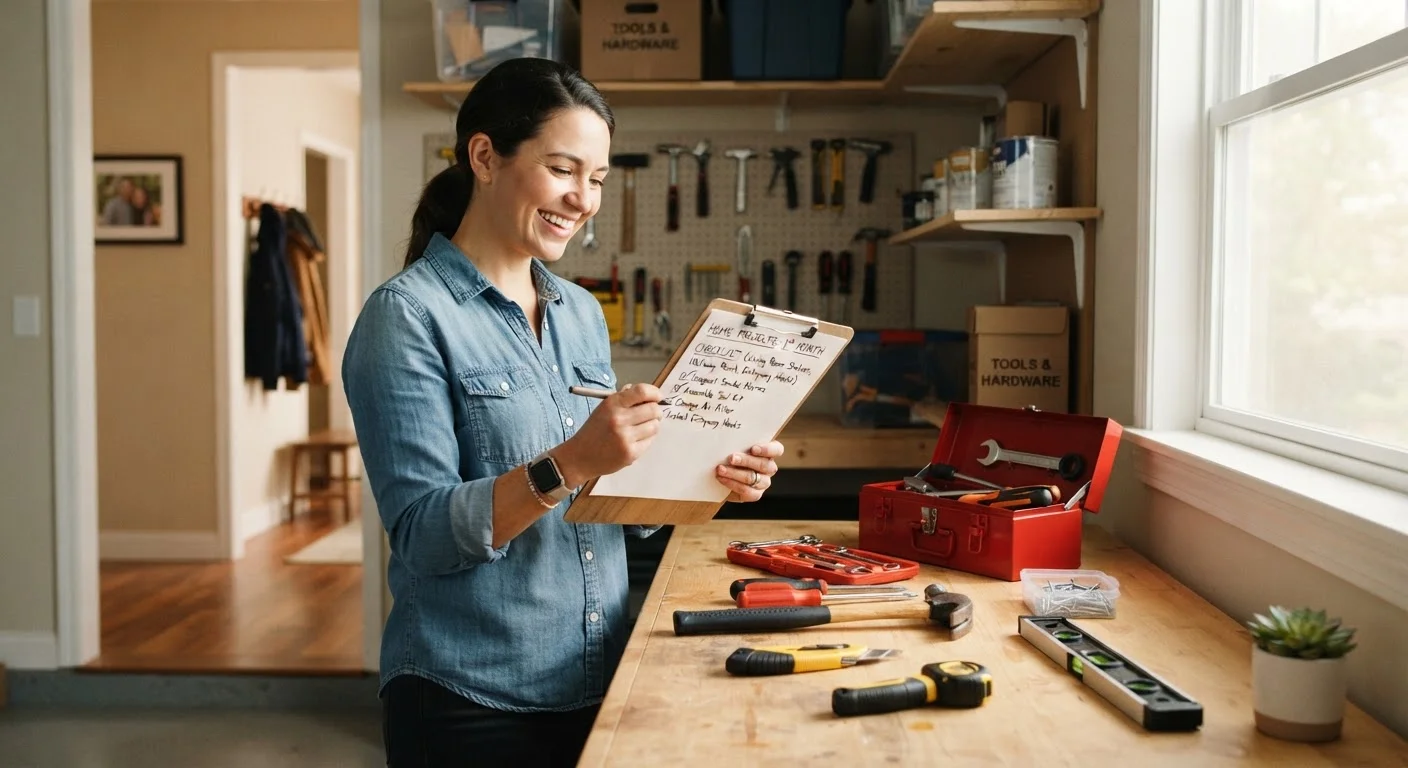
Resist the urge to buy a complete set of tools at once. Instead, purchase each tool when you have a specific project that calls for it. That way you practice with it immediately, remember what it does, and understand its real-world limitations. Tools bought speculatively often sit unused and unfamiliar.
Tools Every Weekend Homeowner Should Know
A Quality Tape Measure
Nearly every home project begins with a measurement. A 25-foot locking tape measure is the standard for most residential work - long enough to measure a room, compact enough for detail work. Learn to read both the inch-fraction markings and how to hook the end properly (the small amount of play in the metal hook is intentional; it compensates for inside versus outside measurements). Accurate measuring prevents wasted materials and misaligned results.
Almost every home project begins with a measurement - accuracy here prevents costly mistakes downstream.
A Cordless Drill and Driver
A mid-range cordless drill with a driver setting handles an enormous range of tasks: driving screws, boring holes for anchors, assembling flat-pack furniture, and tightening hardware. Learn to use the clutch (the numbered collar near the chuck) - it limits torque so you don't strip screws or overdrive fasteners. Start on scrap material to get a feel for different settings before working on finished surfaces.
A cordless drill's clutch setting is the detail most beginners overlook - and the one that protects your work.
A Claw Hammer
The claw hammer is one of the most fundamental tools in any kit, and learning to swing one well - using your elbow and shoulder rather than just your wrist - reduces fatigue and improves accuracy. A 16-ounce curved-claw hammer suits most household tasks, from driving finish nails to pulling old fasteners when patching trim. Let the weight of the hammer do the work; don't grip so tightly that your hand tires quickly.
Let the hammer's weight do the work - grip too hard and you'll tire fast and miss more often.
A Set of Screwdrivers
Phillips and flathead screwdrivers in two or three sizes cover most fasteners in a home. Using the correctly sized driver - one that fills the screw head snugly - prevents the cam-out (slipping) that strips heads and makes removal a nightmare later. Keep a short stubby version for tight spaces like cabinet hinges and electrical cover plates. A magnetic tip helps in confined areas where dropped screws disappear instantly.
A screwdriver that fits the screw head snugly is the single best way to avoid stripped fasteners.
A Stud Finder
Hanging anything heavy - shelving, a mirror, a TV mount - safely requires fastening into wall studs rather than drywall alone. Electronic stud finders detect the density change behind the wall surface and mark stud edges. Calibrate the tool against a section of wall you know is clear, then scan slowly. Verify the find with a second pass; mark both edges of the stud to locate the center, which is where you'll drive your fastener.
Always locate and mark both edges of a stud - the center is where your fastener belongs.
A Utility Knife
A sharp utility knife handles an enormous range of tasks: scoring drywall, trimming caulk beads, opening materials cleanly, and cutting weatherstripping. The key is blade freshness - a dull blade requires more pressure, which reduces control and increases injury risk. Snap off the leading segment regularly to expose a clean edge. Always cut away from your body and use a metal straightedge rather than a plastic ruler as a guide when precision matters.
A sharp blade requires less pressure and gives you more control - replace segments more often than you think you need to.
A 4-Foot Level
A bubble level transforms guess-work into precision when hanging shelves, aligning tile, or checking whether a door frame has shifted. A 4-foot level works for most wall-mounting tasks while staying manageable to store. Learn to read the bubble correctly: it should sit centered between the two marked lines, not just inside the vial. For longer runs - a deck rail, a fence line - rent or borrow a longer level or use the 4-footer in sections.
A level turns guesswork into precision - the single tool most homeowners wish they'd bought sooner.
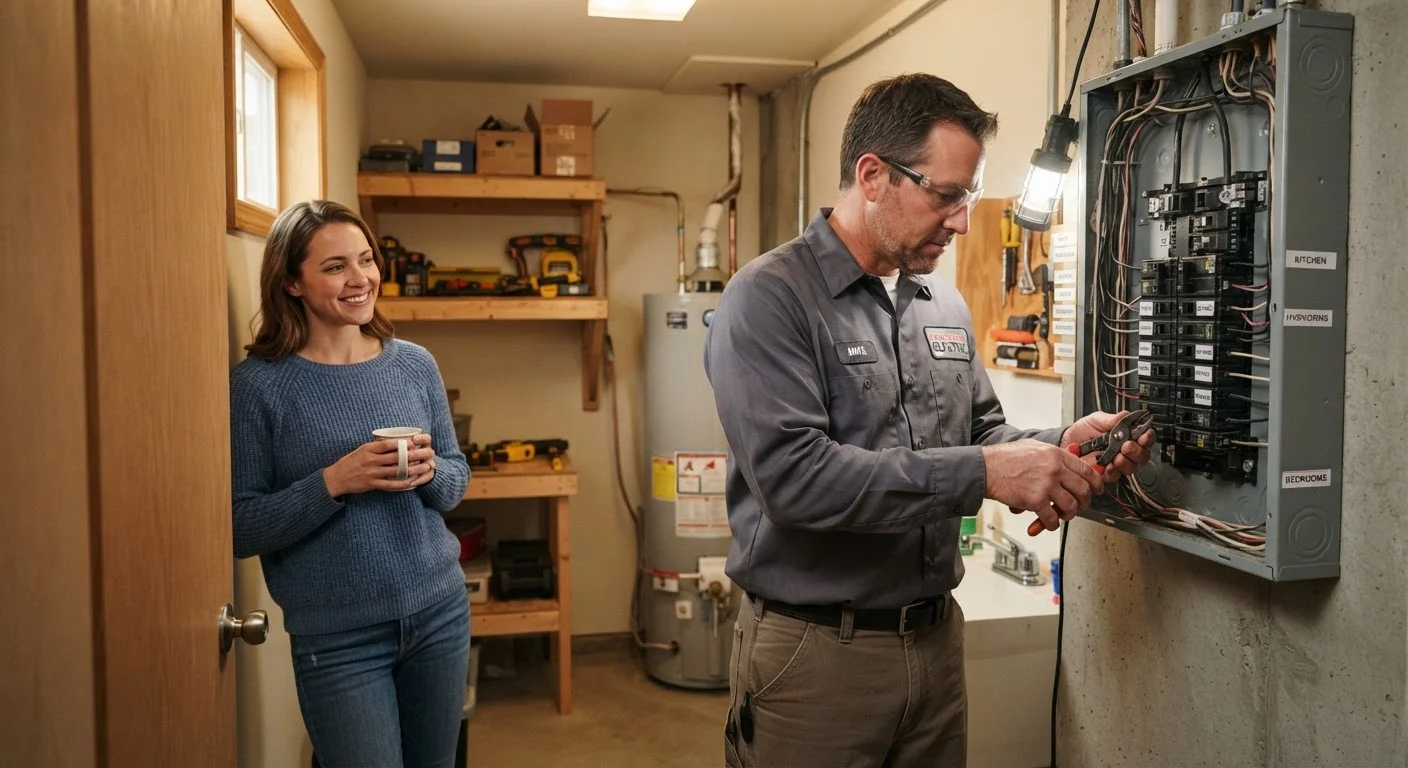
Not every task belongs in the DIY column. Electrical panel work, gas lines, structural modifications, and anything requiring a permit should go to a licensed professional. Our guide on when a DIY project needs a pro walks through exactly where that line falls.
Building Confidence One Project at a Time
Owning these tools is only the first step - using them regularly on small, low-stakes tasks builds the muscle memory that makes bigger projects less intimidating. Start with repairs you can reverse if something goes wrong: tightening loose hinges, patching a small nail hole, or measuring for a shelf. Seasonal maintenance is also a natural practice ground; check our seasonal home maintenance checklist for a structured list of tasks that fit a beginner's skill range.
As your confidence grows, so will your judgment about which jobs to take on yourself and which to hand off. That balance - not raw ambition - is what makes a capable weekend homeowner.