
What Debt Consolidation Actually Means
Debt consolidation is the process of combining multiple debts - often credit cards, medical bills, or personal loans - into a single new loan or credit line. The goal is typically to secure a lower interest rate, reduce the number of monthly payments, or both. Common consolidation methods include personal loans, balance transfer credit cards, home equity loans, and debt management plans (DMPs) offered through nonprofit credit counseling agencies.
It's important to distinguish consolidation from debt settlement, which involves negotiating to pay less than what is owed and carries significant credit and tax consequences. Consolidation, by contrast, restructures how you repay the full amount. For a broader grounding in credit and debt strategies, see our comprehensive guide to credit and debt.
This article is for general informational purposes only and does not constitute personalized financial or legal advice. Consult a qualified financial professional regarding your specific situation.
The Potential Advantages
When the conditions are right, debt consolidation offers real, measurable benefits worth considering.
Potentially lower interest rate reduces total cost
Consolidating high-interest credit card debt into a lower-rate personal loan can reduce total interest paid over the life of repayment. The actual savings depend on the rate difference, loan term, and fees involved.
Single monthly payment simplifies management
Replacing five or six separate minimum payments with one predictable payment reduces the chance of missed due dates and simplifies monthly budgeting.
Fixed repayment schedule provides a clear endpoint
Unlike revolving credit card balances that can persist indefinitely with minimum payments, a consolidation loan typically has a defined payoff date, which creates a structured path to becoming debt-free.
May improve credit utilization ratio
Paying off credit card balances with a personal loan reduces revolving credit utilization - a key factor in credit scoring models - which can result in a score improvement over time, assuming new balances are not added.
20%+
Average credit card interest rate in the U.S.
According to Federal Reserve data, average credit card interest rates have exceeded 20% APR in recent reporting periods, underlining the cost of carrying revolving balances.
1-8%
Typical personal loan origination fee range
Consumer Financial Protection Bureau (CFPB) guidance notes that origination fees on personal loans vary widely and should always be factored into cost comparisons.
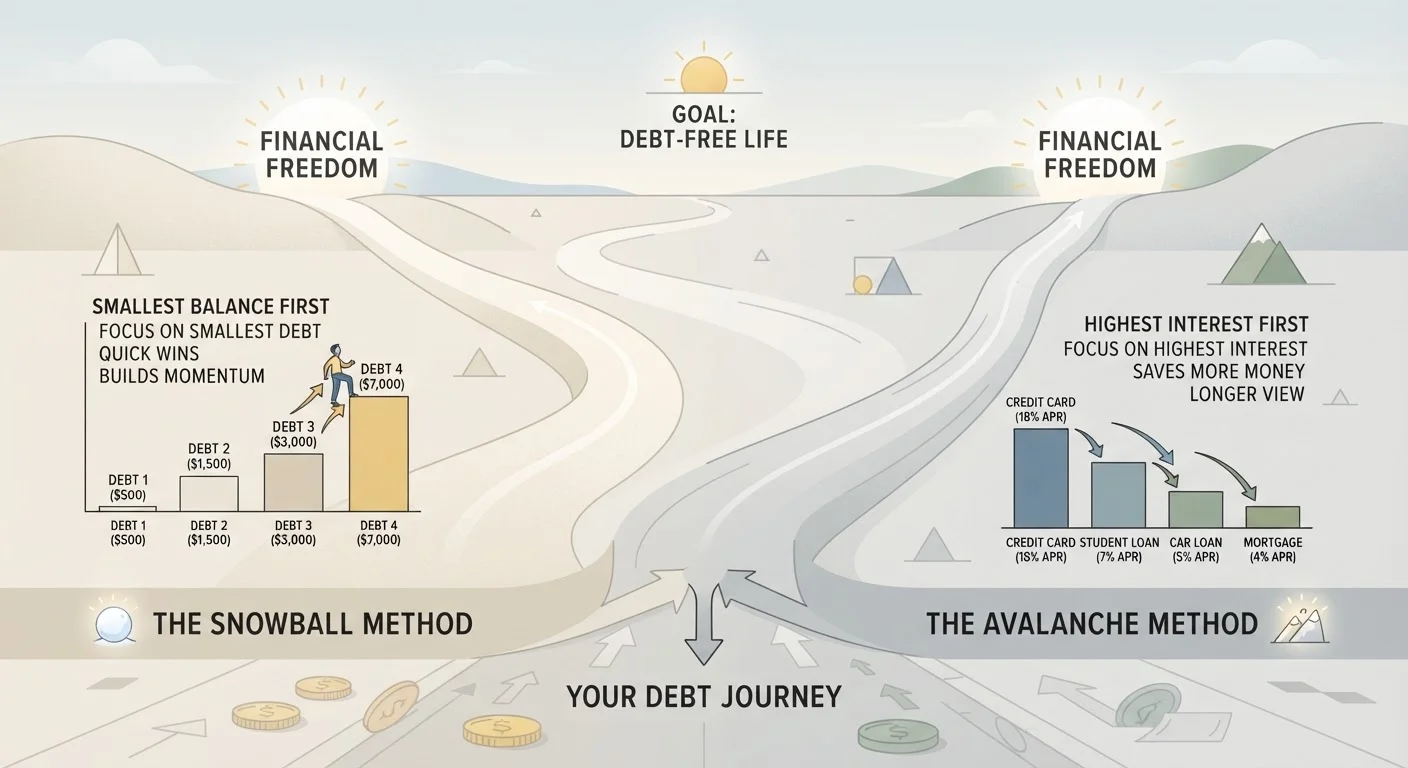
Beyond interest savings, consolidating into a single monthly payment reduces the cognitive load of tracking multiple due dates, minimum payments, and billing cycles - which can lower the risk of missed payments that damage credit scores. For borrowers exploring alternatives, debt avalanche and snowball methods offer a comparison worth reviewing.
The Risks and Drawbacks
Consolidation is not a guaranteed win. Several significant trade-offs can undermine - or even worsen - a borrower's financial position.
Does not eliminate debt - only restructures it
The total amount owed remains unchanged at the moment of consolidation. Borrowers who treat consolidation as a resolution rather than a restructuring risk adding new debt on top of the consolidated balance.
Longer repayment terms can increase total interest paid
Extending the repayment period - even at a lower rate - can result in paying more interest overall. A lower monthly payment spread over five years may cost more than aggressive repayment over two years at a higher rate.
Fees and origination costs reduce net savings
Personal loans often carry origination fees of 1-8% of the loan amount, and balance transfer cards typically charge 3-5% of the transferred balance. These upfront costs must be factored into any savings calculation.
Qualifying requires good credit in many cases
The lowest rates on consolidation products are generally reserved for borrowers with strong credit profiles. Those with poor or fair credit may not qualify for rates low enough to make consolidation worthwhile.
Secured options put collateral at risk
Using a home equity loan or HELOC to consolidate unsecured debt converts it into debt backed by your home. A default could trigger foreclosure, representing a substantially higher-stakes outcome than the original unsecured debt.
One often-overlooked risk involves secured consolidation products. Home equity loans and home equity lines of credit (HELOCs) convert unsecured debt into debt backed by your home. Defaulting on these carries the possibility of foreclosure - a consequence far more severe than the original credit card debt. It's also worth understanding your rights if accounts go to collections; federal law governs what debt collectors can legally do.
When Consolidation May or May Not Make Sense
Consolidation tends to work best when a borrower qualifies for a meaningfully lower interest rate than their current average, has stable income to make consistent payments, and is committed to not adding new debt. If you carry a strong credit score and disciplined spending habits, the math can favor consolidation.
Nonprofit Credit Counseling Is an Option
Nonprofit credit counseling agencies - many affiliated with the National Foundation for Credit Counseling (NFCC) - offer debt management plans that negotiate reduced interest rates with creditors without requiring a new loan. These plans typically involve a modest monthly fee and a structured multi-year repayment schedule. They are a legitimate alternative to commercial consolidation products, particularly for borrowers who do not qualify for favorable loan terms. Always verify an agency's nonprofit status and fee structure before enrolling.
Conversely, consolidation is unlikely to help if the underlying spending behavior that created the debt hasn't changed. Rolling balances into a new loan only to continue charging on freed-up credit cards is a well-documented pattern that leaves borrowers in a deeper hole. Similarly, if fees and origination costs offset any rate advantage, the net benefit may be minimal. Understanding whether you tend to spend more when pressure eases - a behavioral finance consideration - is as important as comparing interest rates. You might also compare this structured approach against automating your savings as a parallel financial habit.