
How a 401(k) Actually Works
Each pay period, a percentage of your wages you specify - say, 6% - is automatically redirected from your paycheck into your 401(k) account before it ever hits your bank. With a traditional 401(k), that contribution comes out before federal income taxes are calculated, which lowers your taxable income for the year. With a Roth 401(k), contributions are made after taxes, but qualified withdrawals decades later are completely tax-free.
Inside the account, your money is not just sitting idle. It's invested in a portfolio of funds - often a mix of stock funds, bond funds, and target-date funds - selected from a menu your employer provides. Those investments grow (or, in downturns, decline) over time. Because you're not paying taxes on investment gains each year, the compounding effect is more powerful than it would be in a standard taxable brokerage account.
If you're new to how investment vehicles work more broadly, our guide for first-time investors covers the foundational vocabulary and mindset useful before diving deeper into your 401(k) investment options.
~70 million
Americans actively participating in 401(k) plans
According to the Investment Company Institute, approximately 70 million workers participate in defined contribution plans, including 401(k)s, making them the dominant private retirement savings vehicle in the U.S.
$7.4 trillion
Total assets held in 401(k) plans
The Investment Company Institute reports that 401(k) plans held approximately $7.4 trillion in assets as of recent estimates, reflecting their central role in American retirement security.
~40%
Workers who don't contribute enough to get full employer match
Research from financial services organizations has consistently found that a significant share of eligible employees leave employer matching dollars unclaimed by under-contributing.
The Employer Match: Why It's the First Priority
Many employers offer to match a portion of what you contribute - a common structure is matching 50 cents for every dollar you put in, up to 6% of your salary. That's an immediate 50% return on those dollars before any market growth occurs. Not contributing enough to capture the full match means declining a portion of your compensation.
Matching formulas vary significantly by employer, so it's worth reviewing your Summary Plan Description (SPD) - the document your employer is required to provide - to understand exactly how your plan works. Vesting schedules also matter: some employers require you to stay a certain number of years before their matching contributions are fully yours to keep.
Why Starting Early Is So Consequential
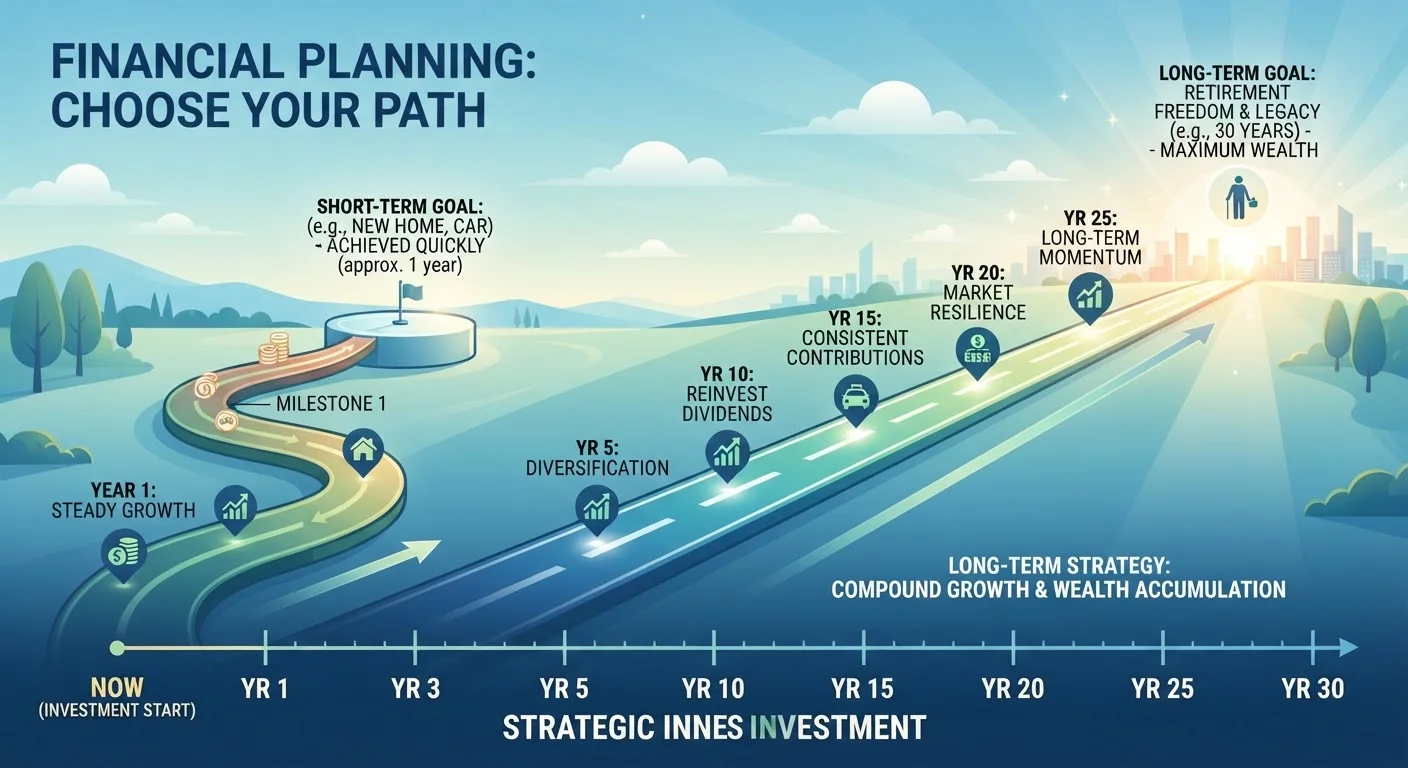
Time is the variable that most dramatically separates comfortable retirement savers from those who struggle. Compound growth - where your gains generate their own gains - becomes exponentially more powerful over longer periods. An employee who begins contributing at 25 and contributes consistently will generally accumulate substantially more than one who waits until 35, even if the later starter contributes more per paycheck to compensate.
Understanding your time horizon - how many years until you expect to need the money - also shapes how your 401(k) should be invested. Someone with 35 years until retirement can generally afford to hold a higher proportion of stock funds, which carry more short-term volatility but historically higher long-term growth potential. Our article on how time horizon changes your investment strategy explains this concept in depth.
Automating your 401(k) contribution is one of the clearest examples of a financial habit that pays off over time, though it's worth understanding the full picture - see our discussion of the trade-offs of automating savings for context.
Common Mistakes That Undermine 401(k) Growth
Several behaviors frequently reduce the effectiveness of a 401(k) over time:
- Not contributing enough to get the full employer match - the most common and costly error.
- Cashing out when changing jobs - triggering taxes and penalties that can consume 30-40% of the balance.
- Ignoring investment allocation - leaving everything in the plan's default money market option, which may lag inflation over long periods.
- Over-concentrating in employer stock - tying retirement savings to the same company risk as your paycheck.
- Contributing and forgetting - not reviewing and rebalancing your investment mix as circumstances change.
A 401(k) doesn't require constant management, but it does benefit from periodic attention. And since retirement accounts are a long-term vehicle, they should be considered alongside your overall savings structure - see how structuring short- and long-term goals can help you allocate funds more effectively.
This article is for general informational purposes only and does not constitute personalized financial, tax, or investment advice. Please consult a licensed financial adviser or tax professional for guidance tailored to your specific situation.