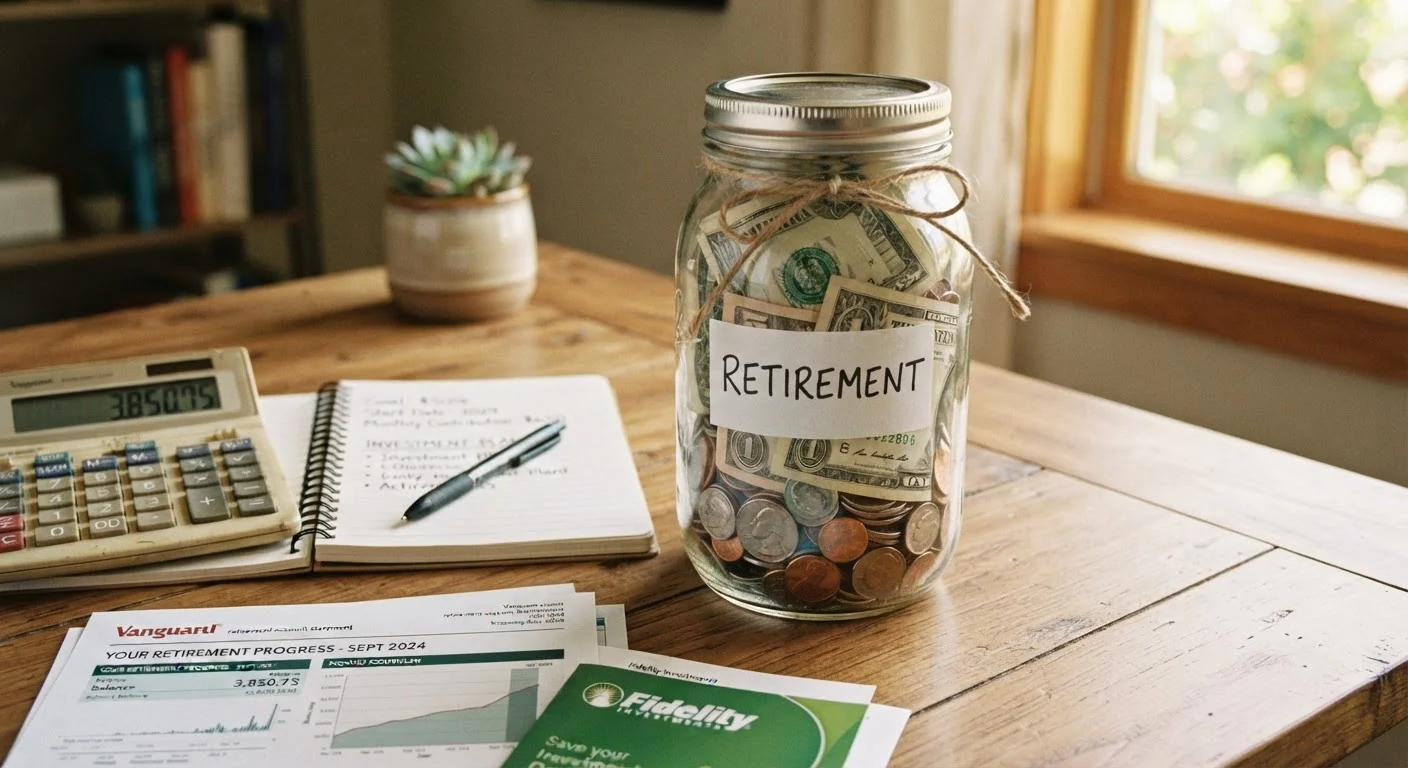
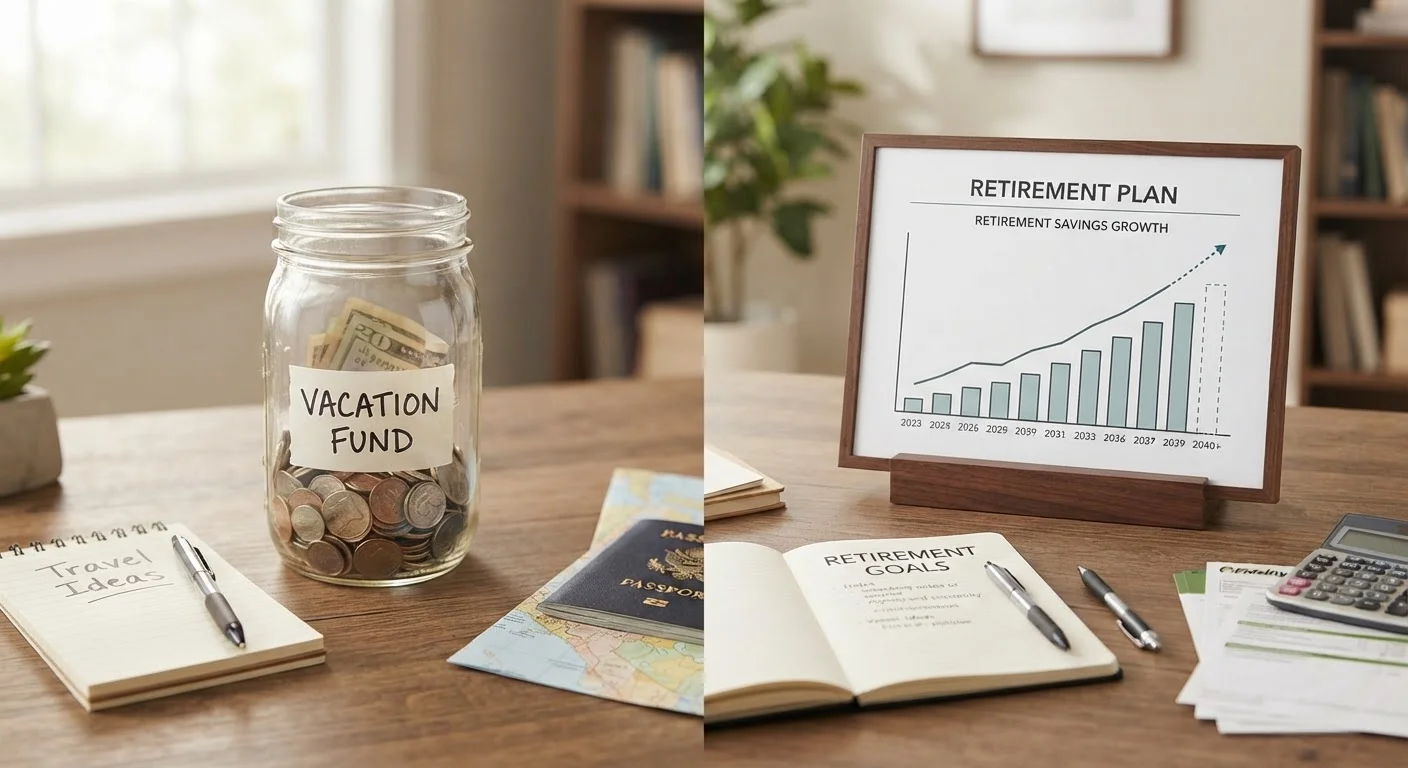
Why the Distinction Matters
Most people think of savings as a single pool of money. In practice, treating all savings the same - regardless of when you'll need the funds - is one of the most common reasons balances stagnate. As covered in our article on why your savings never seem to grow, the problem is often structural, not behavioral.
The core distinction is time horizon: how long the money can stay invested or set aside before you need it. That single variable determines the right account type, acceptable risk level, and whether growth or accessibility should take priority. Conflating the two leads to predictable mistakes - like raiding a retirement account for a car repair, or parking a 20-year goal in a 1% savings account.
Short-Term Goals: 0-3 Years
Short-term goals include emergency funds, vacation savings, upcoming home repairs, a vehicle down payment, or any planned purchase within roughly three years. The defining constraint is liquidity - you need the money available quickly, and you cannot afford to see its value drop before you need it.
For these goals, capital preservation outranks growth. Suitable vehicles include:
- High-yield savings accounts (HYSAs): FDIC-insured, easily accessible, and currently offering meaningfully higher rates than traditional savings accounts.
- Money market accounts: Similar to HYSAs with slightly different access structures, also FDIC-insured.
- Short-term CDs (certificates of deposit): Appropriate when you know the exact date you'll need the funds and can lock in a rate.
What to avoid: putting short-term savings into stocks or volatile assets. A market downturn in year two of a three-year plan could force you to sell at a loss right when you need the money.
Sinking funds - dedicated sub-accounts for specific planned expenses - are a practical tool here. See our guide on how sinking funds work for a deeper look at structuring these buckets.
Label Your Accounts by Goal Name
Renaming a savings account 'Emergency Fund' or 'Vacation 2026' makes it psychologically harder to raid for unrelated expenses. Many online banks allow multiple sub-accounts with custom labels. This small step meaningfully reduces accidental transfers and keeps your buckets intact.
Long-Term Goals: 5+ Years
Long-term goals - retirement, a child's college fund, a future property purchase a decade out - benefit from a fundamentally different strategy. Because the money won't be touched for years, it can tolerate short-term market volatility in exchange for historically higher long-term growth potential.
Tax-advantaged accounts are the primary tools here:
- 401(k) plans: Employer-sponsored retirement accounts with pre-tax (or Roth) contributions and potential employer matching. Our overview of how a 401(k) works explains why early participation compounds significantly over time.
- IRAs (Individual Retirement Accounts): Available as traditional (pre-tax) or Roth (post-tax) structures - each with different tax implications. The Roth IRA vs. Traditional IRA comparison can help clarify which fits your situation.
- Taxable brokerage accounts: Useful once tax-advantaged contribution limits are reached, or for non-retirement long-term goals.
Within these accounts, low-cost index funds are a commonly cited option for long-term investors. For a fuller picture of how they compare to actively managed alternatives, see index funds vs. actively managed funds.
The overarching principle is that time horizon changes everything about appropriate strategy - a point explored directly in our piece on how time horizon shapes investing decisions.
| Short-Term Goals | Long-Term Goals | |
|---|---|---|
| Typical time horizon | 0-3 years | 5+ years |
| Primary priority | Liquidity and capital preservation | Growth and compounding |
| Risk tolerance | Low - cannot absorb losses | Higher - time smooths volatility |
| Recommended accounts | HYSA, money market, short-term CDs | 401(k), IRA, brokerage account |
| Tax advantages | Generally none | Significant (tax-deferred or tax-free) |
| Example goals | Emergency fund, vacation, car down payment | Retirement, college fund, long-term property |
Running Both Strategies at Once
Most households need to fund short- and long-term goals simultaneously - which is where a bucket approach becomes essential. Rather than one savings account, you maintain separate, clearly labeled accounts (or sub-accounts) for each goal type. This prevents short-term spending from cannibalizing long-term progress, and vice versa.
A practical starting framework:
- Identify every savings goal and assign it a timeline.
- Categorize each as short-term (under 3 years) or long-term (5+ years).
- Match each category to the appropriate account type.
- Set a monthly contribution amount for each bucket - even small amounts compound over time.
- Automate transfers so contributions happen before discretionary spending.
Automation is particularly effective here. The trade-offs of automating savings are worth understanding, but for most people, scheduled transfers remove the friction that derails manual saving.
If budget constraints make it hard to fund both simultaneously, prioritize the short-term emergency fund first (three to six months of essential expenses is a commonly cited benchmark), then layer in long-term contributions - especially if your employer offers 401(k) matching, which is effectively part of your compensation.
This article is for general informational purposes only and does not constitute personalized financial, investment, tax, or legal advice. Consult a qualified financial professional before making decisions about your specific circumstances.