What a Rental Tour Can Actually Tell You
Touring a rental is more than a walkthrough - it's due diligence. A freshly painted wall or strategically placed furniture can mask water damage, structural issues, or a landlord who doesn't take maintenance seriously. The difference between a good rental experience and a costly, stressful one often comes down to what you notice - and what you ask - before signing anything.
If you're navigating this process for the first time, our guide for first-time renters covers every stage from application to move-in inspection. For now, focus on what your eyes, nose, and instincts can tell you during those critical 20 to 30 minutes inside the unit.
Below are the red flags worth taking seriously - not to make you paranoid, but to make you prepared.
Water Stains or Active Moisture
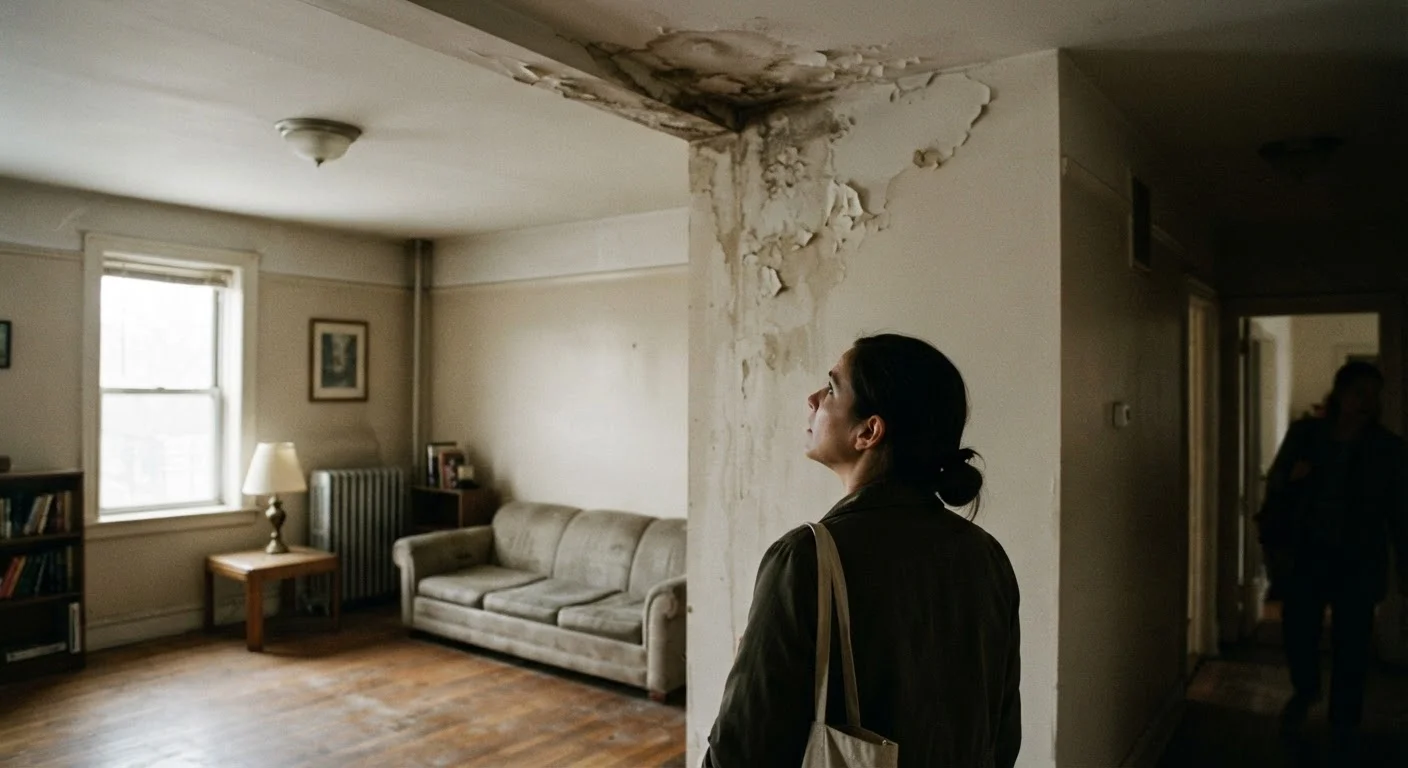
Look up at ceilings and along baseboards for brownish rings, bubbling paint, or warped drywall - all signs of past or ongoing water intrusion. Check under sinks for soft cabinet floors or rust staining around pipes. Water damage that hasn't been properly remediated almost always returns, and chronic moisture creates conditions for mold growth that can affect indoor air quality. Ask the landlord directly whether there's been any water damage and whether repairs were professionally completed.
Water damage that hasn't been properly remediated almost always returns - and often worsens.
Musty Odors or Visible Mold
A musty smell when you first walk in - especially in bathrooms, closets, or basement-level units - is a sign of mold or mildew that may not be visible. Check bathroom grout lines, window sills, and the area around HVAC vents. Small patches of discoloration near ceiling corners or behind doors warrant direct questions. Mold remediation is a landlord responsibility in most states, but proving it existed before your tenancy is much harder after you've already moved in.
A musty smell on entry, especially in bathrooms or closets, often points to hidden mold.
Signs of Pest Activity
Open every cabinet under sinks and in the kitchen. Look for droppings, gnaw marks, sticky trap remnants, or foil-stuffed gaps around pipes - all indicators of a rodent or roach problem. Pest infestations in multi-unit buildings can be extremely difficult to eliminate permanently because neighboring units serve as reservoirs. Ask property management about the extermination history and whether a pest control program is in place. An infestation disclosed after you've moved in is far harder to address than one you spotted beforehand.
Check cabinets and pipe gaps for pest evidence - infestations in shared buildings rarely stay contained.
Non-Functional Fixtures and Appliances
Turn on every faucet and flush every toilet during your tour. Check water pressure, hot water availability, and drainage speed. Test light switches, outlets (especially GFCI outlets near water), and any appliances included in the lease. A landlord who hasn't ensured basic systems are working for a showing is giving you a preview of how maintenance requests will be handled once you're a tenant. Document anything that doesn't work and confirm in writing whether it will be repaired before move-in.
Test faucets, outlets, and appliances during the tour - what doesn't work now signals future neglect.
Inadequate Ventilation or Heating and Cooling
Check that bathroom exhaust fans actually function - not just make noise. Ask whether the heating and cooling systems have been serviced recently and confirm whether the unit has adequate airflow in each room. In older buildings, window units may be the only cooling option; understand whether those are provided or your responsibility. Inefficient HVAC systems don't just affect comfort - they drive up utility costs and contribute to moisture buildup that compounds other problems.
Poor ventilation quietly drives up utility costs and contributes to the moisture issues landlords rarely disclose.
Pressure to Decide Immediately
A landlord who tells you there are five other applicants and that you must apply today may simply be using a common tactic to limit your evaluation time. While competitive rental markets - particularly in tight inventory conditions - do move quickly, a genuine landlord will still give you time to review the lease. If you're being rushed, that urgency itself warrants scrutiny. Our article on finding affordable rentals in a tight market provides context on when speed is genuinely necessary versus when it's engineered pressure.
Pressure to sign the same day is often a tactic - not a reflection of genuine market urgency.
An Evasive or Dismissive Landlord
Pay close attention to how the landlord or property manager responds to your questions during the tour. Vague answers about repair history, reluctance to provide the lease in advance, or irritation at reasonable questions are telling. A landlord's communication style during the courtship phase - when they're motivated to rent the unit - is typically better than what you'll experience after you've signed. If they can't answer straightforward questions about the unit's maintenance history, consider that a preview of the tenancy ahead.
How a landlord communicates during a tour is the best preview of how they'll handle problems later.
How to Use What You Find
No rental is perfect, but a pattern of issues - especially deferred maintenance combined with an evasive landlord - is a signal worth heeding. Take photos of anything that concerns you during the tour, even if the landlord says it will be repaired before move-in. Written commitments in the lease or an addendum carry legal weight; verbal assurances generally do not. Our piece on common rental myths explains exactly why verbal agreements leave renters exposed.
Bring a Checklist and Your Phone
Before any tour, write down the specific items you want to inspect - plumbing, appliances, windows, ventilation, security features - so you don't get distracted by staging. Use your phone to photograph anything that looks worn, stained, cracked, or non-functional. These photos, dated by your device, create a record that's difficult to dispute if condition questions arise later. If the landlord objects to photos being taken, treat that reaction as its own red flag.
If you do move forward with a unit that had minor concerns, document the pre-existing condition thoroughly on your move-in inspection form. That documentation becomes essential if a security deposit dispute arises later - something our guide on landlord disputes covers in depth. Touring with clear eyes now is the first step toward a tenancy that goes smoothly from start to finish.