What Each Source Is Actually Measuring
Understanding what customer reviews and expert tests are designed to measure is the first step to using them correctly.
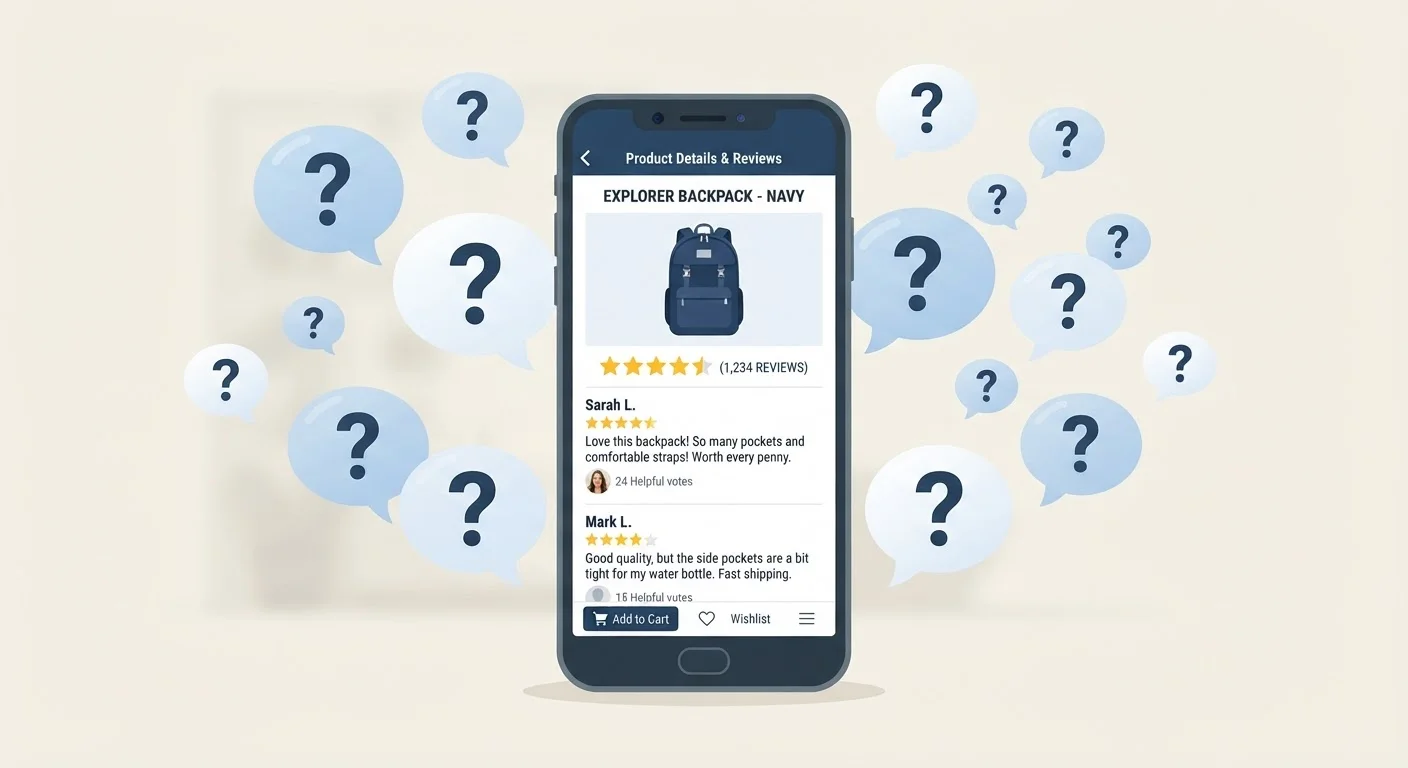
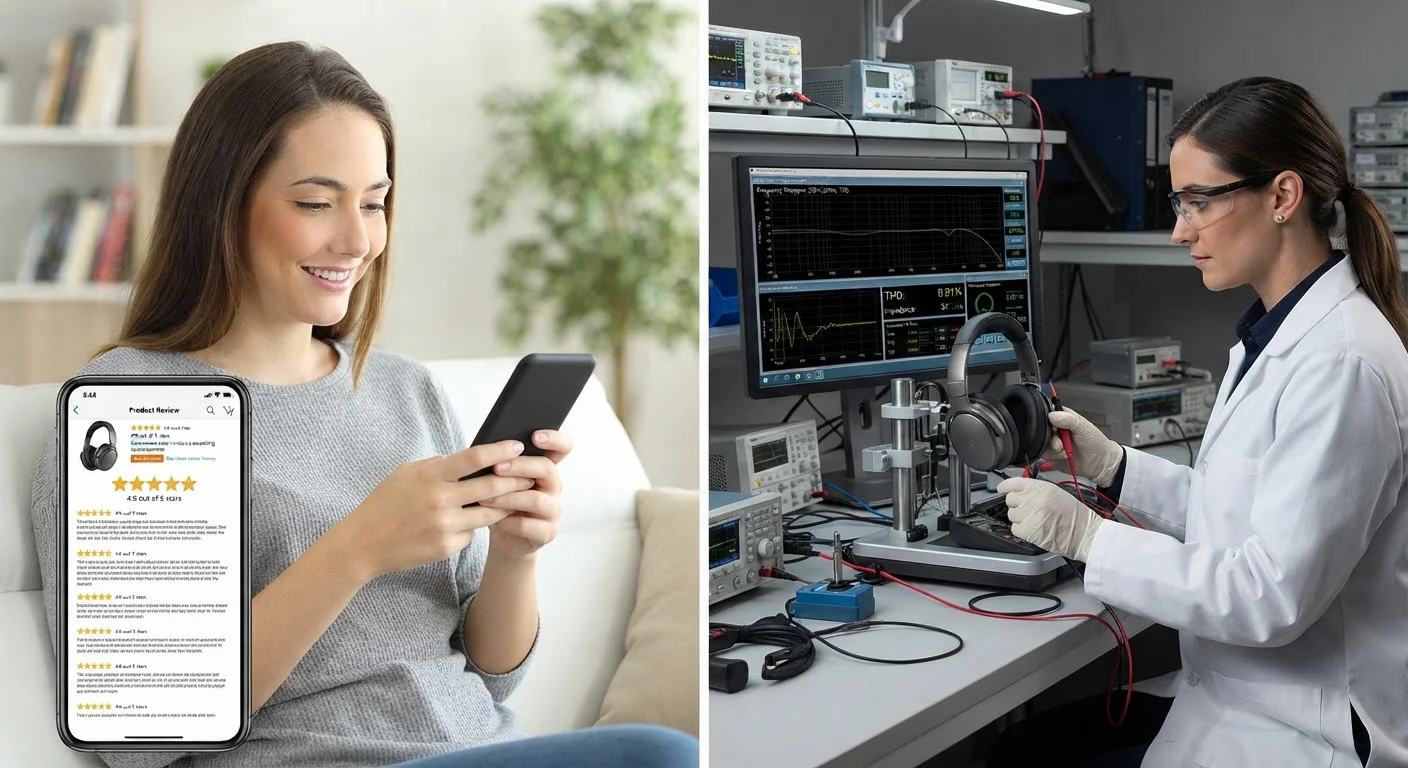
Customer reviews are aggregated personal experience reports. They capture how a product performs for real people, under real conditions, over real time. A reviewer telling you a vacuum loses suction after six months is data a lab test conducted over a few hours simply cannot generate. Reviews also reflect subjective dimensions - comfort, noise level in a real home, how intuitive an interface feels - that standardized testing doesn't easily quantify.
Expert testing, by contrast, is controlled and methodical. A structured lab evaluation can measure a blender's motor RPM, a mattress's pressure distribution, or a car seat's crash performance against a fixed standard. These tests minimize the variables that make individual reviews noisy - things like user error, differing expectations, or confirmation bias. Expert results are especially valuable for safety-critical products, where objective benchmarks matter more than personal impressions.
Knowing which lens each source provides helps you ask better questions before you start reading. See our guide to evaluating products you can't try first for a broader framework on closing that gap.
The Strengths and Blind Spots of Customer Reviews
Reviews are powerful because they represent scale. Thousands of people reporting the same issue - a zipper that breaks early, a paint that chips - carries meaningful signal even if no single review is authoritative on its own. That volume also surfaces edge cases: a small but consistent pattern of failure in a specific use scenario that wouldn't appear in a three-week lab test.
However, reviews carry real blind spots. Star ratings can be skewed by early promotional distribution, incentivized reviews, or review gating (the practice of only soliciting feedback from satisfied buyers). Negative reviews are sometimes disproportionately filed by a vocal minority; positive ones may overrepresent early enthusiasm before long-term flaws emerge. And because reviewers self-select, the sample may not reflect your specific use case.
| Customer Reviews | Expert Testing | |
|---|---|---|
| What it measures | Real-world user experience over time | Objective performance against defined benchmarks |
| Sample size | Potentially thousands of users | Usually one or few units tested |
| Subjectivity | High - reflects personal expectations | Low - controlled, repeatable conditions |
| Longevity data | Strong - reveals durability over months/years | Weak - typically short-term snapshots |
| Manipulation risk | Moderate-to-high (incentivized reviews, gating) | Lower, but varies by funding source |
| Best for | Fit, comfort, everyday usability | Safety, technical specs, comparative performance |
Read review patterns rather than individual entries. Look for specificity - a review explaining exactly what failed and when is far more useful than a vague five-star or one-star rating. For a deeper look at how to read reviews critically, see how consumer reviews actually work and when to trust them.
The Strengths and Blind Spots of Expert Testing
Expert testing provides something reviews rarely can: repeatability. Because test conditions are controlled, results from reputable labs can be compared across products on equal footing. This is particularly valuable for technical categories - electronics, appliances, safety gear, automotive components - where performance differences are real but invisible to casual observation.
That said, expert testing has its own limitations. Tests are snapshots conducted under specific conditions that may not match how you'll actually use a product. A vacuum tested on laboratory-grade carpet may behave differently on your thick shag rugs. Testing organizations also vary widely in rigor and independence; some are funded by industry groups, which can introduce conflicts of interest. Always check who conducted the test and how the testing organization is funded before treating a result as definitive.
Additionally, expert reviews often focus on flagship configurations and may not test the exact model variant you're considering. Specs and components can vary by retailer or production run in ways that don't get retested. For guidance on spotting those discrepancies, see reading between the lines of online product listings.
How to Use Both Sources Together
The most effective research approach treats expert tests and customer reviews as complementary filters, not competing verdicts. A practical workflow: start with expert testing to establish a baseline of technical performance and eliminate products that fail objective benchmarks. Then use customer reviews to pressure-test that shortlist against real-world conditions, especially for durability, usability, and ownership experience over time.
Pay particular attention to cases where expert results and customer sentiment diverge sharply. A product that scores well in lab testing but accumulates consistent complaints about reliability may indicate a quality-control issue that testing a single unit can't detect. Conversely, a product with mixed customer ratings but strong, independent test results may simply be suffering from misaligned expectations among buyers.
For product categories where safety is paramount - car seats, power tools, medical devices - weight expert and regulatory testing more heavily. For categories defined by personal fit or subjective experience - clothing, bedding, exercise equipment - customer reviews that match your profile carry proportionally more value.
To put this into practice before any significant purchase, run through a pre-purchase research checklist that covers specs, certifications, and credibility signals. And if you want a repeatable system you can apply across product categories, building your own product evaluation framework is a logical next step.