
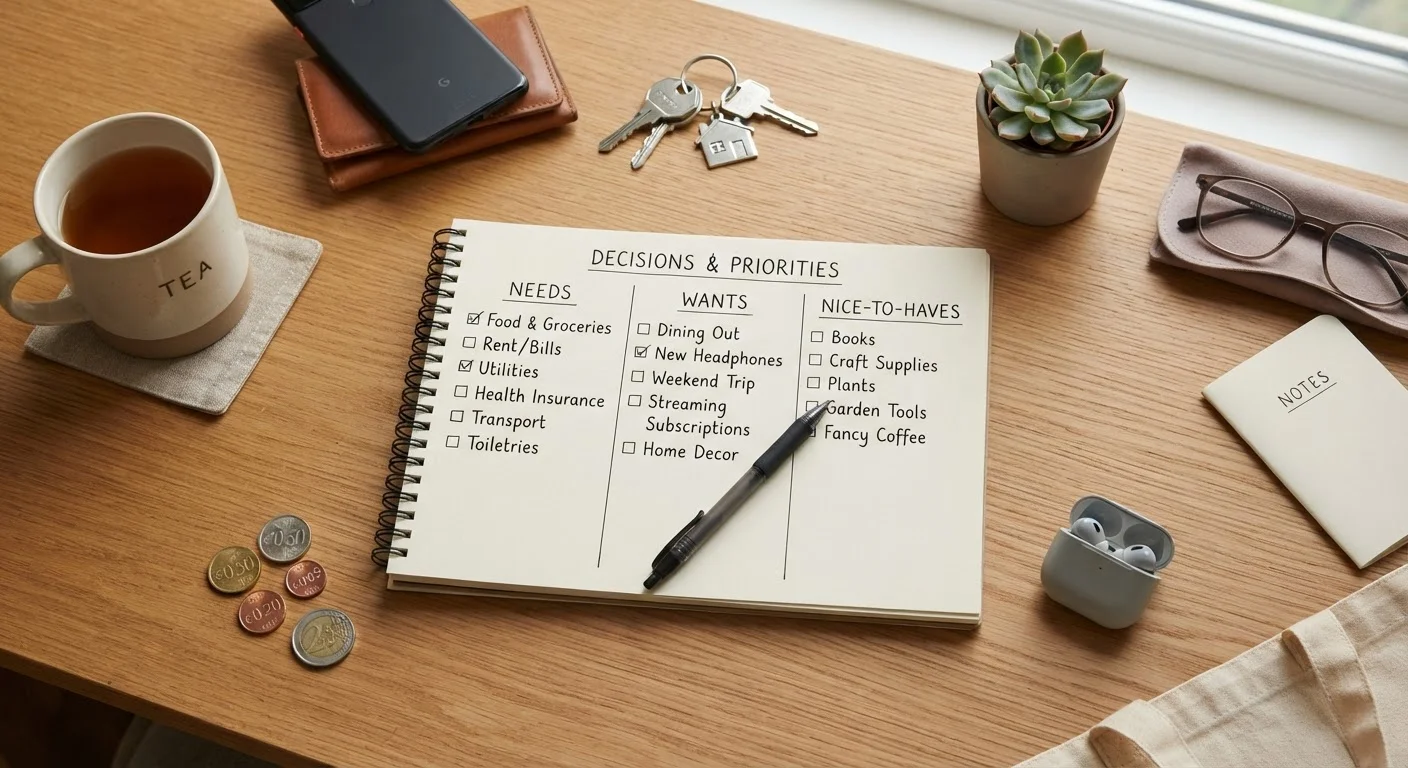
Why the Distinction Matters More Than You Think
Most people don't overspend because they're careless. They overspend because the line between a need and a want blurs fast - especially under pressure, excitement, or stress. Retailers know this. Store layouts, limited-time messaging, and bundle pricing are all designed to make wants feel like needs before you've had a moment to think.
The needs-wants-nice-to-haves framework gives you a mental checkpoint that costs nothing and takes less than a minute. It won't eliminate all spending mistakes, but it consistently slows down the impulsive decisions that lead to buyer's remorse. For a deeper look at the patterns that lead to regret, see common shopping habits that lead to regret.
Use a Simple One-Question Test
When you're unsure which category a purchase falls into, ask: "What is the actual consequence of not buying this today?" If the honest answer is "nothing significant," that's your signal. This single question, asked consistently, interrupts the rationalization most impulse spending relies on.
Breaking Down Each Category
Needs
A need is something whose absence creates a genuine gap - in safety, health, shelter, employment, or a firm obligation you've already committed to. Groceries, utility payments, transportation to work, and medication are classic needs. The key word is genuine. Not uncomfortable, not inconvenient - actually non-functional without it.
Wants
A want improves your life in a meaningful way, but life carries on without it. A newer phone when your current one works, a restaurant meal when you have food at home, a name-brand item when a comparable alternative exists - these are wants. That doesn't make them wrong to buy. It means you're buying them with clear eyes, not rationalizing them as something they aren't.
Nice-to-Haves
Nice-to-haves sit at the low end of urgency and necessity. They're additions that would bring some enjoyment or convenience, but there's no real consequence to skipping or postponing them. An extra throw pillow, a gadget you'll use occasionally, a second streaming service - these are candidates. They're also where unmonitored small purchases accumulate into significant monthly totals.
A shopper's laptop stops working reliably, making remote work impossible. They need a replacement to keep their job.
While buying a new winter coat, a shopper spots a discounted jacket in a color they like, even though their current coat is perfectly functional.
A homeowner considers upgrading their kitchen appliances because newer models have additional features, though the current ones work fine.
Someone working from home finds their internet connection is too slow to handle video calls reliably, affecting their job performance.
How to Apply the Framework in Real Life
The framework works best when you build it into a consistent habit rather than using it selectively. A practical approach: before any unplanned purchase, pause and answer two questions. First, what happens if I don't buy this? Second, am I responding to a real gap or to a feeling? The answers usually settle the category quickly.
For larger purchases, extend the process. Write the item in a list and revisit it in a few days. If it still registers as a need, you have more confidence buying it. If the urgency faded, that's a signal. The pre-purchase checklist for everyday shoppers pairs well here - it walks through additional questions worth asking before committing to any significant spend.
~33%
Americans with no emergency savings buffer
Federal Reserve surveys have consistently found that roughly one in three U.S. adults would struggle to cover an unexpected $400 expense, underscoring why distinguishing needs from wants matters for financial resilience.
48 hours
Waiting period that reduces impulse purchases
Consumer behavior research broadly supports short waiting periods as effective at reducing unplanned spending, as urgency typically fades when decisions are revisited after a brief delay.
When Categories Shift - and Why That's Normal
One of the framework's most useful features is that it acknowledges context. A gym membership might be a nice-to-have for someone with a free outdoor routine but a genuine need for someone managing a chronic health condition under a doctor's guidance. A reliable car is a want in a city with excellent transit and a need when your commute has no alternative. For a broader look at how car ownership costs fit into this kind of thinking, the Car Ownership hub covers practical vehicle expense decisions.
Periodically reassessing categories also matters. Something that was a need six months ago - say, a specific subscription - may have drifted into nice-to-have territory as your habits changed. Regular spending reviews catch this drift before it compounds. If you're working within tighter constraints, saving money on a tight budget without cutting what matters offers strategies that complement this framework directly.
This article is for general informational and educational purposes only and does not constitute financial advice. For guidance specific to your financial situation, consider consulting a qualified financial professional.