
Why Buyer's Remorse Follows Patterns
Most people assume buyer's remorse is just bad luck - the wrong item, the wrong timing, a deal that wasn't as good as it looked. But consumer behavior research consistently points to something more systematic: the same decision-making shortcuts and emotional triggers tend to show up again and again before a regretted purchase.
That's actually useful information. If regret follows patterns, those patterns can be learned and interrupted. The list below covers the habits that most reliably lead to post-purchase disappointment - and what's actually driving them under the surface. Understanding the mechanism is the first step to changing the outcome.
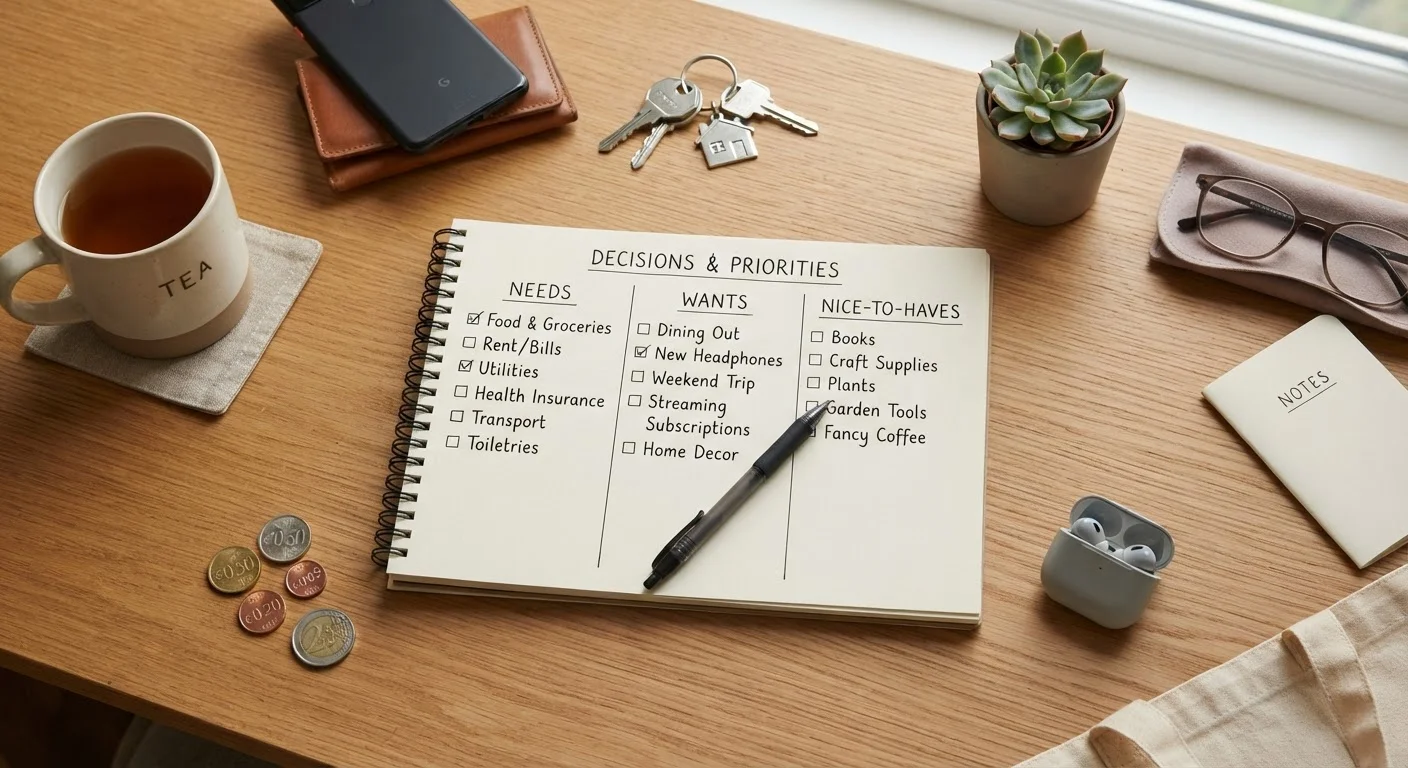
For a broader framework on how needs and impulses interact when you shop, see our guide to separating needs from wants.
Shopping while emotionally activated
Stress, excitement, boredom, and even mild hunger have all been shown to shift how people evaluate purchases. When your emotional baseline is disrupted, the brain's reward system becomes more persuasive and the prefrontal cortex - responsible for deliberate evaluation - becomes quieter. The result: items feel more appealing, risks feel smaller, and the urge to act now wins out over the instinct to pause.
The pattern to notice is shopping as a response to a feeling rather than a genuine need. A purchase made to relieve stress or celebrate a mood rarely holds up once that emotional state passes.
Shopping as a response to a feeling - not a need - is the clearest setup for regret.
Treating a low price as a reason to buy
A discount creates the perception of value, but value only exists if the item is actually useful to you. When the primary justification for a purchase is "it was on sale," the underlying question - do I actually want or need this? - often goes unanswered.
This is one of the most common patterns behind buyer's remorse, and it's thoroughly reinforced by how retail environments are designed. See how sales pricing and urgency cues can push shoppers to spend more than planned.
A low price is only a good reason to buy if you needed the item before you saw the price.
Skipping the research phase under time pressure
Urgency - whether real or manufactured - compresses the time available to evaluate a purchase. When shoppers believe they need to decide immediately, they gather less information, rely more on surface signals like packaging or price, and tend to overlook practical details like return policies, compatibility, or size.
Real urgency is rarely as tight as it feels. Most items remain available, and most "limited" windows extend further than advertised. Taking even 10 minutes to check a few specifics before confirming a purchase consistently leads to better outcomes.
Manufactured urgency is one of retail's oldest tools - and one of the shopper's biggest vulnerabilities.
Overweighting features you won't realistically use
It's easy to be drawn to a product's maximum capability rather than its typical use case. A kitchen appliance with 12 functions sounds like good value - but if your real cooking habits call for two of them, you've paid for ten features that will gather dust. This pattern often shows up in electronics, fitness equipment, and kitchen goods.
A useful corrective: before buying, write down the three things you'll actually use it for, and ask whether a simpler, less expensive option would cover the same ground.
Buying for a version of yourself you're not yet - and may not become - is a reliable source of regret.
Anchoring to the original price instead of actual worth
Price anchoring happens when a higher "original" price makes a marked-down price feel like a win - even if you would never have considered the item at full cost. This is a known cognitive bias, and retail pricing strategy is often built around it. The relevant question isn't whether the current price is lower than some other number; it's whether the current price is worth it to you, independently.
If you're evaluating a deal and find yourself thinking in terms of "how much you're saving" rather than "how much you're spending," that's the anchor doing its work.
The relevant question is never how much you're saving - it's how much you're spending, and why.
Not accounting for the full cost of ownership
Purchase price is often just the beginning. Ongoing costs - maintenance, accessories, subscriptions, storage, or installation - can significantly change the real value equation. A lower-priced item that requires expensive consumables or frequent replacement parts may cost more over time than a pricier alternative that doesn't.
For significant purchases, it's worth mapping out expected costs over a realistic ownership period rather than treating the sticker price as the whole picture. A structured end-to-end buying process includes this kind of total-cost thinking at the evaluation stage.
The purchase price is rarely the whole cost - and ignoring what comes after it is a recurring regret trap.
Building Better Habits Before You Buy
None of these patterns are character flaws - they're predictable responses to how purchasing decisions get framed, rushed, or emotionally loaded. The good news is that even modest friction in the buying process helps. Waiting 24 hours, writing down why you want something, or asking whether you'd still want it at full price are all small habits that interrupt the automatic pilot most regret-prone shopping runs on.
Try the 24-Hour Rule
For any non-urgent purchase above your personal comfort threshold, delay the decision by at least 24 hours. This simple habit breaks the emotional momentum that drives most impulse buying. If you still want the item the next day and your reasons hold up on reflection, you're likely making a more grounded decision.
Before any purchase that gives you pause, it's worth running through a structured pre-purchase checklist. A practical pre-purchase checklist can help you catch the most common decision traps before they cost you. And if you're weighing whether to buy now or wait for a better price, understanding the timing tradeoffs is worth a read before you commit.