How Each Financing Route Works
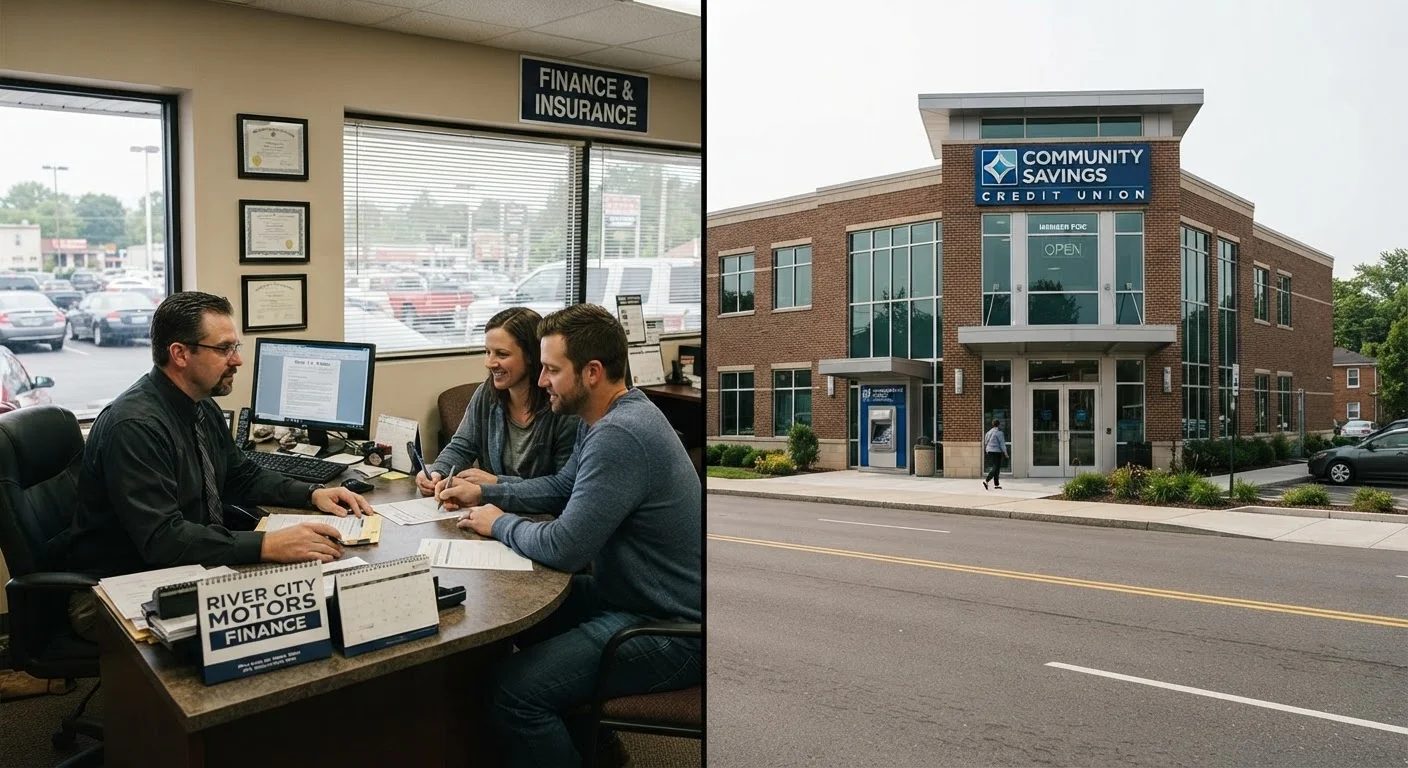
When you finance a vehicle through a dealership, you're typically working with the dealer's finance and insurance (F&I) office. The dealer submits your application to a network of lenders and presents you with an offer - often with a markup added to the lender's base rate, known as the "dealer reserve." This markup is a common source of additional profit for the dealership and can raise your effective interest rate without being immediately obvious.
Direct lending - borrowing from a bank or credit union before you shop - flips that dynamic. You apply, receive a pre-approval with a set rate and loan amount, and bring that offer to the dealership like cash. The dealer can still try to beat that rate, but you have a defined benchmark to compare against. According to the Consumer Financial Protection Bureau (CFPB), obtaining financing from multiple sources before purchasing is one of the most effective ways consumers can reduce their total loan cost.
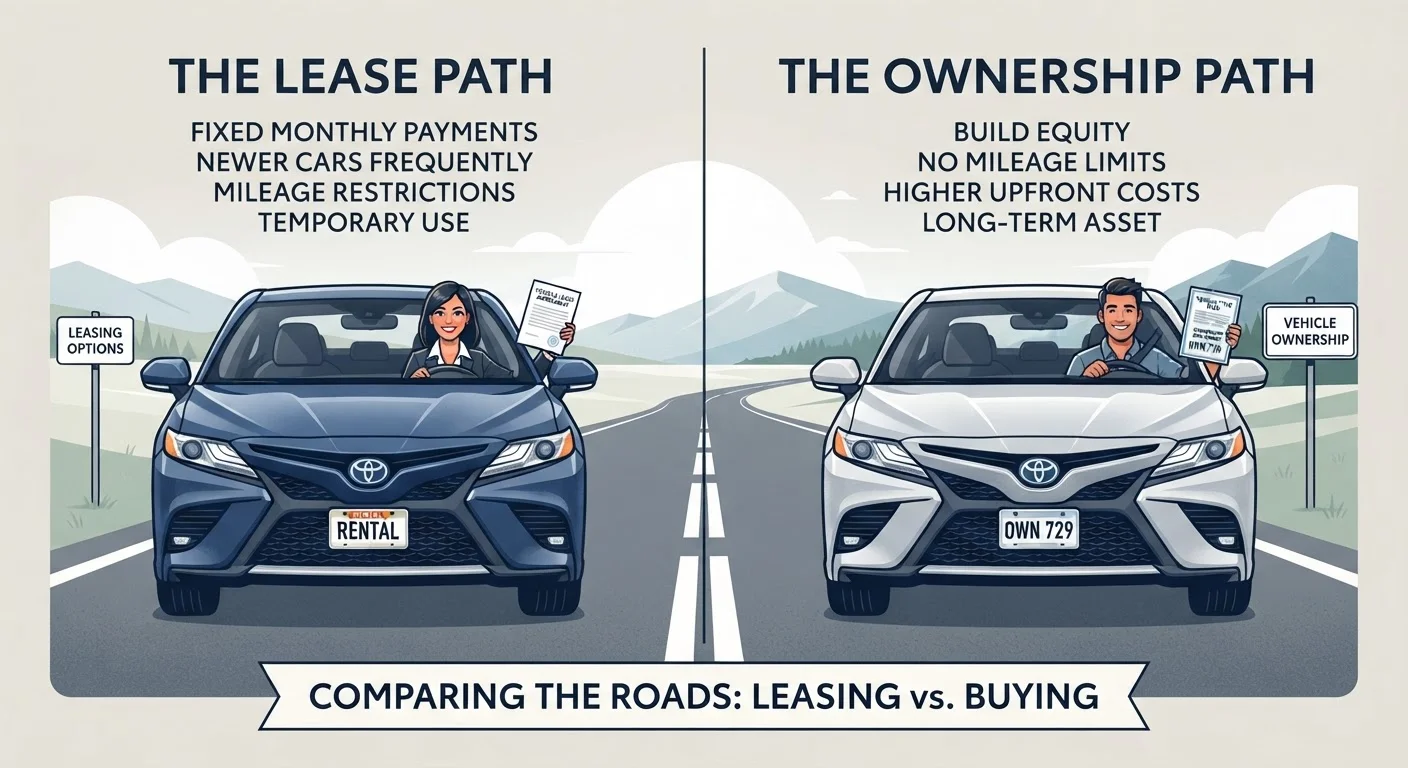
For context on how your financing choice fits into the bigger ownership picture, see our comparison of leasing vs. buying - the financing structure you choose interacts directly with which ownership path makes sense for you.
Key Differences at a Glance
Understanding where these two options diverge most sharply helps you decide which is worth pursuing for your situation.
| Criterion | Dealer Financing | Bank or Credit Union Financing |
|---|---|---|
| Application process | Single application at dealership | Apply before you shop; pre-approval in hand |
| Rate transparency | Markup (dealer reserve) may be added | Rate quoted directly; no hidden markup |
| Negotiating position | Price and financing negotiated together | Financing separated from vehicle price |
| Speed | Often finalized same day | Pre-approval may take 1-3 business days |
| Promotional rates | Manufacturer low-APR deals available | No promotional rates; market-based only |
| Lender relationship | Dealer selects lender on your behalf | You choose your lender directly |
| Credit union option | Not available through dealer channel | Credit unions often offer competitive APRs |
One important nuance: manufacturer-sponsored financing promotions - often advertised as 0% or low-APR deals - genuinely originate from the automaker's captive finance arm and may not carry a dealer markup. However, these offers typically require strong credit scores and may come with conditions such as shorter loan terms or restrictions on other incentives like cash-back rebates.
The Credit Union Advantage Worth Knowing
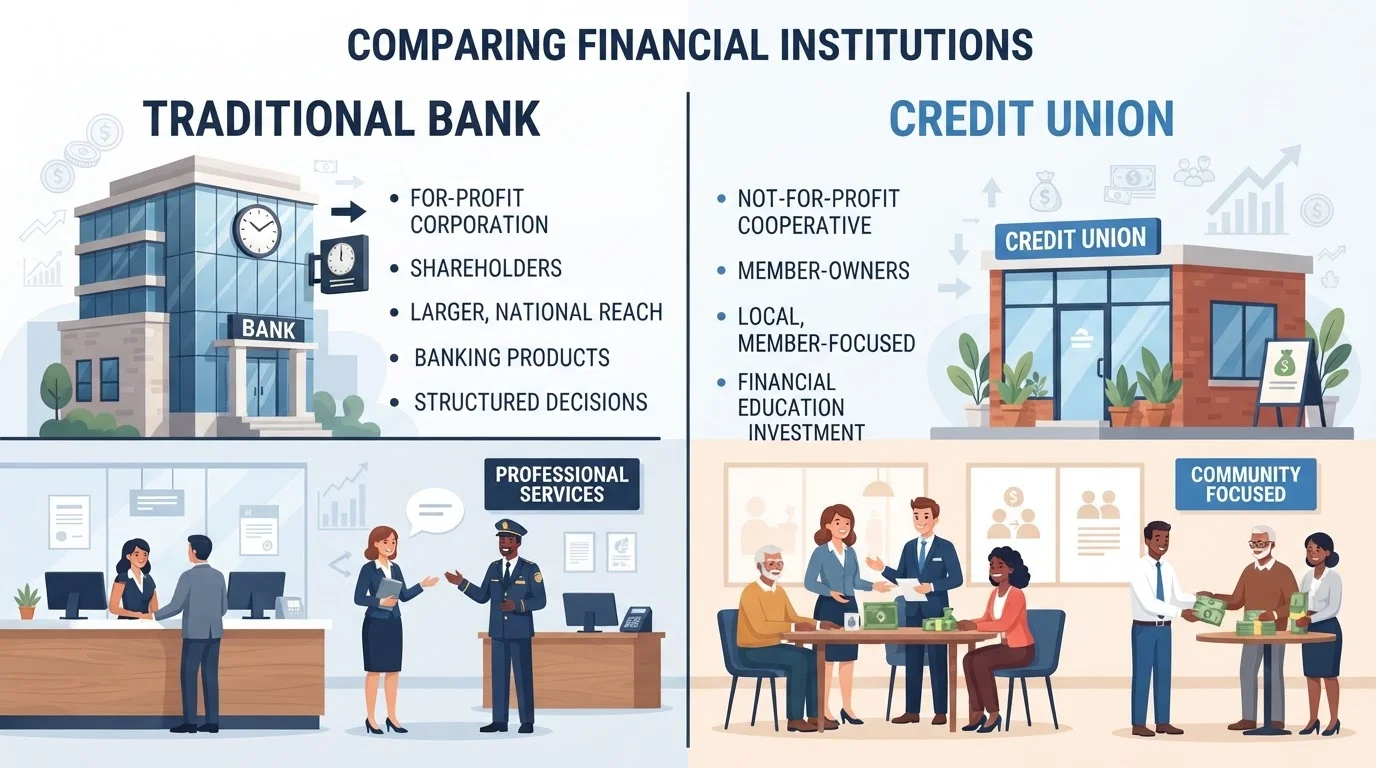
Credit unions deserve specific attention in this comparison because they operate differently from both commercial banks and dealer lenders. As member-owned, not-for-profit institutions, credit unions return earnings to members in the form of lower rates and fees rather than to shareholders. This structural difference can translate into meaningfully lower auto loan APRs for qualifying borrowers.
Credit unions may also apply more flexible underwriting criteria, particularly for members with shorter credit histories or past financial difficulties. That said, membership is required - eligibility is typically based on employer, geography, or affiliation. If you're not already a member, it's worth checking whether you qualify before dismissing this route.
For a broader look at how credit unions and banks differ in their approach to lending, our credit unions vs. banks comparison covers their distinct approaches in detail. And if you want to understand how your credit profile affects the rates you'll be offered, the Credit & Debt hub is a useful starting point.
Rate Shopping and Your Credit Score
Applying for auto loan pre-approval at multiple lenders within a short window - generally 14 to 45 days depending on the credit scoring model used - is typically treated as a single inquiry for credit score purposes. This means comparing rates from several banks and credit unions carries less credit score risk than many borrowers assume. Check the specific guidelines of the scoring model your lender uses, as policies can vary.
Making the Decision That's Right for You
The smartest approach for most buyers is to pursue pre-approval from at least one bank or credit union before visiting any dealership. This takes the guesswork out of what rate you qualify for and gives you a concrete benchmark. Once at the dealership, you can share your pre-approval and invite them to compete - if dealer financing comes in lower, you take it; if not, you use your outside approval.
Avoid evaluating loan offers based on monthly payment alone. A longer loan term can make any payment look affordable while dramatically increasing total interest paid. Always calculate the full cost of the loan - principal plus all interest - before comparing offers. First-time buyers especially fall into this trap; our article on common financing mistakes first-time buyers make covers this and other costly missteps in depth.
Finally, consult a licensed financial professional if you're uncertain how an auto loan will interact with your broader financial picture. General information like this article can inform your thinking, but individual circumstances vary and personalized guidance from a qualified adviser is always worth seeking for significant financial commitments.
This article is for general informational and educational purposes only and does not constitute personalized financial or legal advice. Consult a qualified financial professional before making borrowing decisions.