How These Two Institutions Are Structurally Different
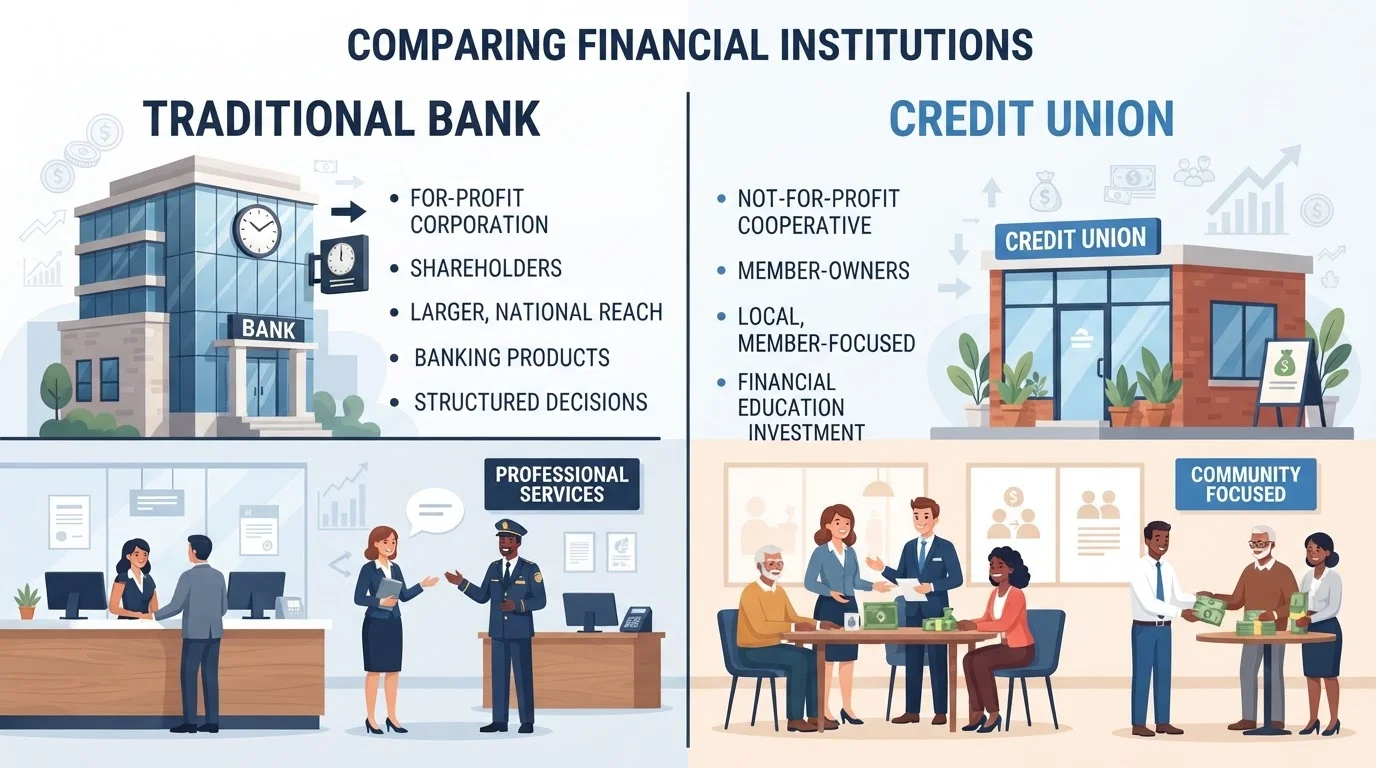
Understanding the fundamental structure of each institution helps explain why their credit-building approaches differ. Traditional banks are for-profit corporations. They answer to shareholders and generate revenue through interest, fees, and financial services. Credit unions, by contrast, are nonprofit cooperatives owned by their members. Profits are typically returned as lower rates, reduced fees, or improved member services.
This structural difference has a real effect on lending. Because credit unions are not optimizing for shareholder returns, they often have more flexibility in how they evaluate loan applications. Before you can use a credit union's products, however, you must qualify for membership - typically through an employer, community group, geographic region, or family connection. Banks have no such requirement.
For a broader foundation of credit vocabulary, see key credit terms every consumer should know before comparing specific products.
Credit-Building Products: How Each Institution Compares
Both banks and credit unions offer the core products used to build credit: secured credit cards, credit-builder loans, and personal loans. The differences lie in approval standards, cost, and support.
| Criterion | Traditional Banks | Credit Unions |
|---|---|---|
| Structure | For-profit, shareholder-owned | Nonprofit, member-owned cooperative |
| Membership requirement | None - open to all | Must meet eligibility criteria |
| Underwriting approach | Typically algorithm-driven, score-focused | Often more holistic and flexible |
| Fees | Varies widely; often higher | Generally lower across products |
| Credit-builder loans | Available at some banks | Widely available, commonly offered |
| Bureau reporting | Yes (confirm per product) | Yes (confirm per product) |
| Digital tools & access | Generally more advanced | Varies; often more limited |
| Branch & ATM network | Typically larger, nationwide | Smaller; shared networks exist |
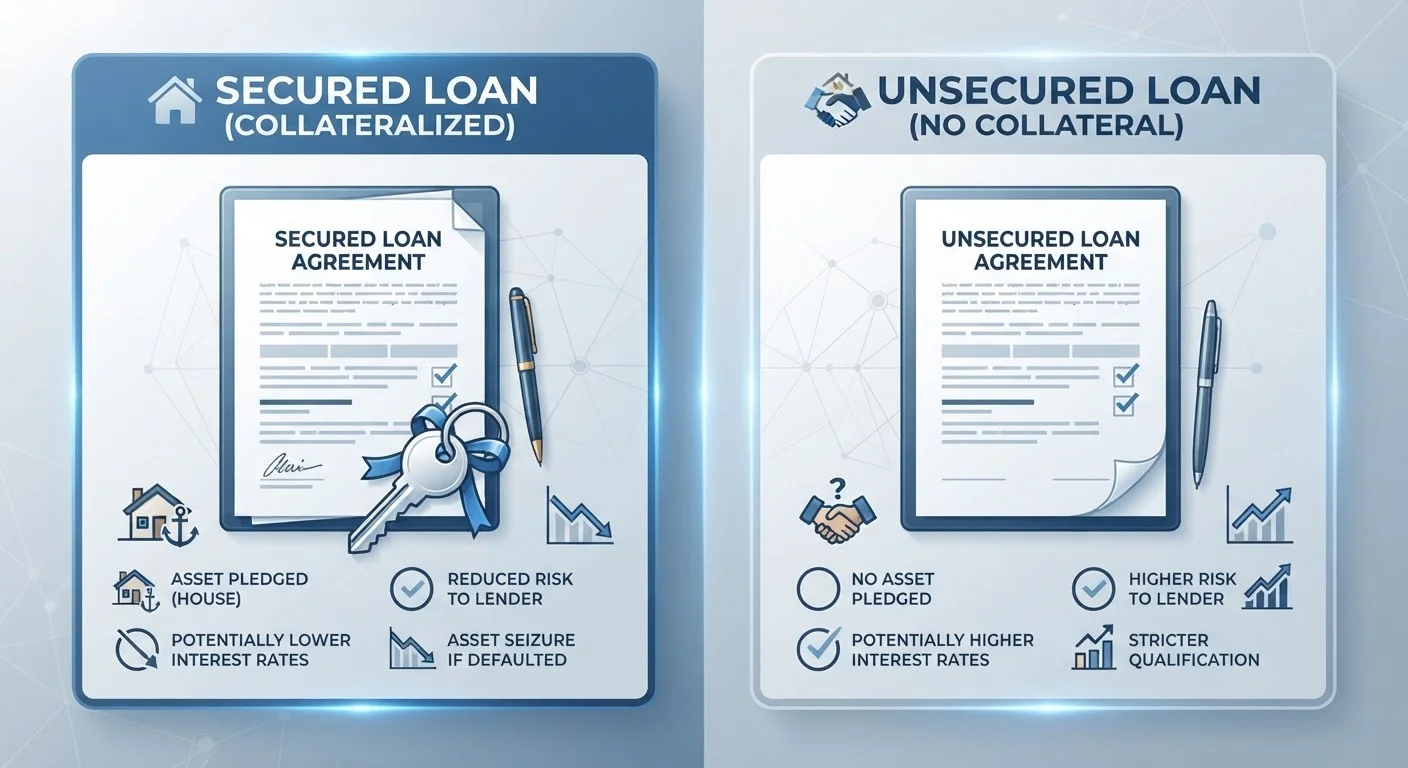
Secured credit cards - which require a cash deposit as collateral - are available at both institution types. Secured and unsecured credit products work differently in terms of risk and collateral requirements, and credit unions often offer secured cards with lower annual fees and deposit minimums. Banks, particularly large national ones, may have more options but sometimes carry higher fees.
Credit-builder loans are small loans where the borrowed amount is held in a savings account while you make payments. Once the loan is repaid, you receive the funds. Credit unions pioneered this product and still offer it widely. Some banks and online lenders have adopted it, but availability varies.
Lending Criteria and Approval Flexibility
One of the most meaningful distinctions for credit builders is how each institution evaluates applicants. Large banks often apply standardized, algorithm-driven underwriting - a specific credit score threshold may automatically disqualify an applicant, regardless of other positive factors.
Credit unions tend to take a more holistic view. A loan officer may consider your employment history, relationship with the credit union, or savings pattern when making a decision. This does not mean credit unions approve everyone - they still assess creditworthiness carefully - but it does mean borderline applicants may have more room to make their case.
135M+
Americans with credit union membership
According to the National Credit Union Administration (NCUA), U.S. credit union membership has grown steadily, surpassing 135 million members.
~0.5-1%
Typical interest rate advantage on loans
The NCUA has historically reported that credit union loan rates average roughly half a percentage point to a full point lower than comparable bank rates, though this varies by product and market.
5-6%
U.S. adults with no credit history
The Consumer Financial Protection Bureau (CFPB) has estimated that millions of American adults are 'credit invisible,' making credit-building products especially important for first-time borrowers.
This flexibility is particularly valuable for consumers with no credit history or those working to recover from past financial difficulties. That said, the terms you receive at any institution will reflect your credit profile, so building consistent habits matters regardless of where you bank. Credit score habits worth building early outlines behaviors that support steady progress over time.
Bureau Reporting, Fees, and What to Watch For
A critical requirement for any credit-building product is that the institution reports your payment history to the three major credit bureaus - Equifax, Experian, and TransUnion. Both banks and credit unions generally do this for standard loan and credit card products, but it is worth confirming before you open an account. Not every credit-builder product at every institution reports to all three bureaus.
Fee structures deserve close attention. Credit unions typically charge lower fees - lower annual fees on cards, lower late payment penalties, and lower loan origination costs. Banks vary widely; some national banks have reduced fees in recent years, while others still carry significant costs that can offset the credit-building benefit.
For context on how credit applies to larger purchases, financing a car through a dealership vs. a bank or credit union illustrates how the institution you choose can affect loan terms on major decisions too.
The broader picture of responsible borrowing is covered in understanding credit and debt from every angle, a useful companion resource as you evaluate your options.
This article is for general informational and educational purposes only and does not constitute personalized financial advice. Consult a qualified financial professional before making decisions about your specific credit or financial situation.