What Makes a Protein 'Complete'?
Protein is made up of amino acids - 20 in total, nine of which are classified as essential because the body cannot manufacture them on its own. A food is called a complete protein when it provides all nine essential amino acids in sufficient quantities.
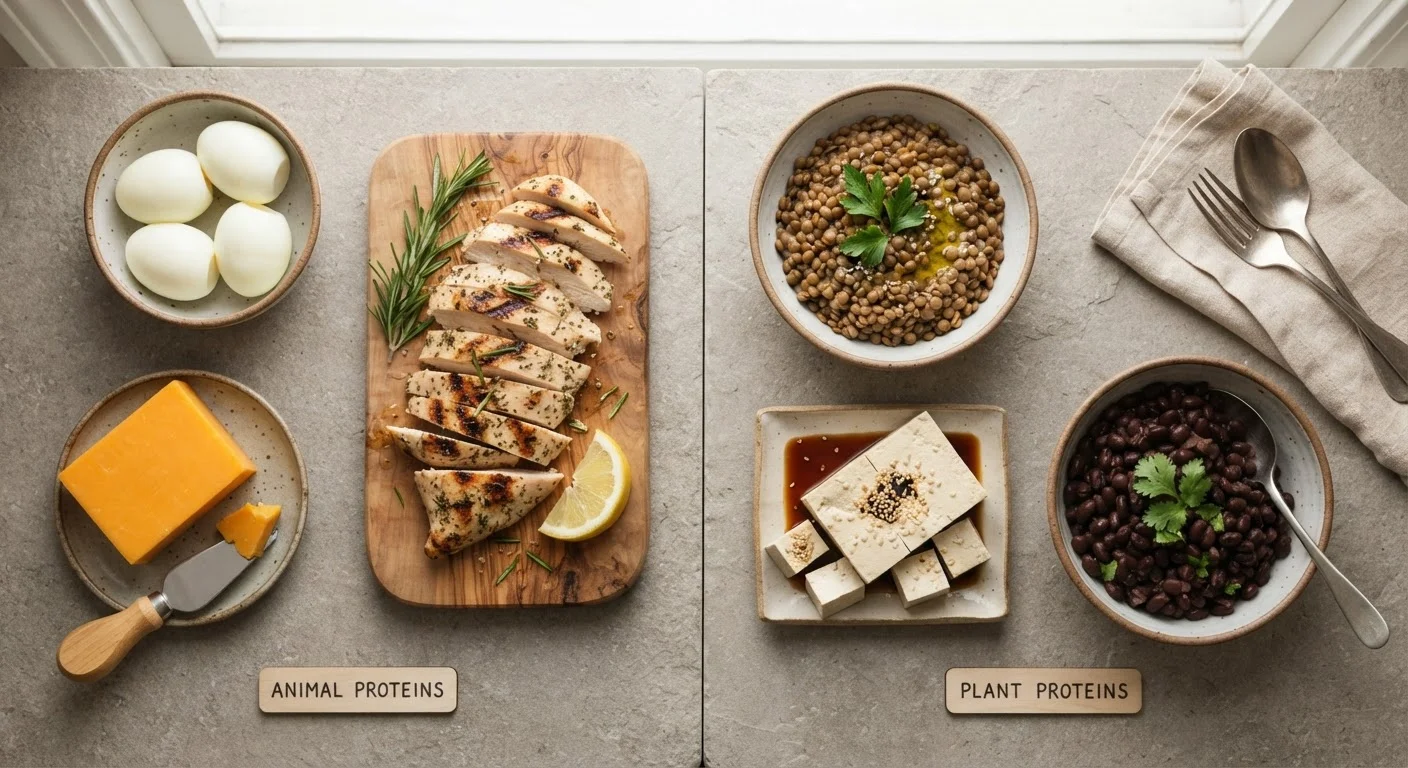
Animal proteins - including meat, poultry, fish, eggs, and dairy - are universally complete. Plant proteins are mostly incomplete, meaning they're low or missing in one or more essential amino acids. Notable exceptions include soy (edamame, tofu, tempeh) and quinoa, which are complete plant-based proteins.
This distinction matters but isn't a dealbreaker for plant-focused eaters. Consuming a variety of plant proteins throughout the day - a concept nutritionists call protein complementarity - effectively supplies all essential amino acids. Classic combinations like rice and beans or hummus and whole-grain pita illustrate this naturally. See our overview of popular diet patterns for how plant-forward eating frameworks handle this in practice.
Digestibility and Bioavailability
The body doesn't absorb 100% of any protein it consumes. Digestibility refers to what proportion is broken down and absorbed, measured by the DIAAS - the current gold-standard metric endorsed by the Food and Agriculture Organization of the United Nations.
| Criterion | Animal Protein | Plant Protein |
|---|---|---|
| Amino acid completeness | Complete (all 9 essential AAs) | Usually incomplete; soy & quinoa are exceptions |
| Digestibility (DIAAS) | High (typically 0.9-1.1) | Moderate (typically 0.5-0.8) |
| Saturated fat | Variable; red/processed meats higher | Generally low |
| Dietary fiber | None | Significant (legumes, grains) |
| Vitamin B12 | Naturally present | Absent without fortification |
| Heme iron | Present; highly bioavailable | Non-heme iron only; lower absorption |
| Typical cost per serving | Moderate to high | Low to moderate |
| Environmental footprint | Generally higher | Generally lower |
Animal proteins like eggs, dairy, and chicken consistently score near or at 1.0 on the DIAAS, indicating excellent digestibility. Most plant proteins score lower - typically 0.5 to 0.8 - partly because plant cell walls and compounds like phytic acid can impede absorption. Cooking, soaking, fermenting, and sprouting can meaningfully improve plant protein digestibility.
The Broader Nutritional Picture
Protein quality is only one dimension of a food's nutritional value. Animal and plant proteins differ substantially in their accompanying nutrients.
- Saturated fat: Red and processed meats are significant sources; most plant proteins are low in saturated fat.
- Fiber: Absent from all animal foods; abundant in legumes, nuts, and whole grains - the same foods that deliver plant protein.
- Micronutrients: Animal proteins provide readily absorbed heme iron, vitamin B12 (unavailable from plants without fortification), zinc, and omega-3 fatty acids (especially from fatty fish). Plant proteins contribute folate, magnesium, potassium, and a wide range of antioxidants.
- Sodium: Processed animal products (deli meats, canned fish) often carry high sodium loads; whole plant proteins generally do not.
Understanding where each protein source fits within a broader eating pattern is key. Our guide to whole versus processed foods provides useful context for reading beyond the protein label.
A Note on Vitamin B12 for Plant-Based Eaters
Vitamin B12 is found almost exclusively in animal foods. People who limit or avoid animal products are at genuine risk of deficiency over time, which can affect nerve function and red blood cell production. Fortified foods (certain plant milks, cereals, nutritional yeast) and supplements are the established solutions. Anyone substantially reducing animal intake should discuss B12 status with their healthcare provider.
Practical Guidance and Cost Considerations
For most Americans, protein intake is not the limiting factor - variety and food quality are. Both animal and plant proteins can anchor a nutritionally sound diet. Here are some evidence-informed principles to guide your choices:
- Prioritize whole-food sources over heavily processed products regardless of origin - grilled fish over fish sticks, lentils over plant-based nuggets.
- Diversify plant proteins across legumes, tofu, tempeh, nuts, and seeds to cover the amino acid spectrum naturally.
- Choose leaner animal options - skinless poultry, fish, and low-fat dairy - if limiting saturated fat is a health goal.
- Factor in cost: dried legumes and canned beans are among the most economical protein sources available. Our strategies for eating well on a budget explore this in depth.
For structured planning across a full week, the balanced eating planning checklist is a practical starting point.
This article is for general informational purposes and does not constitute medical or dietary advice. Consult a registered dietitian or qualified healthcare professional for guidance tailored to your individual health needs.