Why Paper Clutter Is So Stubborn
Paper clutter isn't a personality flaw - it's a systems problem. Mail arrives daily. School folders come home weekly. Receipts, instruction manuals, coupons, and takeout menus drift in constantly. Without a defined place or process for each category, paper lands on the nearest flat surface and stays there.
The deeper issue is decision fatigue. Every piece of paper requires a small mental decision: keep it, act on it, file it, or toss it. When life is busy, those micro-decisions get deferred, and deferred paper becomes a pile. That pile then feels overwhelming, making it even easier to add to rather than address.
Understanding this cycle is the first step. The solution isn't a bigger filing cabinet - it's a system that removes friction from the moment paper enters your home. This guide walks you through building exactly that, piece by piece. If you're working through clutter in multiple areas of your home, the whole-home organization framework offers a broader room-by-room approach worth pairing with these steps.
What You'll Need Before You Start
Before setting up your paper management system, gather a few simple supplies and be honest about how paper currently flows through your home.
What you will need
Physical inbox tray
Serves as the single landing zone for all incoming paper - the critical first sorting point.
Labeled file folders or accordion file
Organizes paper into categories (e.g., bills, medical, school, warranties) for fast retrieval.
Paper shredder
Securely destroys documents containing personal information before recycling.
Document scanner or scanning app
Creates digital copies of important documents so originals can be discarded.
Sticky notes or a small notepad
Flags papers that require action (a call to make, a form to return) without burying the reminder.
Building Your Paper Management System
Follow these steps in order - each one builds on the last. The goal is a lightweight, repeatable routine that takes minutes per day rather than hours per month.
Establish one and only one inbox spot
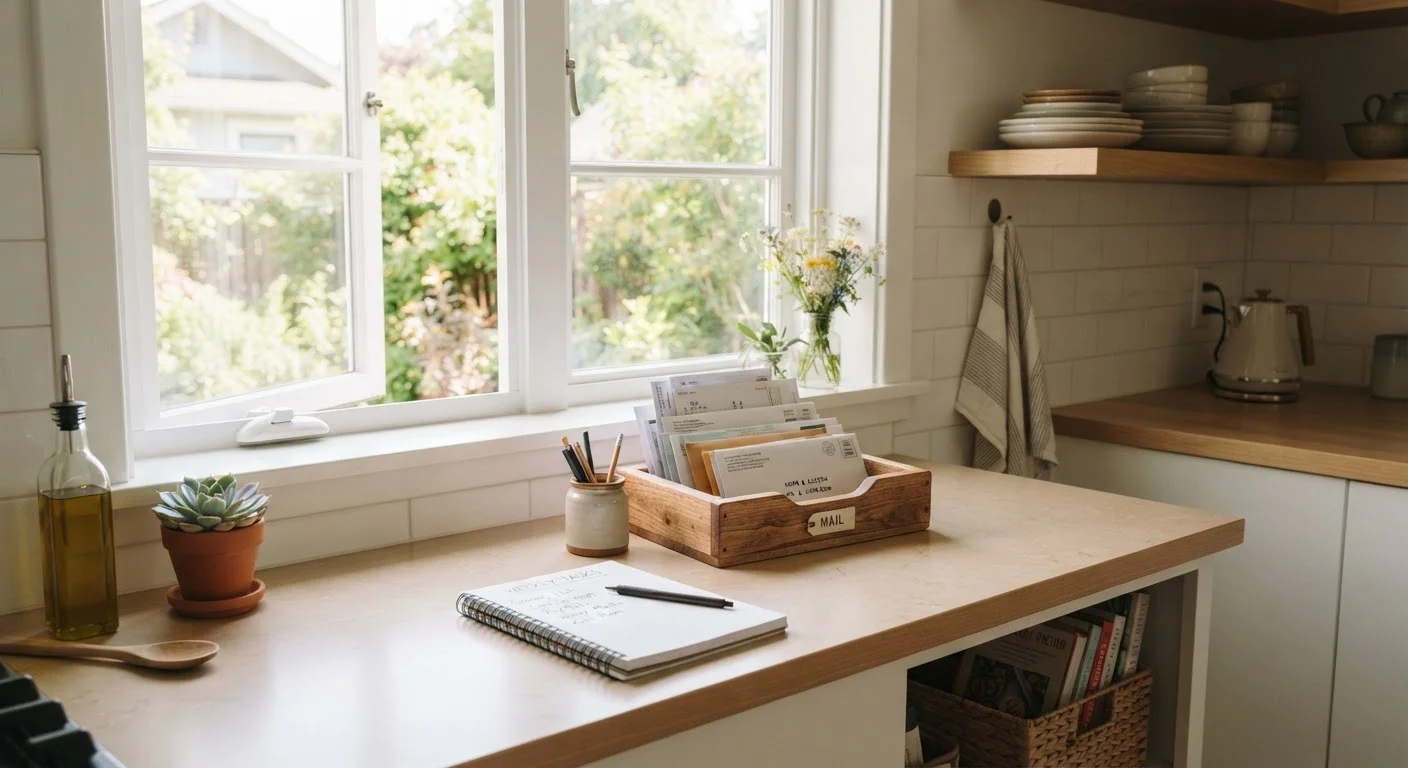
Choose a single physical location - a tray on a counter, a hook by the door, a basket on a shelf - where all incoming paper lands. Every household member must know and use this spot. The moment paper has two or more possible landing zones, the system breaks down.
Keep the inbox small deliberately. A tray that holds roughly 20-30 sheets creates a natural pressure to process it before it overflows.
Sort immediately using three categories
When paper hits your inbox, apply a fast three-way sort before walking away:
- Toss or shred now: Junk mail, duplicate copies, expired coupons, anything you'll never need.
- Act within 48 hours: Bills due, forms to sign, RSVPs to send. Flag these visibly.
- File for reference: Documents you need to keep but don't require action - insurance cards, receipts, medical summaries.
Anything that doesn't clearly fit one of these three gets a second look. If you can't articulate why you're keeping it, that's usually your answer.
Set up a simple filing structure
Resist the urge to build an elaborate filing system with dozens of subcategories. Most households need only five to eight broad folders: Bills & Utilities, Medical, School, Financial/Tax, Home, Insurance, Warranties/Manuals, and Pending Action.
Label folders clearly and keep the filing location close to your inbox. Distance is the enemy of follow-through - if filing requires walking to another room, papers will pile up instead.
Reduce paper coming in at the source
The least work is the paper that never arrives. Switch as many accounts as possible to paperless statements - banks, utilities, insurance providers, and subscription services all typically offer this. Register your address at optoutprescreen.com to reduce prescreened credit offers, and use the DMAchoice registry to limit unsolicited mail catalogs.
Fewer sheets entering the home means less sorting, less filing, and a lighter system overall.
Schedule a weekly 10-minute paper review
Once a week, spend no more than ten minutes at your inbox: process the action items, file the keepers, and shred or recycle the rest. This single habit prevents any backlog from forming. If the inbox is empty at review time, the system is working.
For a broader approach to making this kind of routine stick across your whole home, see building an organization habit that actually sticks.
Keeping the System Running Long-Term
A paper system only works if it becomes a habit rather than a one-time project. The most reliable approach is attaching your weekly paper review to something you already do - Sunday meal prep, paying bills, or a Monday morning coffee. Consistency matters far more than perfection.
Every few months, revisit your filing categories. Households change: a new job, a school-age child, a home purchase all shift what paper you receive. Trim any category that's collecting documents you never look at. And if the pile starts creeping back, treat it as useful feedback - something in the system needs adjusting, not more willpower.
For a structured way to catch paper clutter before it compounds, consider pairing this system with a seasonal declutter audit each quarter. It's also worth reading how to build an organization habit that sticks - the same principles that apply to rooms apply directly to paper routines.