Why Organization Habits Fail - and What to Do Instead
Most people approach home organization the same way they approach a crash diet: go all-in over a single weekend, exhaust themselves, and watch it unravel within two weeks. The problem isn't willpower - it's the approach. Sustainable tidiness works exactly like any other lasting habit: it needs to be small enough to repeat without friction.
Behavioral research consistently shows that habits form most reliably when tied to an existing routine and kept simple enough to execute on low-energy days. That principle applies directly to home organization. Instead of planning a whole-house overhaul, the goal is to build a repeatable daily practice - one room, one zone, one decision at a time.
This approach also fits naturally alongside other habit-building efforts. The same behavioral logic that underpins the budgeting habits that actually stick applies here: small, consistent actions create durable change far more reliably than dramatic overhauls.
What You'll Need Before You Start
Organization doesn't require a shopping trip. Before gathering supplies, take stock of what's already in your home.
What you will need
Sorting containers (3)
Used to separate items into keep, donate/discard, and relocate categories during each session.
Adhesive labels or masking tape
Mark shelves, bins, and drawers so every household member knows where items belong.
Timer
Keeps sessions short and focused - typically 15 to 20 minutes - to prevent burnout.
Hooks or small wall-mounted storage
Adds quick-access storage at entry points where items are most frequently dropped.
Step-by-Step: Building Your Organization Habit
Follow these steps in order. Each one builds on the last, so resist the urge to skip ahead or tackle multiple rooms simultaneously until the habit feels automatic in the first space you tackle.
Choose one room - and only one
Pick the room that causes you the most daily frustration, or the one that would give you the most relief if it were consistently tidy. Commit to this room for at least two weeks before moving on. Write it down somewhere visible.
Do a single 15-minute sort session
Set a timer for 15 minutes. Work through one surface or one category of items - not the whole room. Sort everything into your three containers: keep, donate/discard, and relocate (items that belong elsewhere in the home). Stop when the timer goes off, even if you're not finished.
Assign a home to every item you're keeping
For each item in your "keep" pile, decide exactly where it lives - not a general zone, but a specific shelf, drawer, or hook. Label that location if other people share the space. This is the single most important step: clutter is usually items without an assigned home.
Immediately remove the donate/discard and relocate items
Take your donate/discard bag directly to your car, recycling bin, or donation drop point - don't leave it sitting in the room. Deliver relocated items to their correct rooms right now. Letting sorted piles linger defeats the purpose of the session.
Build a daily five-minute reset into an existing routine
Choose a consistent daily trigger - after dinner, before bed, or when you first get home - and spend five minutes returning your chosen room to its baseline state. This isn't a cleaning session; it's simply returning things to their assigned homes. Attach it to something you already do automatically to help it become habitual.
Repeat sort sessions weekly until the room is stable
Schedule one 15-minute sort session per week in the same room until there's nothing left to sort and the five-minute reset is working reliably. This typically takes two to four weeks depending on the room's size and how much has accumulated. Only then move your habit to the next room.
Keeping Everyone On the Same Page
If you share your home with others, organization habits need buy-in to survive. A system that only one person maintains will collapse under the weight of daily life. The key is designing structures that feel intuitive for every person in the household - not just the one who set them up.
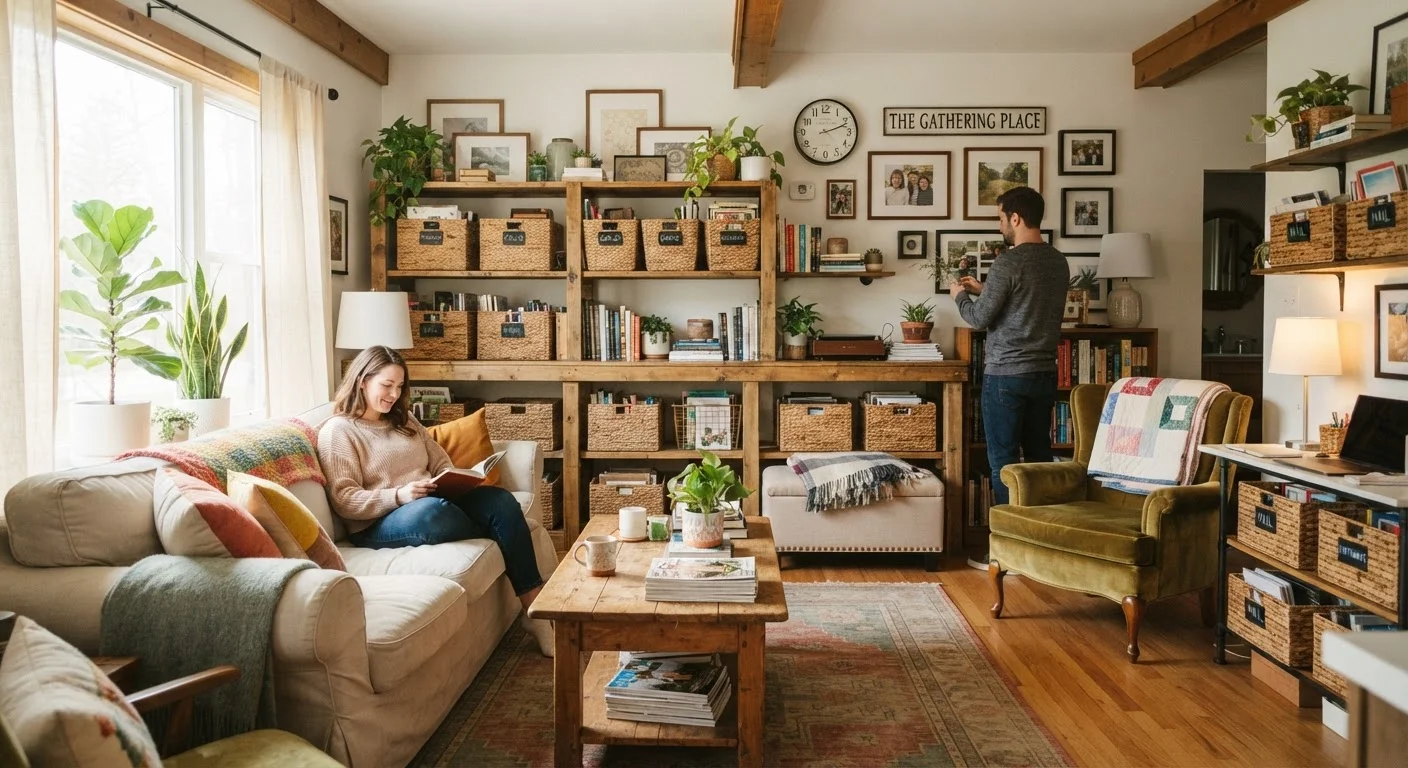
Keep storage solutions visible and labeled where possible. Make the "right" choice the easy one: a hook by the door is more likely to catch keys than a designated drawer in another room. For households with varying tidiness standards, the guide to organizing a home everyone actually uses offers concrete frameworks for negotiating shared spaces without constant friction.
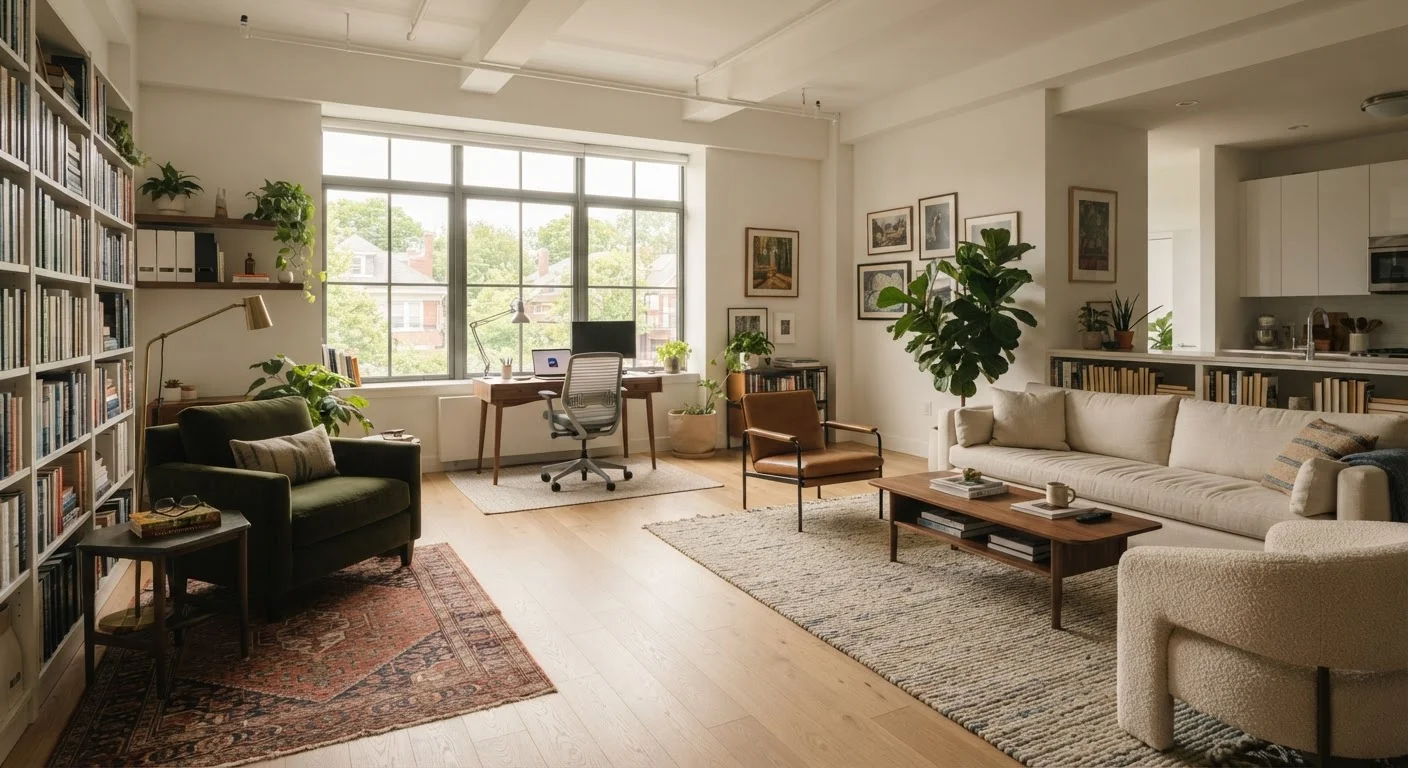
Once your first room is running smoothly, consider whether your layout is working as hard as it could. Zone-based organization - assigning specific functions to defined areas - can dramatically reduce the daily decisions that lead to clutter piling up in the first place.
Troubleshooting: When the Habit Slips
Expect setbacks. Life gets busy, guests arrive, routines shift - and clutter creeps back. This is normal, not failure. The goal isn't a perfect home; it's a recoverable one.
When things pile up, don't restart from scratch. Return to the five-minute reset in whichever room has drifted most, and rebuild from there. If paper clutter is a recurring culprit, the guide to stopping paper clutter cycles addresses the root causes that keep mail and documents accumulating despite your best efforts.
Small spaces can feel especially discouraging when clutter returns. Rethinking how you use vertical surfaces can change your storage capacity significantly - the comparison of vertical versus floor-based storage is worth revisiting when floor space is the limiting factor. Stick with the habit, adjust what isn't working, and remember: one room at a time is still the pace that wins.