Why the Vertical vs. Floor Decision Matters
In a small room, every square foot carries weight - figuratively and literally. The storage decisions you make shape not just how much you can stow away, but how the room feels to move through, how easy it is to find things, and whether the space feels calming or chaotic.
The core question isn't simply "where do I put more stuff?" It's about understanding how your room's dimensions, your daily routines, and the physical needs of everyone in the household interact. Before adding any storage, it's worth asking the right questions about your space - as our guide on assessing your space before buying storage explains.
Vertical and floor-based storage each have clear strengths, and the smartest small-room setups usually use both - deliberately, not by default.
| Criterion | Vertical Storage | Floor-Based Storage |
|---|---|---|
| Floor space impact | Minimal - keeps floors open | Higher - claims physical footprint |
| Accessibility | Variable - top shelves require reaching | Easy - items within arm's reach |
| Safety considerations | Must anchor tall units to wall studs | Stable; no anchoring typically needed |
| Room feel | More open, airy appearance | Can feel denser in small rooms |
| Best for heavy items | No - overhead weight is risky | Yes - stable and low-center of gravity |
| Renter-friendly | Often requires wall installation | Fully freestanding, no wall work |
| Flexibility to rearrange | Lower - wall-mounted systems are fixed | Higher - easy to move and reconfigure |
| Ideal ceiling height | 8 feet or more | Works at any ceiling height |
The Case for Vertical Storage
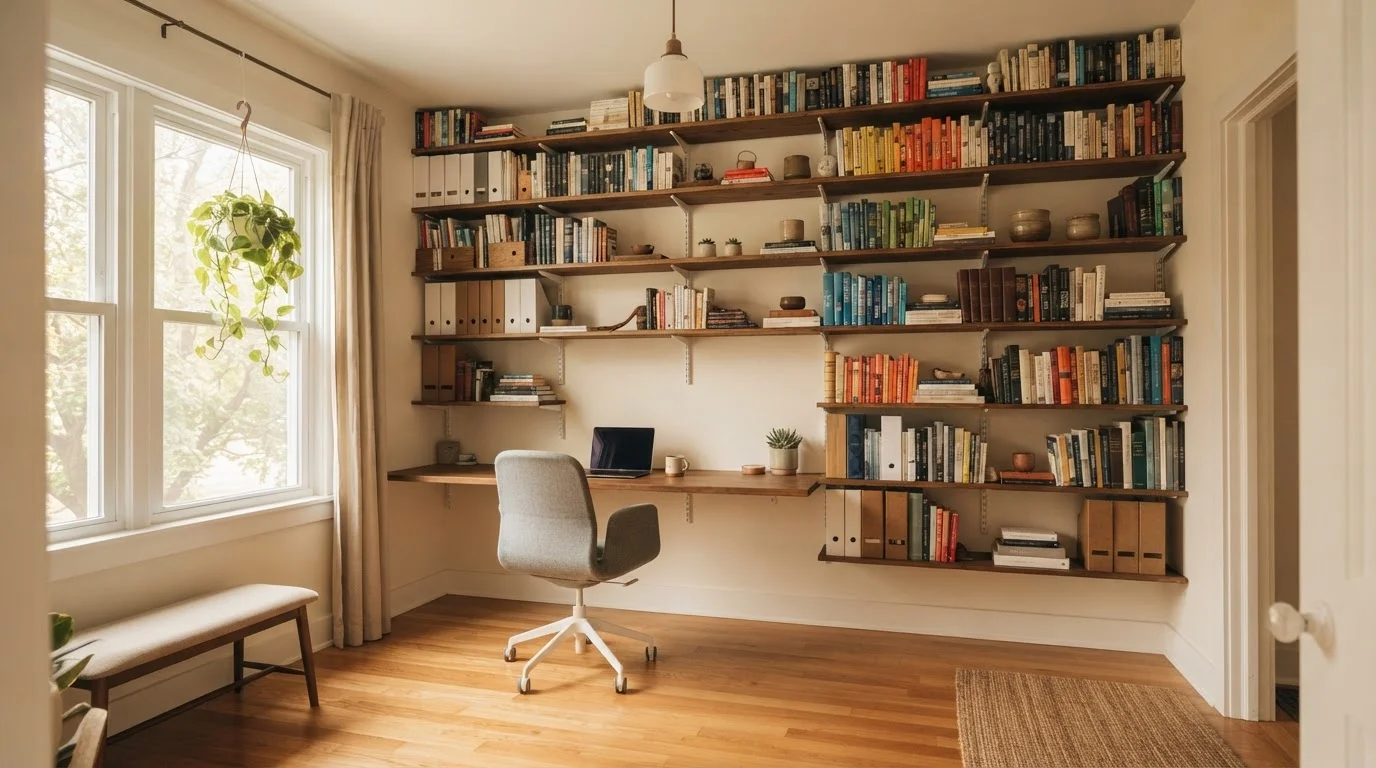
Vertical storage means using the height of a room - wall-mounted shelves, tall bookcases, pegboards, over-door organizers, and stacked units. Its primary advantage is preserving floor space, which has a dramatic effect on how open a room feels.
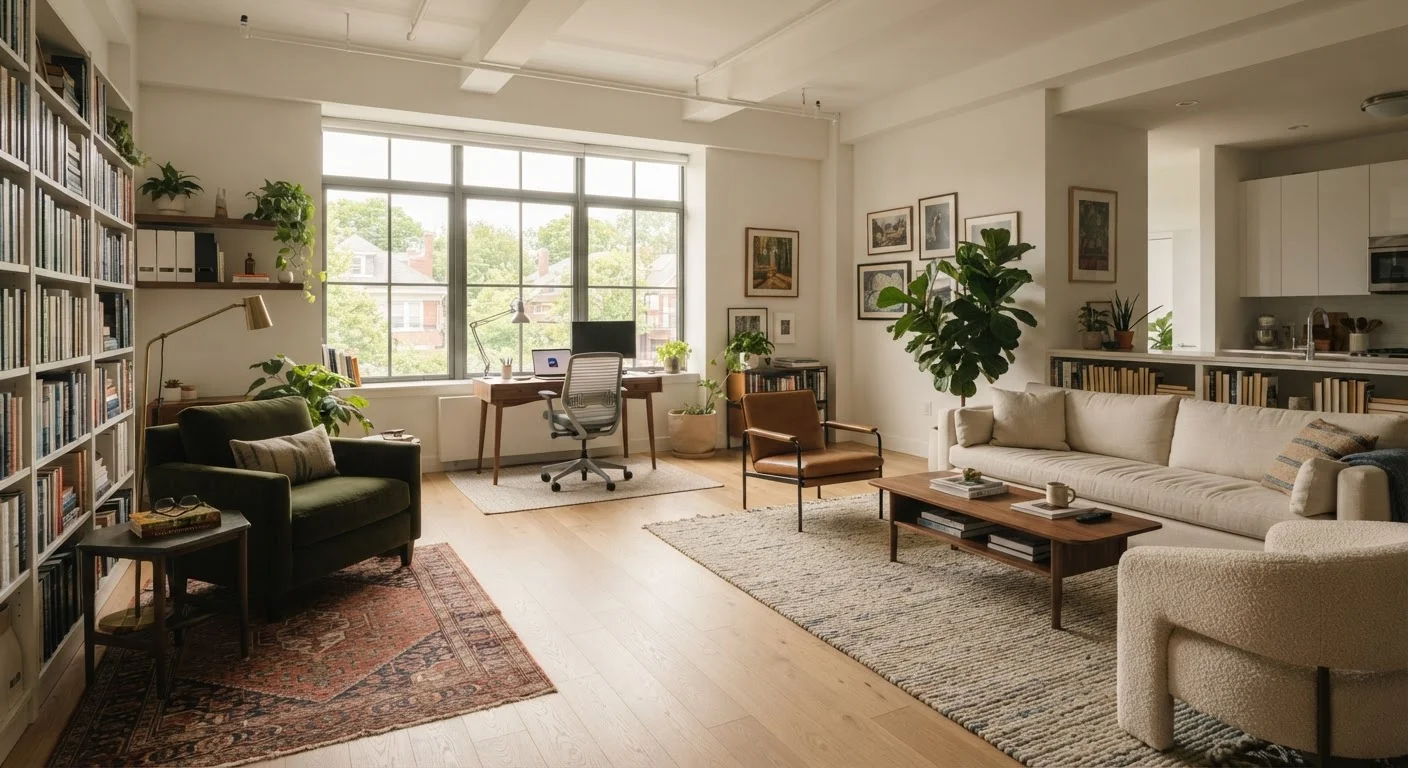
When storage climbs toward the ceiling rather than spreading across the floor, you retain room for movement, furniture arrangement, and visual breathing room. This is especially valuable in bedrooms doubling as home offices, compact entryways, and studio apartments.
A few practical considerations:
- Anchor tall furniture securely. Any shelving or cabinet taller than roughly 30 inches should be anchored to wall studs - a requirement many overlook until something tips. This is a safety non-negotiable, particularly in homes with children.
- Keep frequently used items at eye level. Reserve the highest shelves for things you rarely need. Climbing for everyday items creates friction and is a safety hazard.
- Assess your ceiling height honestly. Vertical storage pays off most when ceilings are 8 feet or higher. In rooms with 7-foot ceilings, tall units can feel oppressive rather than efficient.
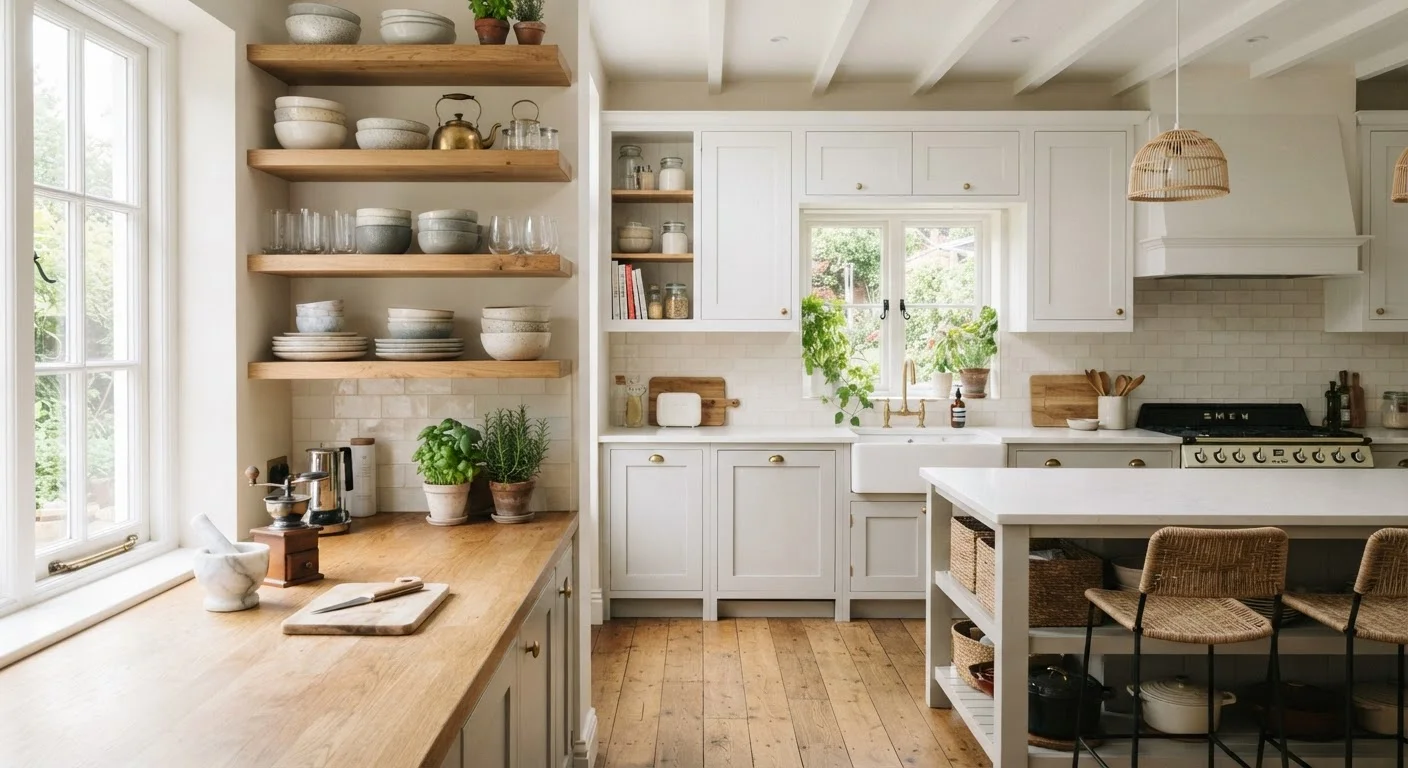
For kitchen-specific thinking on vertical approaches, see our comparison of open shelving versus upper cabinets.
The Case for Floor-Based Storage
Floor-based storage - ottomans with hidden compartments, low dressers, under-bed drawers, baskets, and wide credenzas - keeps everything within easy reach and doesn't require wall anchoring. It's inherently stable and accessible, making it the practical default for many households.
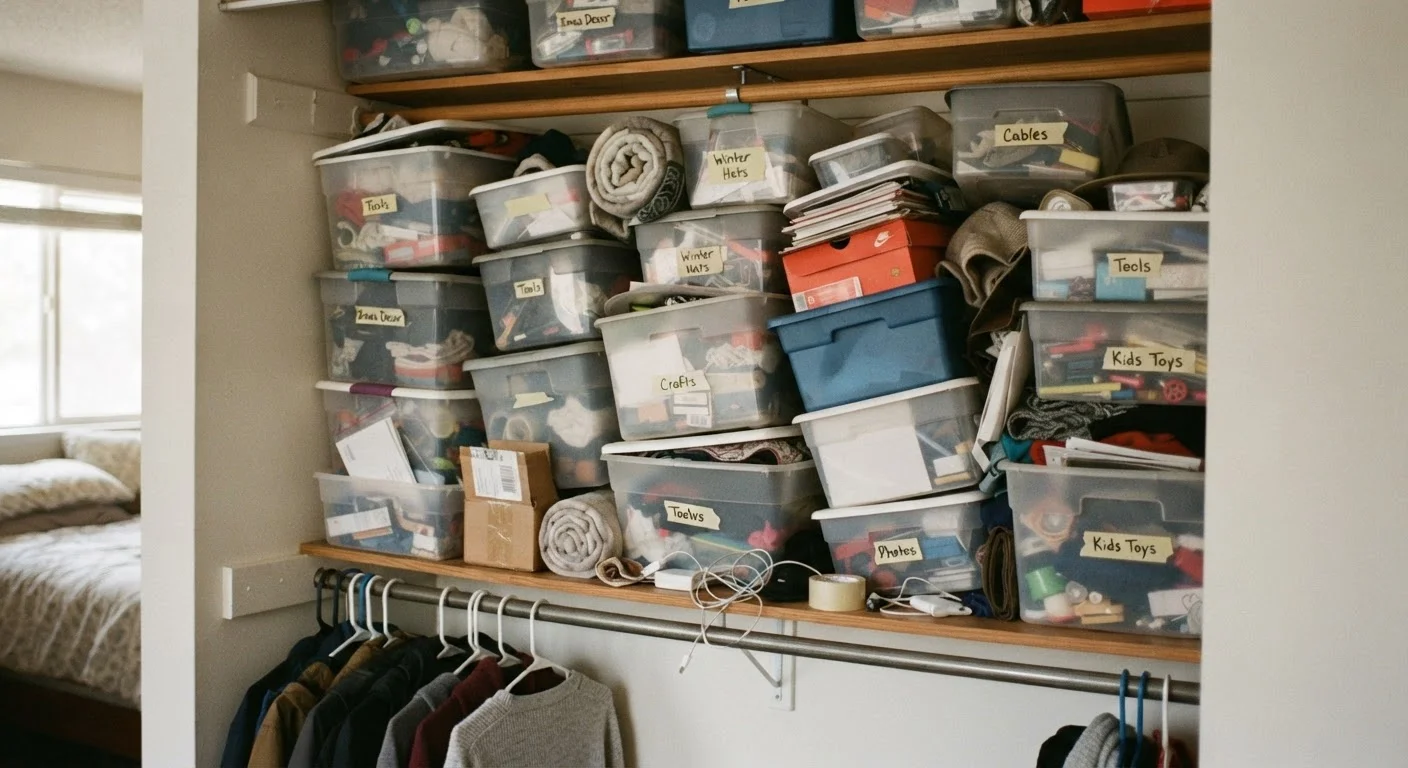
Its limitation in small rooms is footprint. Each piece of floor-based storage claims physical territory, and in a compact space, that adds up quickly. A room lined with low storage units can start to feel more like a warehouse than a living space, even when it's tidy.
Floor-based storage earns its place when:
- You're storing heavy, awkward, or fragile items that shouldn't be overhead.
- Household members include anyone for whom overhead reaching is uncomfortable or unsafe.
- You want flexibility - floor units can be repositioned without patching walls.
- You're renting and can't install wall-mounted systems.
Under-bed storage is a particularly underused floor-level option. Shallow rolling bins or purpose-built drawers can hold seasonal clothing, spare linens, or shoes without claiming any visible room space at all.
Blending Both Approaches Strategically
The most functional small rooms don't choose a single approach - they assign each type of storage intentionally. Think of it as a layered system: vertical storage handles volume and infrequently accessed items; floor-level storage handles everyday essentials and heavier loads.
A practical framework:
- Map your items by frequency of use. Daily-use items belong at arm level. Weekly items can go higher or lower. Seasonal and rarely used items earn the top shelf or deepest under-bed bin.
- Identify dead zones. Corners, the backs of doors, and the space above closet rods are often wasted. These are ideal candidates for vertical additions that don't compete with primary living space.
- Consider sight lines. Tall storage along one wall often works better than distributed units around a room, which can feel visually busy.
This kind of zone-based thinking - assigning purpose to specific areas - is a proven organizational principle. Our article on zone-based organization walks through how to apply it room by room. And if you're tackling multiple rooms, the whole-home organization framework offers a structured starting point.
Building these habits incrementally - rather than overhauling everything at once - tends to produce more lasting results, as the one-room-at-a-time approach makes clear.