What This Decision Actually Involves
Swapping upper cabinets for open shelves has become one of the most discussed kitchen updates in home improvement circles. The appeal is easy to understand: open shelves can make a kitchen feel larger, brighter, and more personalized. But the trade-offs are real, and they affect daily life in ways that Instagram photos rarely show.
This isn't purely a design choice - it's a storage and maintenance decision. Understanding both sides clearly will help you decide what actually fits your kitchen and your household. For a broader look at how storage decisions interact with the space you have, see our guide on vertical vs. floor-based storage.
The Case for Open Shelving
Open shelves have genuine, functional advantages - not just visual ones.
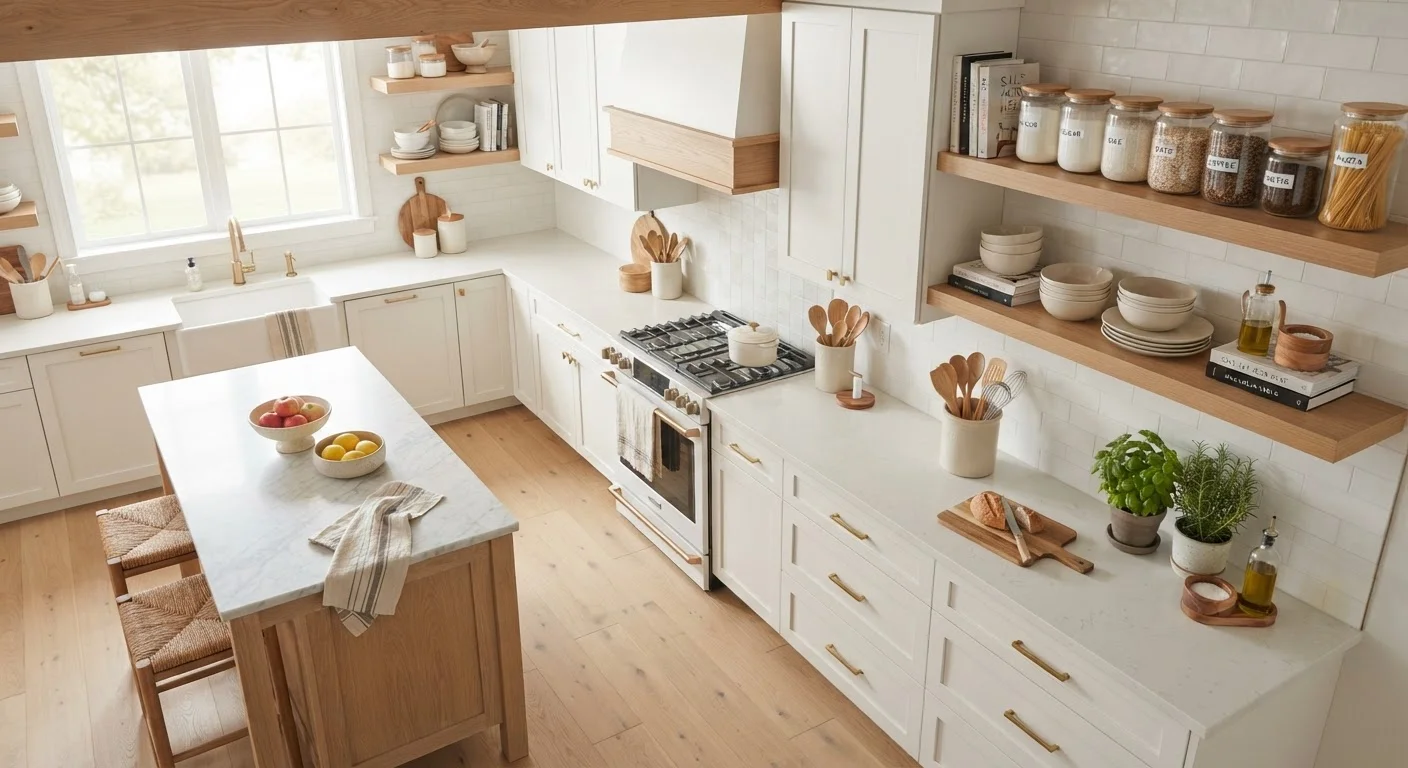
Items are visible and immediately accessible
Frequently-used dishes and glasses are easy to grab without searching through closed storage. This works especially well for households with consistent, curated kitchenwares.
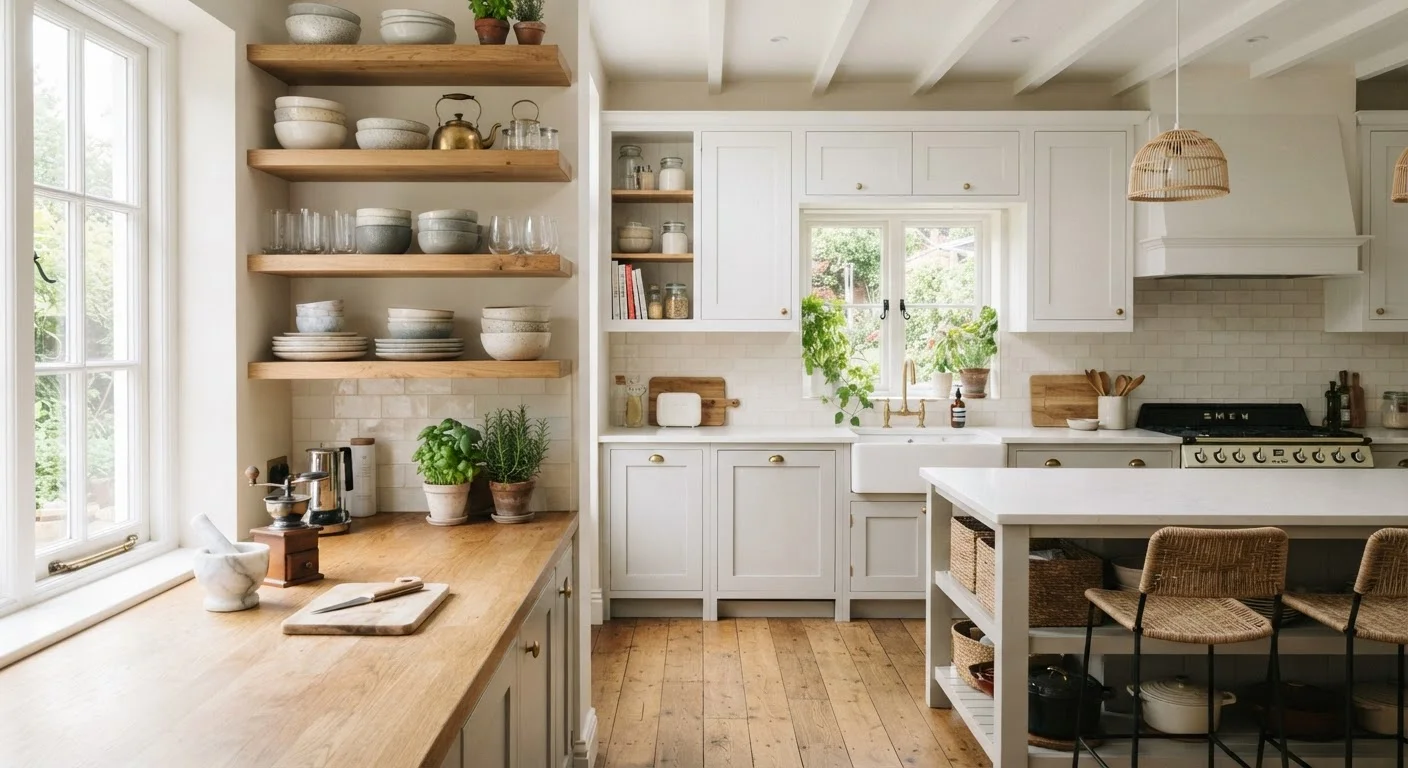
Makes small kitchens feel more open
Removing visual barriers at upper-wall height creates a sense of depth and airiness that can genuinely improve how a compact kitchen feels day-to-day.
Encourages intentional editing of what you keep
When everything is on display, most people naturally pare down to items they actually use and like. This can be a useful discipline for decluttering a cluttered kitchen.
Easier to install and modify than full cabinetry
Floating shelves are a simpler, lower-cost installation than upper cabinet runs, and adjusting shelf positions later requires far less work than reconfiguring built-in cabinets.
The most practical benefit is immediate visibility. When dishes, glasses, and pantry staples are in plain sight, you reach for what you need without opening and closing cabinet doors. This can genuinely streamline cooking workflow if your shelves are well-organized. For more on workflow-driven kitchen organization, these kitchen organization principles are worth reading alongside this comparison.
Open shelving also tends to make small kitchens feel less closed-in. Removing visual barriers at eye level creates a sense of depth that upper cabinets, especially dark ones, can work against.
The Case for Upper Cabinets
Upper cabinets have held their place in kitchen design for good reason - they solve real, everyday problems.
Requires consistent tidiness to look good
Open shelving exposes everything at all times. Mismatched items, clutter, or even minor disorganization is always visible, which creates ongoing upkeep pressure.
Dishes collect grease and dust faster
In an active cooking kitchen, open shelves near the range or stove accumulate airborne grease and dust noticeably faster than enclosed cabinet interiors.
Less total storage than full upper cabinets
Open shelves typically provide fewer linear feet of usable storage than equivalent cabinet runs, which can be a real constraint in smaller kitchens with limited storage elsewhere.
Items are exposed to humidity and temperature swings
Pantry staples, spices, and certain dishware stored openly are more exposed to kitchen heat, steam, and humidity than items kept behind cabinet doors.
The biggest practical advantage cabinets offer is concealment. Not every household has kitchenwares that look attractive on display, and that's completely normal. Cabinets let you store mismatched items, bulk pantry goods, and rarely-used appliances without thinking twice about how they look. If your household includes multiple people with different tidiness thresholds, cabinets create much less friction - a point worth considering alongside organizing shared spaces with different standards.
Dust and grease accumulation is also a genuine maintenance factor. Open shelves in an active kitchen require regular wiping - dishes on display gather cooking grease and airborne dust faster than most people expect before switching.
~30%
Reported increase in weekly cleaning time
Homeowners who switched to open shelving commonly report spending noticeably more time on surface cleaning compared to when they had upper cabinets, based on home-improvement user surveys.
42%
Homeowners prefer hybrid cabinet layouts
According to Houzz's annual kitchen trends reports, a significant share of kitchen remodelers opt for a mix of open and closed storage rather than committing fully to one approach.
A Hybrid Approach Worth Considering
For many households, the best outcome isn't all-or-nothing. A hybrid layout - open shelves in lower-traffic zones or display areas, cabinets for the heavy-use storage above the stove and prep areas - captures the visual benefits without sacrificing practicality.
Common hybrid strategies include keeping open shelves near a dining area for glassware or attractive dishware, while retaining full upper-cabinet runs near the range and sink where grease and steam are highest. This also distributes the maintenance burden: you get the visual lift of open shelving without committing every surface to daily upkeep.
Structural and Safety Check First
Before removing upper cabinets, inspect the wall behind them for plumbing, electrical lines, or structural elements. Older homes in particular may have unexpected conditions behind kitchen walls. If you find anything beyond basic drywall, stop and consult a licensed contractor. Installing open shelves also requires anchoring into wall studs - shelves loaded with dishes are heavier than they look, and improper anchoring is a safety risk.
Before committing to any removal, it's worth thinking carefully about what you actually store. Questions worth asking before reorganizing your storage apply just as well here - honest self-assessment of what you own and how you use it matters more than a design trend.
Practical Considerations Before You Commit
Removing upper cabinets is more than a style swap. Cabinet removal can expose wall patches, outdated wiring, or plumbing lines depending on your kitchen's layout and age. Always assess the wall condition before committing, and if you encounter anything beyond drywall repair, consult a licensed contractor. Some jurisdictions require permits for structural wall work - check your local building codes first.
Installing floating shelves also requires proper anchoring into wall studs. Dishes are heavy, and shelves that aren't correctly secured into framing are a safety hazard, not just a stability concern. If you're not confident locating studs and using the right hardware for your wall type, this is a task worth handing off to a professional.
Finally, consider resale. Open shelving is a personal preference, and future buyers may view it differently than you do. Neither choice dramatically harms resale value, but it's a factor worth noting if you plan to sell within a few years. For a broader look at the trade-offs of curating a simpler, more minimal home, the honest trade-offs of going minimalist offers useful perspective.