Why Kitchen Organization Is Really About Workflow
A kitchen that looks organized but constantly frustrates you during meal prep isn't truly organized - it's just tidy. Real kitchen organization, as explored in what organized actually means, is about making your space work for the way you actually cook and live.
The kitchen is the room where workflow matters most. You move between the refrigerator, prep surface, cooktop, and sink dozens of times during a single meal. Every misplaced tool or out-of-reach ingredient adds friction. Over time, that friction erodes how much you enjoy cooking - and how consistently you maintain order.
The principles below aren't about matching containers or perfect labeling. They're about building a kitchen that functions reliably, no matter the size or layout.
Core Principles for a Kitchen That Stays Organized
These practices have held up across decades of kitchen design and home organization research. Apply the ones that fit your space first, then layer in the rest as habits form.
Store items at the point of use, not by category alone.
Keeping tools and ingredients near where they're actually used eliminates unnecessary steps and mental load during cooking. A spice rack next to the stove beats a neatly alphabetized one across the room every time.
Limit what lives on the countertop to daily-use items only.
Countertops are prime real estate. Every appliance or object that parks there permanently reduces your usable prep space and makes cleaning harder. Cleared surfaces also create a visual calm that makes the kitchen feel larger.
Group like items together in dedicated zones.
Zones - baking, breakfast, snacks, cooking tools - reduce the time spent searching and help everyone in the household know where things belong. Consistent grouping also makes restocking and tidying automatic.
Audit your kitchen storage at least once a year.
Cooking habits, family size, and seasonal needs change. A system built for last year's routines may be quietly fighting this year's. Annual reviews help you catch mismatches before they become chaos.
Design your system for the easiest possible reset, not the perfect arrangement.
Organization only works if it gets maintained. Systems that are easy to restore after a busy week are more durable than elaborate setups that require effort to upkeep. Aim for 'good enough to reset in five minutes.'
Start Small, Build Lasting Habits
Organizing an entire kitchen in a single weekend feels satisfying but rarely sticks. Systems installed in a rush tend to ignore actual use patterns, and within weeks, things drift back to where they naturally land - which is often the wrong spot.
A more durable approach is to tackle one zone at a time: the coffee and breakfast station this week, the spice area next. This is the same logic behind building an organization habit that actually sticks - small, consistent efforts outperform big sporadic overhauls every time.
Also worth considering: who else uses the kitchen? Rigid systems often break down in shared households. If your setup requires memorizing which drawer holds what, it will only work for the person who built it. Organizing for everyone who uses the space means keeping logic visible and intuitive - labeled zones, consistent groupings, and a little forgiveness built in.
Storage Structure and What's Worth Reconsidering
Your kitchen's physical structure shapes what organization is even possible. Cabinet depth, drawer count, and counter space all impose real constraints. Before investing in bins or risers, spend a week noting what you reach for most and where those items currently live.
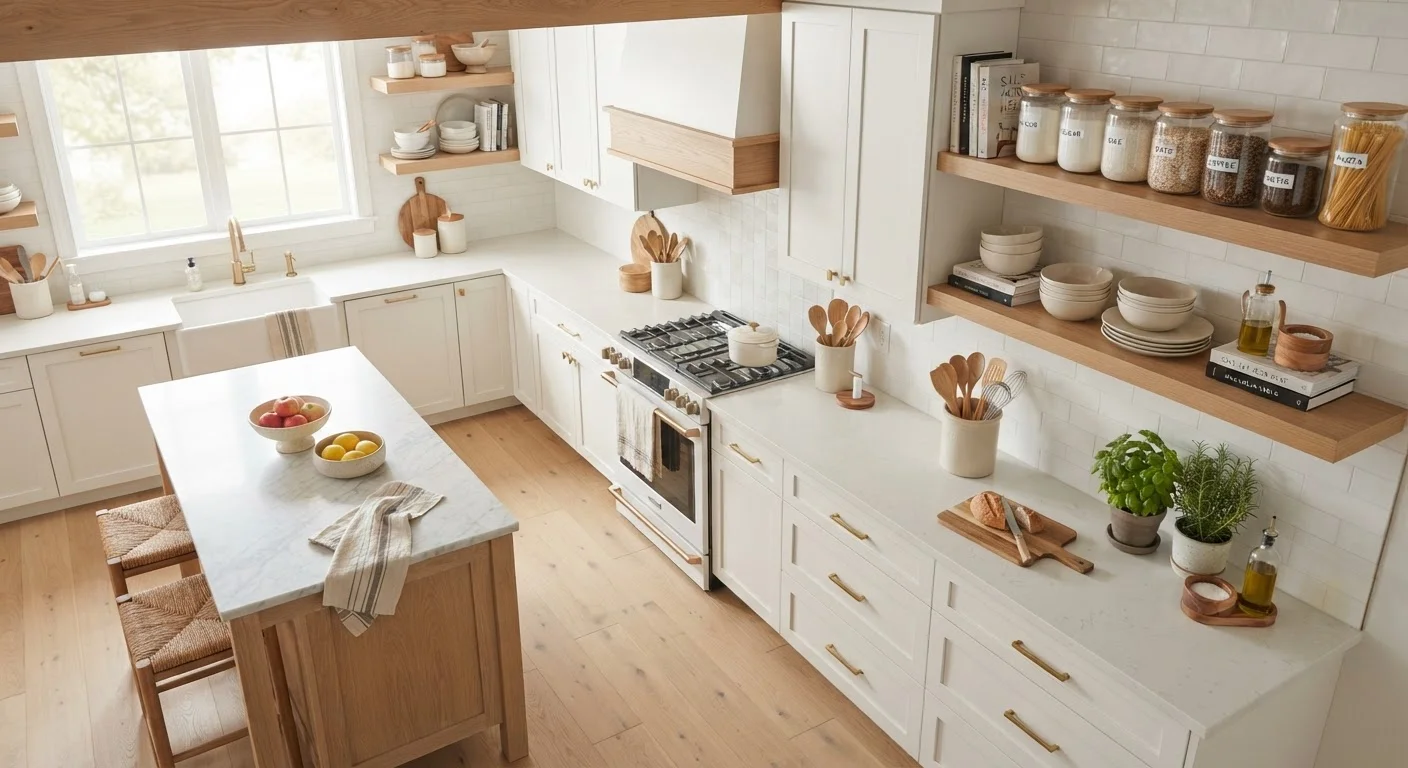
One common question is whether upper cabinets are even serving you well. If you're constantly climbing on a step stool, those cabinets may be storing things you rarely use. Our look at open shelving vs. upper cabinets walks through the real tradeoffs - dust, accessibility, visual weight - so you can decide what makes sense for your kitchen rather than following a trend.
This kitchen is also just one piece of the bigger picture. If you're working through your whole home, the whole-home organization framework offers a room-by-room approach that connects kitchen logic to the rest of your space. And for broader maintenance ideas, home improvement resources cover the structural side of keeping your kitchen functional long-term.
Above all, remember that the goal isn't a kitchen that photographs beautifully - it's a kitchen you can cook in comfortably every day. That standard is both more achievable and far more satisfying.