Why Whole-Home Organization Is Different from Tidying Up
Tidying up means moving things until the room looks presentable. Whole-home organization means building systems so that things naturally return to the right place - with minimal effort, every time. The difference is durability.
A surface-level clean resets the clock. A genuine organizational system stops the clock from running out in the first place. That requires thinking about your home not as a collection of rooms, but as a set of functions - and designing storage and routines around those functions.
For a deeper look at how assigning roles to spaces changes daily friction, see our guide on zone-based organization. If you're also unfamiliar with terms like "negative space" or "one-in-one-out," our plain-language organization glossary is a useful starting reference.
The Framework: Four Phases Every Room Needs
Regardless of room size or clutter level, effective organization follows the same four-phase sequence:
- Declutter. Remove everything that doesn't belong, is broken, is duplicated, or hasn't been used in over a year. This is the hardest phase - and the most important.
- Categorize. Group what remains by type or by how it's used, not by where it currently lives. "Batteries and tape" is a usage category. "Junk drawer contents" is not.
- Assign. Give every category a defined home - ideally at the point of use. Batteries near remotes; dog leash near the front door; scissors in the home office and the kitchen if both locations genuinely use them.
- Maintain. Build a short daily or weekly reset into your routine so categories don't drift. Five minutes each evening prevents a five-hour Saturday overhaul.
When in doubt about whether to keep something, ask where it will live - not whether you like it. If you can't name a specific home for it, that's useful information.
Professional organizers consistently find that the inability to assign a location is a reliable signal of an unnecessary item, not a storage problem to solve.
Do your heaviest decluttering when you're mildly tired but not exhausted - decision fatigue accelerates ruthlessness in a useful way during the purge phase.
Cognitive research on decision fatigue suggests that mental resource depletion lowers attachment to marginal possessions, which helps during decluttering without impairing basic judgment.
Room-by-Room Priorities
Each room has a dominant function, and your organization priorities should match it:
- Kitchen
- Prioritize workflow zones - prep, cooking, storage, and cleaning. Pots near the stove, cutting boards near the prep counter, and everyday dishes within easy reach. Reduce counter clutter to the appliances used at least three times a week.
- Living Room
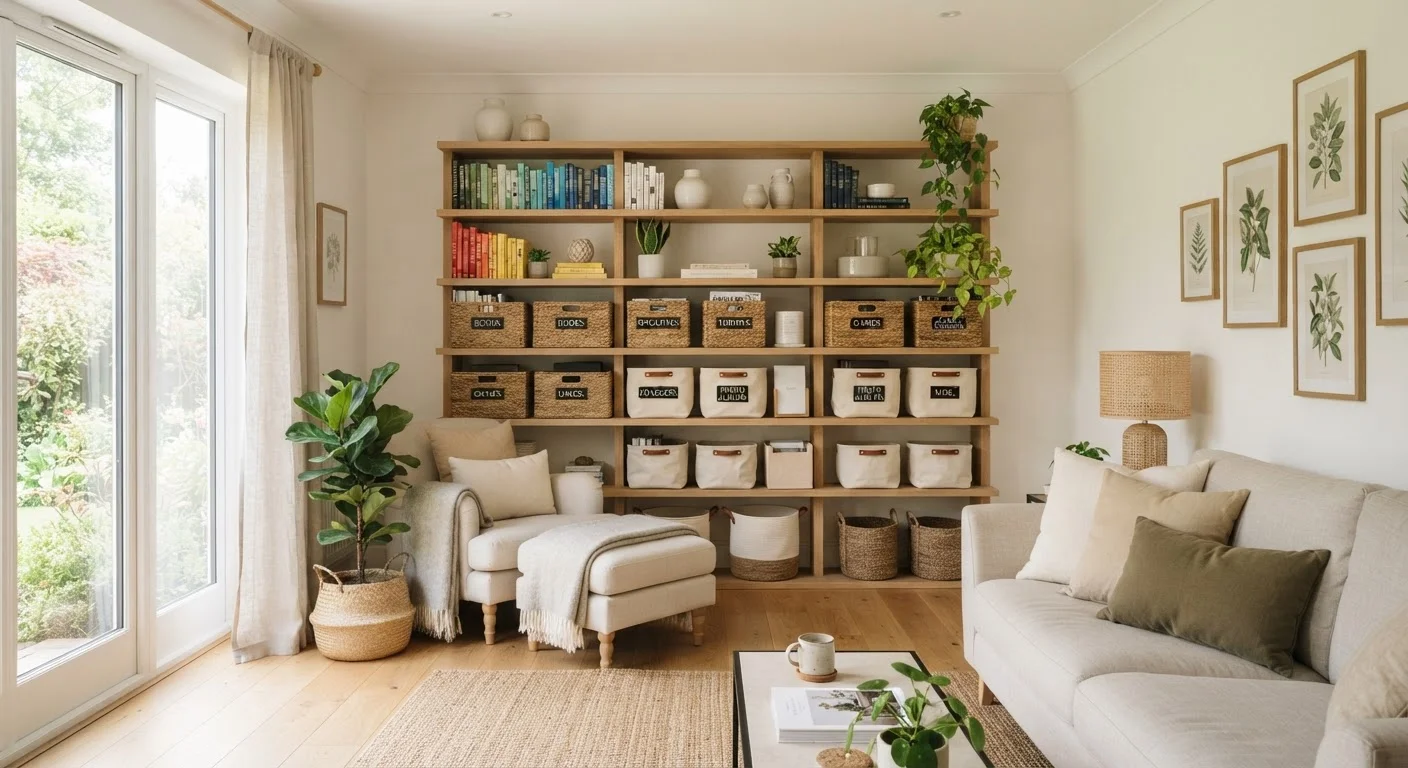
- Manage visual noise. Remotes, charging cables, throws, and reading material are the main offenders. Enclosed storage - ottomans with lids, cabinets with doors - keeps the room feeling restful.
- Bedrooms
- Closets benefit most from a full purge before any new system is installed. Group by garment type, then by frequency of use, placing everyday items at eye level.
- Bathrooms
- Expired products are the silent culprit. A quarterly sweep of medicine cabinets and under-sink storage prevents buildup. Drawer dividers prevent the cosmetic avalanche.
- Home Office or Workspace
- Paper is the dominant challenge. A simple three-tray system - incoming, in-progress, to file - handles most paper flow without a complicated filing overhaul.
For a structured seasonal review of every room, our seasonal declutter checklist walks you through exactly what to evaluate and when.
Storage Logic That Actually Works
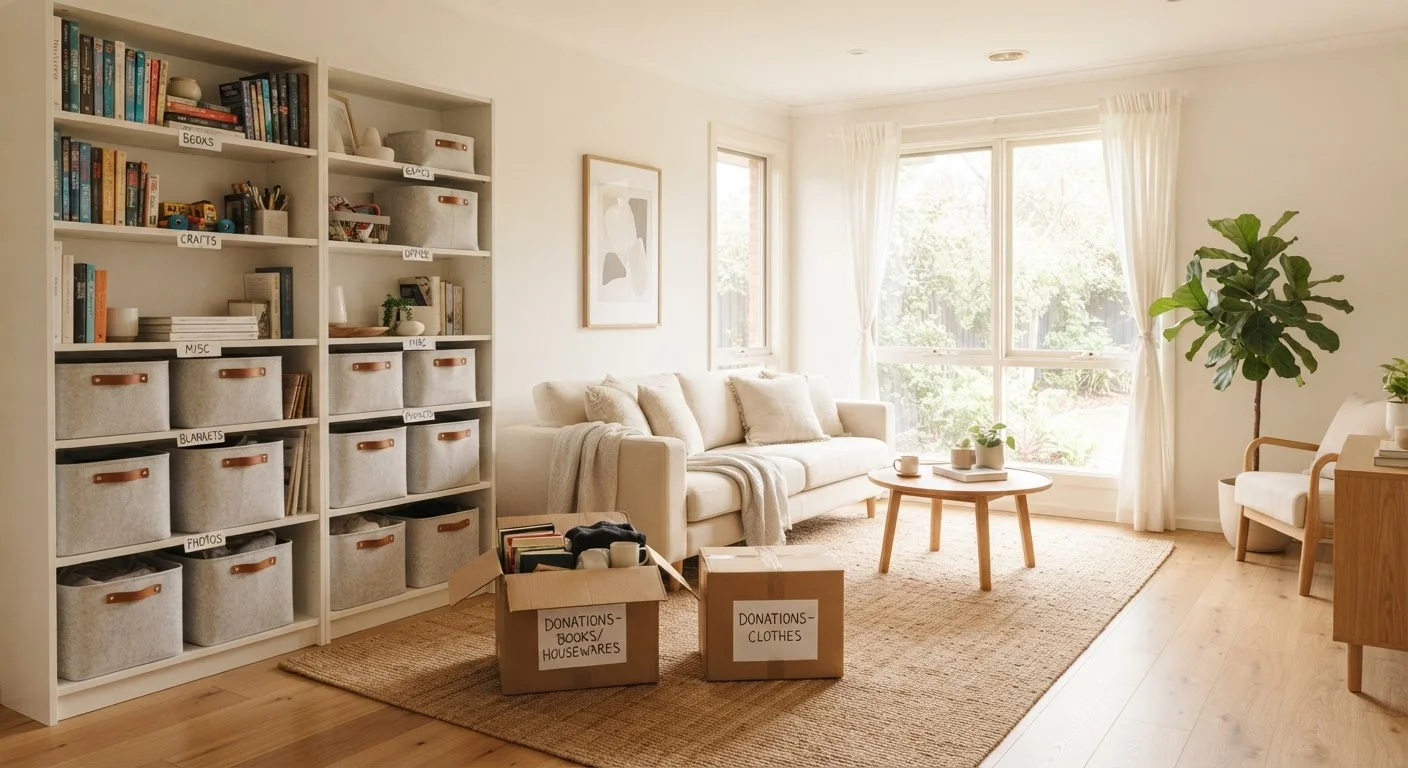
The most common storage mistake is buying containers before decluttering. Containers purchased for a bloated category just give clutter a nicer home. Always declutter first, measure second, buy third.
Effective storage follows a few durable principles:
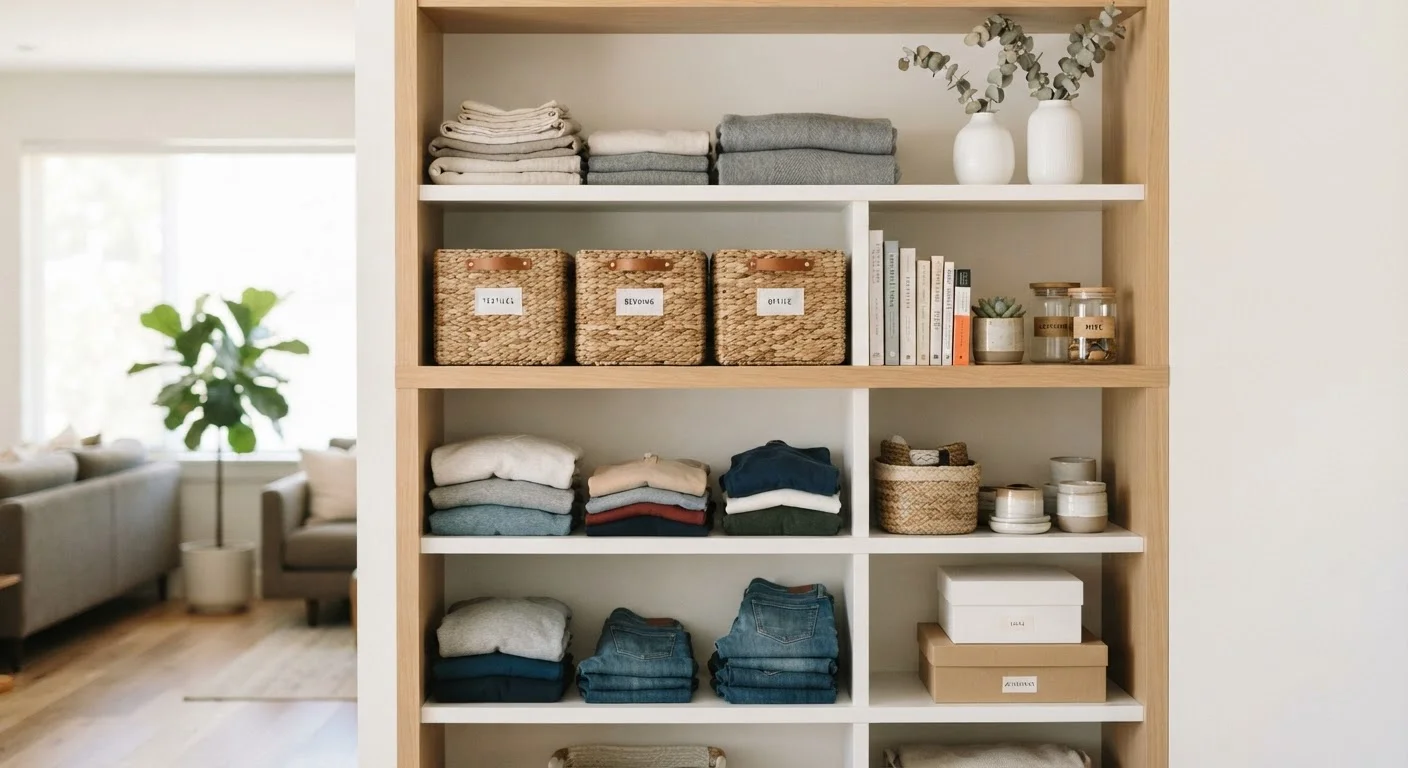
- Visibility beats capacity. Open bins, clear boxes, and shallow drawers make things easier to find and - critically - easier to put back. Deep cabinets with opaque bins are where things go to be forgotten.
- Frequency determines height. Items used daily belong between knee and shoulder height. Rarely used items go up high or deep in a cabinet.
- Vertical space is underused. Walls, door backs, and the insides of cabinet doors are legitimate storage real estate in small homes.
- Labels commit the system. A labeled bin creates a social contract - even with yourself - that reinforces where things belong.
Maintenance Routines That Prevent Backsliding
Organization without maintenance is renovation without upkeep - it degrades predictably. Build these three habits to protect the work you've done:
- Daily reset (5-10 minutes). At the end of each day, return displaced items to their assigned homes. This is faster when every item has a clear home, which is why the assign phase matters so much.
- Weekly check-in (15-20 minutes). Scan high-traffic areas - entryway, kitchen counters, dining table - for accumulating items that need to be dealt with rather than moved again.
- Seasonal audit. Review what's no longer earning its place. Clothing, paper, kids' toys, and pantry goods are the categories most prone to quiet accumulation.
If building consistency is the challenge rather than the system itself, building an organization habit one room at a time offers practical guidance on making tidiness a sustainable practice rather than a recurring emergency.
Common Pitfalls and How to Avoid Them
Even well-intentioned organization projects stall or reverse. Here are the pitfalls most worth knowing about:
- Organizing for an idealized version of yourself. If you've never filed paper regularly, an elaborate filing system won't fix that. Design for your real habits, not aspirational ones.
- Ignoring shared household dynamics. Systems imposed on others rarely stick. Our guide on organizing shared spaces for different standards explains how to build systems that work for everyone who lives in the home.
- Skipping the declutter phase. Reorganizing a full room without removing anything first just rearranges the problem.
- Treating it as a one-time project. Homes are dynamic. People, seasons, and routines change - and organization systems need to adapt with them.
Don't Buy Storage Before You Declutter
Purchasing bins, baskets, and organizers before removing unnecessary items almost always leads to over-buying and under-solving. Clutter given a container is still clutter. Complete the declutter and categorize phases fully before measuring for or purchasing any storage solution.
A calmer, more functional home isn't about perfection. It's about reducing the daily friction that accumulates when things don't have a place. Start with one room, apply the four phases, build the maintenance habit - and the rest of the home follows naturally.