Why Most Shared-Home Systems Fall Apart
Organizing a home that only you use is straightforward: you set the standards and you maintain them. Add a partner, roommate, teenager, or co-parent, and the equation changes entirely. What works intuitively for one person can feel arbitrary or invisible to another.
Most household organization systems fail not because the design is wrong, but because the design was built around a single person's mental model. The person who set up the system knows where everything goes and why - everyone else is guessing. Understanding why clutter feels so overwhelming can help explain why this friction compounds quickly in shared homes.
The fix isn't stricter rules or more storage containers. It's building systems that communicate themselves - ones that make the right behavior easy enough that everyone defaults to it, regardless of their natural tidiness level. For a broader foundation, see our guide on getting started with home organization.
This Isn't About Perfection
Organized shared spaces don't look like magazine spreads - they look functional. The goal is a home where everyone can find what they need and return it without stress. Compromise is part of the process, and that's completely normal.
Shared Agreements Before Shared Systems
Before rearranging a single shelf, the most important step is a conversation. Shared spaces need shared expectations - and those expectations need to be explicit, not assumed. A brief household discussion about which areas are communal and which are personal sets the foundation for everything that follows.
Consider framing it around function rather than cleanliness. Instead of 'the kitchen needs to be cleaner,' try 'let's agree that the counter is always clear of personal items by bedtime.' Specific, behavioral language gives everyone something concrete to follow.
This kind of zone-based thinking extends beyond a single conversation. Zone-based organization - assigning specific functions to defined areas - reduces daily friction because everyone knows what belongs where without negotiating it each time.
Design systems for the least organized person in the home, not the most.
If the easiest path in your home leads to clutter, everyone will take it - including the people who do care about tidiness. Systems scaled to the most capable user fail the rest of the household and quietly breed resentment.
Hold a brief household conversation about which spaces are shared and which are personal.
Unspoken standards are the leading cause of recurring conflict in shared homes. Making explicit agreements about common areas versus personal zones removes ambiguity and gives everyone a framework they can actually reference.
Use visual cues and labeled storage instead of relying on memory.
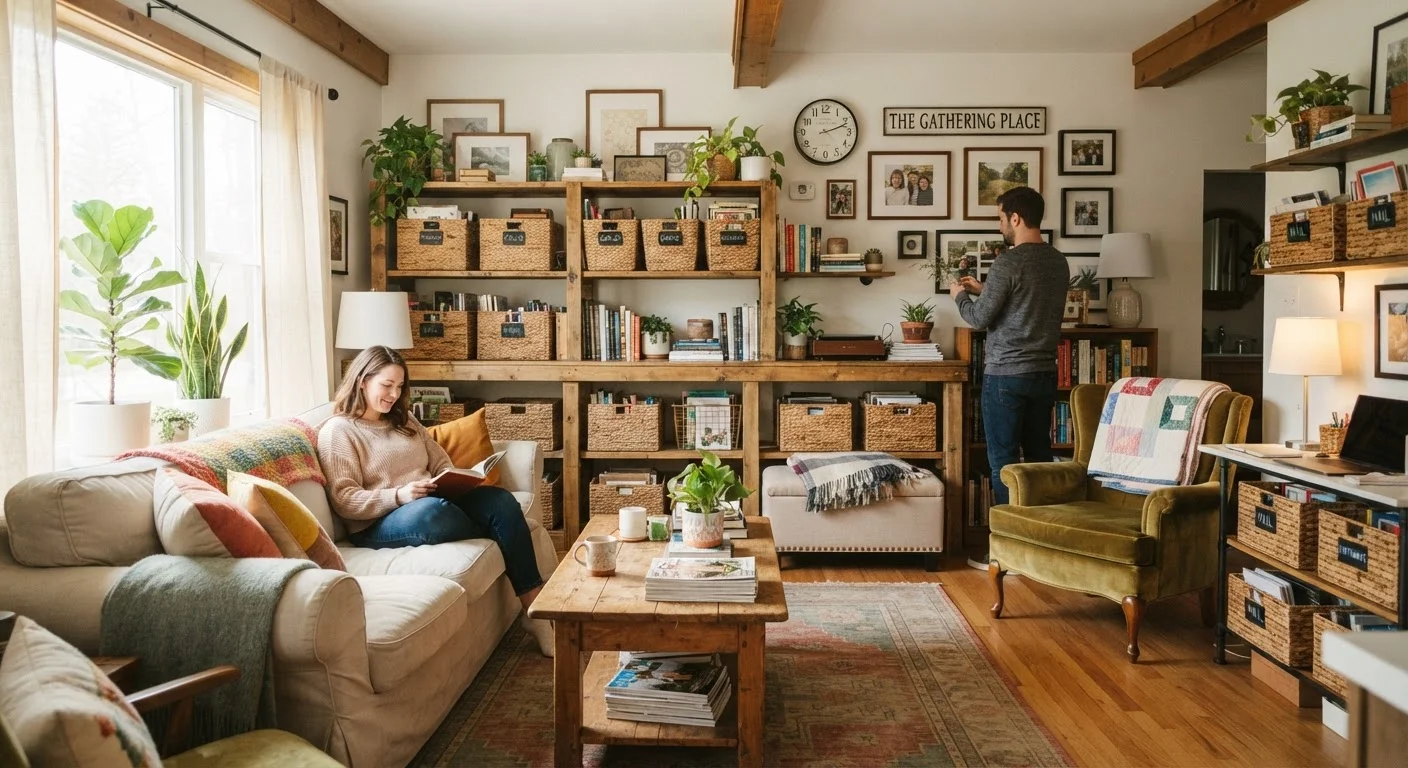
Memory-based systems work only for the person who created them. Labels, open baskets, and color-coded bins communicate the system to everyone - including guests, children, and anyone who didn't help design it.
Create a 'landing zone' near every main entry point.
Most household clutter originates at entry points - keys, shoes, bags, and mail pile up because there's no designated home for incoming items. A defined landing zone intercepts clutter before it migrates to other rooms.
Build in a brief daily reset rather than relying on weekend clean-ups.
Weekly tidying sessions allow clutter to compound for days, which makes the task feel larger and more discouraging. A 10-minute end-of-day reset distributes the effort so no single session becomes overwhelming.
Respect personal organizational styles within private spaces.
Attempting to impose a single organizational standard across every corner of a shared home tends to produce conflict without producing tidiness. Shared spaces need shared standards; private spaces can reflect individual preferences.
Low-Effort Systems That Actually Get Maintained
The most elegant organization system is useless if it requires sustained effort to maintain. In a shared home, that effort will be distributed unevenly - and eventually the whole system drifts. Sustainable organization is built on ease, not discipline.
Start with honestly assessing your space before buying more storage. More bins rarely solve a clutter problem; they often just relocate it. What actually helps is reducing the number of decisions required to maintain order - labeled containers, consistent landing zones, and a brief daily reset routine.
For households that are just building these habits, tackling one room at a time prevents the overwhelm that causes most people to abandon the effort entirely. Small, consistent wins build the muscle memory that makes tidiness feel automatic rather than effortful.
Making the System Work for Everyone Long-Term
Shared-home organization isn't a one-time project - it's an ongoing negotiation. Household compositions change, routines shift, and systems that worked last year may stop fitting. Building in a light periodic review (a conversation every few months) keeps the structure relevant without requiring a full overhaul.
If you're ready to look at the whole home at once, a room-by-room organizational framework can help you apply these principles consistently across every shared space. And if storage layout is a limiting factor, understanding the trade-offs between vertical and floor-based storage can open up options you may not have considered.
The goal is a home that functions for the people actually living in it - not a showcase of organizational ideals. When the systems are simple enough that everyone can use them, and flexible enough that individual styles aren't erased, shared homes become genuinely calmer places to be.