Your Brain on Clutter
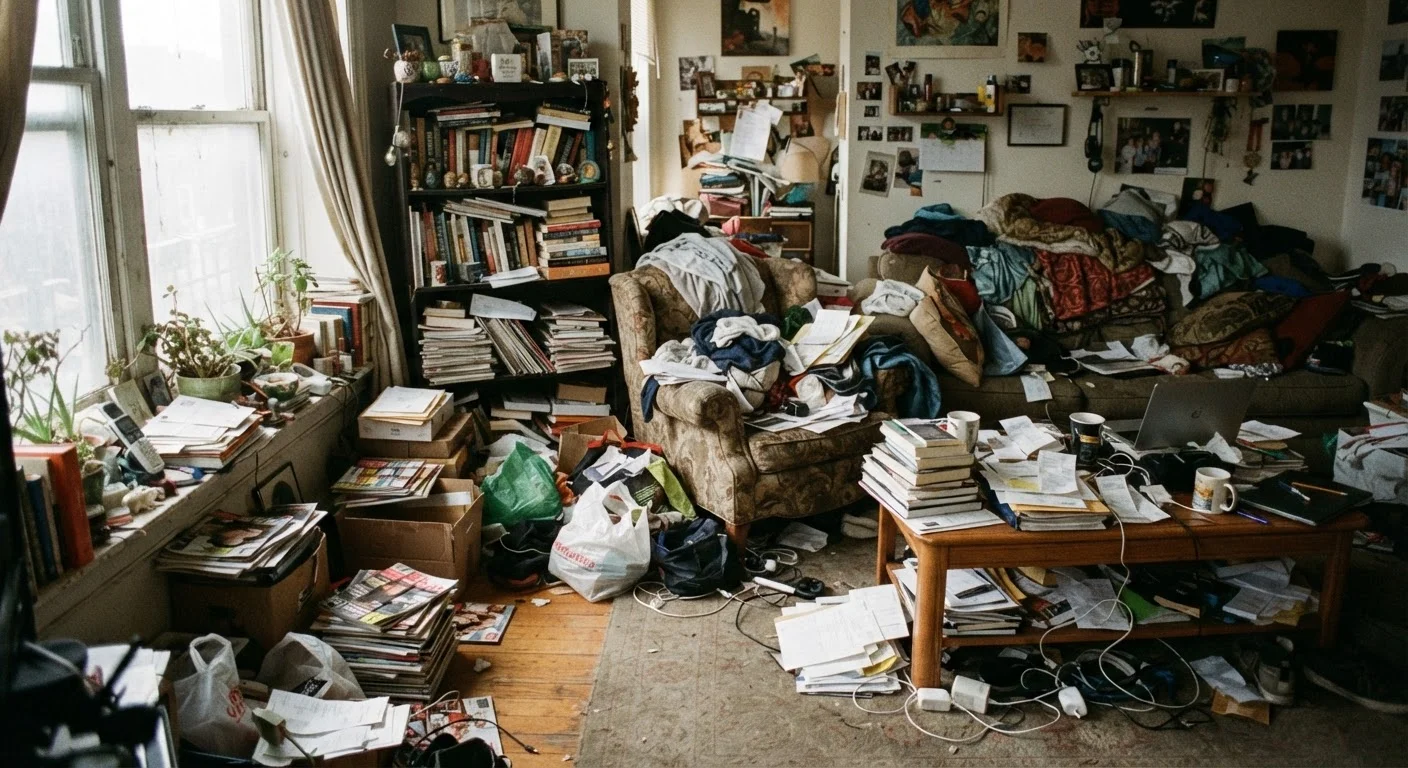
Walk into a cluttered room and your brain doesn't just see a mess - it sees unfinished work. Every visible object is catalogued as something that needs a decision: Does this belong here? Should I deal with it? What does it mean that it's still here? Your brain runs these micro-assessments automatically, and that constant background processing has a real neurological cost.
Scientists call this cognitive load - the total demand placed on your working memory at any given moment. In a tidy space, cognitive load from your environment stays low. In a cluttered one, the environment itself is constantly bidding for mental bandwidth, leaving less capacity for focus, creativity, and calm.
A widely cited study published in the Personality and Social Psychology Bulletin found that people who described their homes as cluttered showed higher levels of the stress hormone cortisol throughout the day, compared to those who described their homes as restful. Cortisol is useful in short bursts - it's your body's alarm system - but sustained elevation is associated with fatigue, irritability, and difficulty concentrating.
“A cluttered space is a visual reminder of all the things we haven't done. The brain doesn't distinguish between 'I should tidy that' and any other open loop - it just keeps tracking them all.”
— Darby Saxbe, Associate Professor of Psychology, University of Southern California
Why Clutter Feels Personal (Even When It Isn't)
One of the most draining aspects of clutter isn't the clutter itself - it's the guilt that comes with it. Many people interpret a messy home as evidence of a personal failure: lack of discipline, laziness, or poor judgment. This narrative makes the problem worse, because shame tends to trigger avoidance rather than action.
The reality is more straightforward. Clutter accumulates because modern households receive a constant inflow of objects - mail, packaging, purchases, hand-me-downs - with very little built-in infrastructure for managing that flow. Without deliberate systems, accumulation is the default outcome. It's not a character flaw; it's what happens when volume exceeds structure.
Understanding this shift is genuinely useful. When you stop treating clutter as a moral problem and start treating it as a logistical one, it becomes much easier to address. If you're not sure where to begin, our beginner's guide to home organization walks through realistic first steps without the overwhelm.
The Paralysis Loop: Why Starting Is the Hardest Part
If you've ever stood in a cluttered room, felt a wave of stress, and then walked out without touching anything - you've experienced the paralysis loop. It works like this: clutter creates cognitive overload, cognitive overload makes it hard to identify a starting point, and the inability to identify a starting point makes the task feel impossible, which makes avoidance feel rational.
The key to breaking this loop isn't motivation - it's reducing the decision load. Research on habit formation consistently shows that smaller, more concrete goals produce more consistent action than large, open-ended ones. Instead of "clean the house," try "clear the kitchen counter." Instead of "sort through everything," try "fill one bag."
This is the logic behind structured decluttering frameworks, which break the process into explicit, manageable steps. Our guide to popular decluttering methods covers several approaches - including KonMari, Swedish Death Cleaning, and the Four-Box Method - so you can find one that matches how your brain works.
Start With One Surface, Not the Whole Room
When clutter feels paralyzing, pick a single flat surface - one counter, one table, one shelf - and clear only that. Don't move on until it's done. Completing one small area gives your brain proof that progress is possible, which reduces the psychological resistance to continuing.
Building a Calmer Home Environment
Once you understand the psychological mechanics of clutter, a few practical principles become much clearer.
- Reduce visual noise first. Flat surfaces - countertops, tabletops, floors - have an outsized effect on perceived calm. Clearing these areas, even temporarily, produces an immediate reduction in cognitive load.
- Work with inflow, not just outflow. Decluttering once doesn't solve the problem if new items continue arriving without a system. Paper clutter is a common example - it piles up faster than almost anything else because there's rarely a designated landing spot.
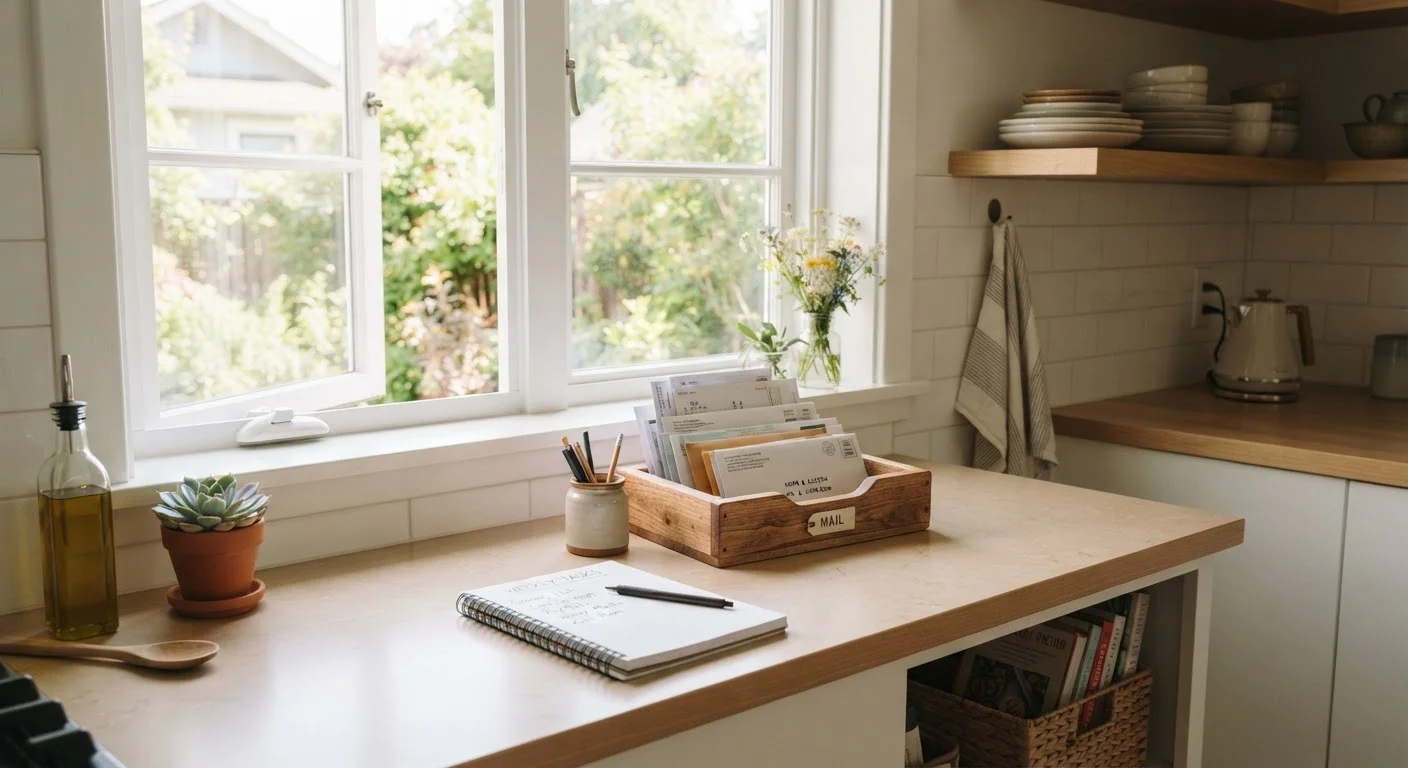
- Create friction for accumulation. The easier it is to drop something somewhere, the more things accumulate there. Designated zones - a single tray for incoming mail, a hook by the door - channel the natural tendency to set things down into manageable spots.
For households where different people have different tolerances for tidiness, building shared systems requires a different conversation. Our article on organizing shared spaces addresses how to create structures that work for everyone, not just the most organized person in the house.
If you're ready to take a more systematic approach, our whole-home organization framework provides a room-by-room structure you can work through at your own pace.