
The Generational Handoff: Millennials Enter the Market en Masse
For years, commentary on housing demand focused on when Millennials - the generation born roughly between 1981 and 1996 - would finally buy homes. That question has largely been answered. This cohort now accounts for the largest share of home purchases in the country, and because the generation is so large, its collective arrival in the market carries outsized weight.
The demand pattern is not uniform. Early Millennials in their late 30s and early 40s are often seeking mid-size homes in good school districts, while younger Millennials are competing fiercely for entry-level inventory that barely exists. Simultaneously, Gen Z is beginning to form independent households, adding another layer of demand pressure at the lower end of the market.
This generational concentration matters because it creates sustained, structural demand - not a short-term spike driven by interest rates or investor activity. To understand what indicators reflect this pressure in real time, see the market signals economists watch.
38%
Share of home purchases made by Millennials
According to the National Association of Realtors' 2023 Home Buyers and Sellers Generational Trends report, Millennials represented the largest generational share of homebuyers.
17%
US households that are multigenerational
Pew Research Center has documented a long-term rise in multigenerational households in America, reaching roughly 1 in 6 households in recent years.
28%
Share of workers with hybrid or remote arrangements
U.S. Bureau of Labor Statistics and various workforce surveys have tracked a meaningful post-pandemic persistence of hybrid and remote work, varying by industry and occupation.
Baby Boomers, the Lock-In Effect, and Constrained Supply
On the other side of the generational equation, Baby Boomers (born roughly 1946-1964) are aging into a stage where downsizing would historically have been expected. Many own homes that are larger than their current needs - the classic family home with empty bedrooms after children have moved out. Conventional wisdom held that this wave of sellers would gradually release inventory to younger buyers.
That release has been slower than anticipated. A significant factor is the mortgage lock-in effect: homeowners who refinanced or purchased when rates were historically low face a steep financial trade-off if they sell and buy elsewhere at today's higher rates. Many are choosing to stay put, which constrains the supply of established homes available for younger families to move into.
This supply squeeze interacts directly with existing zoning and construction bottlenecks. America's broader housing shortage didn't begin with demographic pressure, but demographic pressure is making it harder to resolve.
Remote Work Migration and the Reshaping of Geographic Demand
The normalization of remote and hybrid work arrangements has introduced a structural shift in where housing demand flows. When proximity to a specific office becomes optional - or at least negotiable - the calculus of where to live changes. Workers who once tolerated high housing costs in major metros to be near their employers have gained new flexibility.
The result has been measurable appreciation in markets that were previously considered secondary: mid-size cities, Sun Belt suburbs, mountain towns, and smaller Midwest metros have all attracted relocating workers. This geographic redistribution doesn't reduce total demand - it redirects it - which is why some high-cost coastal markets have seen modest softening while previously overlooked markets have tightened significantly.
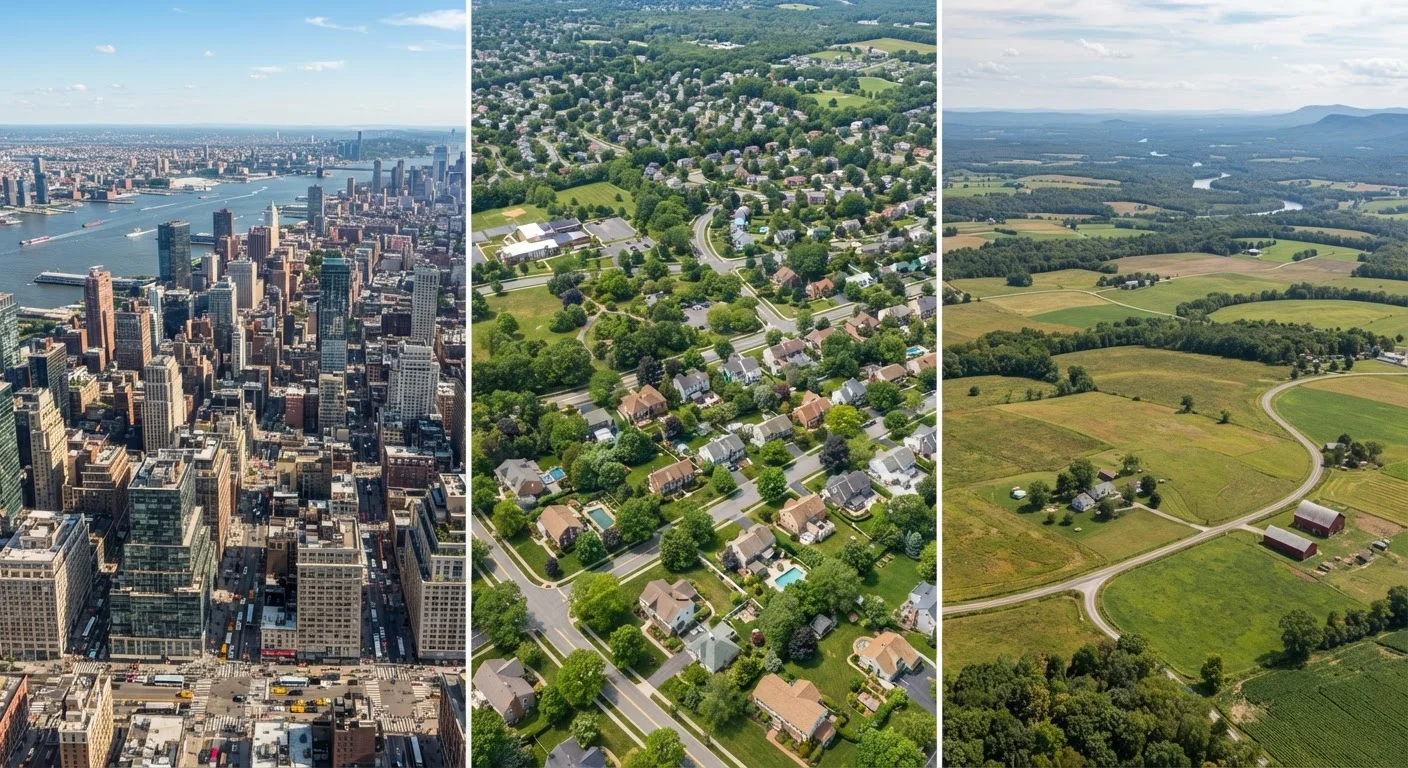
These dynamics interact differently depending on whether a market is urban, suburban, or rural. How those three market types function and diverge is worth understanding before drawing conclusions about any specific area.
Household Composition: More Kinds of Households, More Varied Needs
Housing demand isn't just about how many people there are - it's about how they're organized into households. Two broad trends are diversifying what types of homes are actually needed.
First, single-person households have grown steadily as a share of total households. Adults marrying later, higher divorce rates, and longer life expectancy among seniors all contribute. A single-person household still requires a unit - typically a smaller one - and this expands demand for condos, smaller apartments, and accessory dwelling units in ways that family-focused housing stock doesn't always accommodate.
Second, multigenerational living has increased meaningfully, driven by a combination of cultural preference, caregiving needs, and affordability pressure. Families combining multiple generations under one roof often need larger homes with flexible layouts - in-law suites, separate entrances, or extra bathrooms. This demand doesn't always show up neatly in standard housing categories.
Both trends interact with local zoning rules, which in many communities still restrict the kinds of housing that would best serve these emerging household types.
This article is intended for general informational purposes and does not constitute financial, investment, or real estate advice. Readers should consult qualified professionals before making decisions based on housing market information.