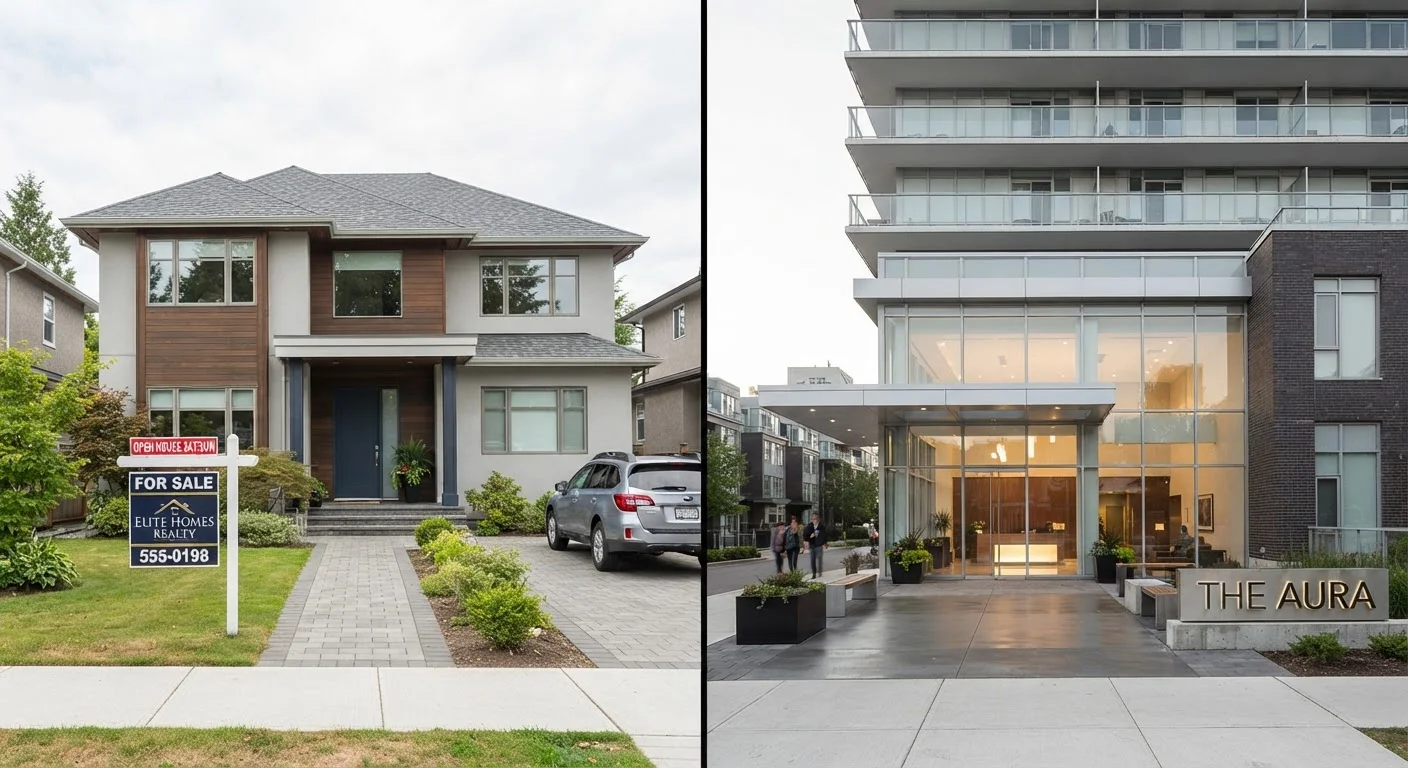

Why High-Price Markets Change the Calculus
The conventional wisdom - that buying is almost always better than renting - was shaped in an era of moderate home prices relative to incomes. In many U.S. metros today, that assumption doesn't hold without scrutiny. When median home prices reach eight to twelve times the median household income, the financial logic of buying shifts considerably.
The core tension in a high-price market is the price-to-rent ratio: dividing a home's purchase price by its annual rental equivalent. Ratios above 20 generally favor renting from a pure return-on-capital perspective; ratios below 15 tend to favor buying. Coastal metros and many Sun Belt cities have seen ratios climb well above that threshold, meaning monthly ownership costs - mortgage principal and interest, property taxes, insurance, and maintenance - often far exceed what a comparable rental would cost.
That gap matters. The difference between a $3,200 monthly mortgage payment and a $2,200 monthly rent isn't just $1,000 a month - it's $1,000 that could be redirected toward savings, investments, or other financial priorities. See our honest financial comparison of owning vs. renting for a deeper breakdown of how those numbers interact over time.
The True Costs on Both Sides
A clear-eyed comparison requires accounting for costs that don't show up in a simple rent vs. mortgage payment comparison.
| Criterion | Renting | Buying |
|---|---|---|
| Upfront costs | Security deposit + first month | Down payment + 2-5% closing costs |
| Monthly cost predictability | Subject to lease renewals | Fixed with fixed-rate mortgage |
| Equity accumulation | None | Builds with each payment |
| Maintenance responsibility | Landlord typically responsible | Owner fully responsible |
| Mobility | High - move at lease end | Low - selling takes time and money |
| Tax considerations | No direct tax benefit | Potential mortgage interest deduction |
| Market risk exposure | Minimal | Significant - prices can fall |
On the buying side, closing costs typically run 2-5% of the purchase price - a significant outlay before any equity is built. Annual maintenance and repairs generally average 1-2% of the home's value per year, a figure that rises with older properties. Property taxes, homeowners insurance, and potential HOA fees add further carrying costs that renters avoid.
On the renting side, the true cost calculation should account for what renters don't build: equity. A portion of every mortgage payment reduces principal, functioning as a form of forced savings. Renters who invest the equivalent of a down payment elsewhere may generate comparable returns - but that requires discipline and favorable market conditions, neither of which is guaranteed.
For readers weighing whether to stay put or move, lease renewal decisions involve a similar framework of real versus perceived costs.
The Break-Even Horizon and Why It Matters
Every rent-vs.-buy analysis has a break-even point: the year at which the cumulative costs of buying fall below the cumulative costs of renting. In high-price markets with elevated transaction costs, that horizon commonly stretches to five, seven, or even ten or more years.
5-7 years
Typical break-even horizon in high-cost metros
Housing economists generally estimate that buyers in expensive markets need to stay five to seven years or more before cumulative ownership costs fall below equivalent renting costs.
2-5%
Closing costs as share of purchase price
Standard U.S. closing costs - including lender fees, title insurance, and escrow - typically add tens of thousands of dollars to upfront buying expenses in high-price markets.
1-2%
Annual maintenance cost as share of home value
The commonly cited rule of thumb holds that homeowners should budget 1-2% of their home's value per year for maintenance and repairs, a cost renters generally avoid.
If there's any meaningful chance you'll relocate before that threshold - for work, family, or personal reasons - buying carries real financial risk. Selling too early can mean recovering less than you paid after accounting for agent commissions (typically 5-6% of the sale price) and transaction costs on both ends.
This is why personal stability is not a soft consideration - it's a financial variable. A two-year job assignment, an uncertain relationship status, or a flexible remote-work arrangement all affect the math. For a broader look at how timing intersects with major purchase decisions, timing a purchase vs. buying when you need it offers useful framing.
Non-Financial Factors That Deserve Equal Weight
Financial models can compare renting and buying with reasonable precision - but they can't fully quantify autonomy, community roots, or the psychological weight of a large mortgage. These factors are legitimate inputs into the decision.
Ownership advantages beyond equity include the freedom to renovate, stable housing costs over time (with a fixed-rate mortgage), and the option to rent out the property. Many homeowners also report a stronger sense of community investment and long-term rootedness.
Renting advantages beyond flexibility include the ability to live in locations or neighborhoods that would be unaffordable to buy in, and the freedom to redirect time and money away from maintenance. In tight supply markets, renters who find stable, reasonably priced housing may be better served staying put and building other financial assets. Strategies for finding affordable rentals in a tight market can help renters make the most of this path.
The realistic comparison of renting vs. buying explores these lifestyle dimensions in greater depth, including how life stage and risk tolerance factor into the choice.
This article is for general informational purposes only and does not constitute financial, legal, or investment advice. Readers should consult a qualified financial adviser or real estate professional before making housing decisions based on their individual circumstances.