Why Certifications Exist - and Why Not All Are Equal
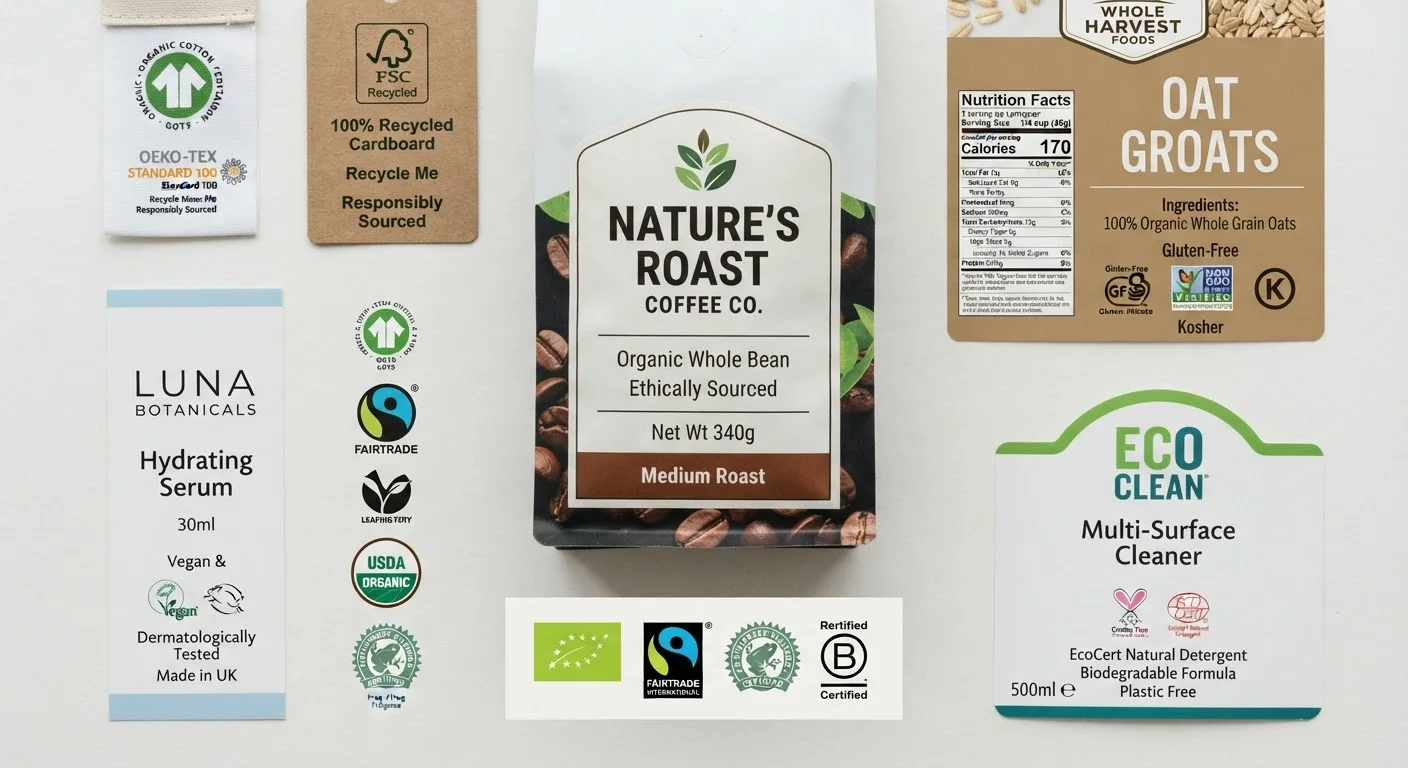
A certification mark is supposed to tell you something a marketing claim cannot: that an independent organization tested or audited this product and verified it meets defined standards. The problem is the word "independent" carries a lot of weight that not every seal actually earns.
Some certifications involve rigorous third-party testing, factory audits, and ongoing compliance monitoring. Others are essentially self-declarations - a company fills out a questionnaire, pays a fee, and receives a badge it can print on packaging. Without understanding the difference, shoppers have no reliable way to know whether a seal means anything meaningful.
Understanding what product labels are actually communicating is the first step. Knowing which third-party marks are built on genuine accountability is the next.
Third-Party Certification
Verification of a product's claims or safety attributes conducted by an organization that is independent of both the manufacturer and the buyer. True third-party certification involves documented standards and some form of ongoing oversight.
NRTL (Nationally Recognized Testing Laboratory)
A testing laboratory recognized by OSHA as competent to test products against established safety standards. NRTLs must meet specific accreditation criteria; their marks are accepted by U.S. building codes and inspectors.
Self-Declaration
A claim made by the manufacturer about their own product without independent verification. Self-declarations may be accurate, but they carry no third-party accountability.
Accreditation Body
An organization that formally evaluates and recognizes certification bodies as competent to certify others. In the U.S., ANSI (American National Standards Institute) is a key accreditation body for standards developers and certifiers.
Post-Market Surveillance
Testing or monitoring of products after they have been certified and placed on the market. Programs with post-market surveillance can pull certification from products that no longer comply, making their marks more credible over time.
Certifications With Real Accountability Behind Them
The following certifications are widely recognized in the U.S. and are backed by documented testing standards, third-party oversight, or government program requirements.
| UL Founded | 1894 (Underwriters Laboratories organizational history) |
| ENERGY STAR Program Start | 1992 (U.S. Environmental Protection Agency) |
| U.S. NRTLs Recognized by OSHA | Over 20 laboratories (OSHA NRTL Program, publicly listed) |
| USDA Organic Oversight | Federal law (Organic Foods Production Act) (USDA Agricultural Marketing Service) |
| WaterSense Administrator | U.S. Environmental Protection Agency (EPA WaterSense Program) |
Safety and Electrical
- UL Listed / UL Certified: UL (formerly Underwriters Laboratories) is an independent, accredited safety certification organization. Products bearing the UL mark have been tested against established safety standards. UL conducts factory inspections and can remove authorization if a product fails follow-up evaluations.
- ETL Listed: Issued by Intertek, ETL is an OSHA-recognized Nationally Recognized Testing Laboratory (NRTL). It is equivalent in standing to UL for electrical safety purposes and is accepted by code authorities across North America.
- CSA Group: A Canadian-origin NRTL also recognized in the U.S., CSA tests to many of the same safety standards and is commonly seen on appliances and industrial equipment.
Energy and Environment
- ENERGY STAR: A program administered by the U.S. Environmental Protection Agency. Products must meet specific energy-efficiency criteria; manufacturers submit data and are subject to third-party verification and post-market testing. Not every product category has equally stringent thresholds, so it is worth checking the EPA's published specification for the product type in question.
- WaterSense: Also EPA-administered, WaterSense certifies water-efficient plumbing fixtures and irrigation products against defined performance benchmarks.
Organic and Food-Adjacent
- USDA Organic: Administered by the U.S. Department of Agriculture, this certification requires accredited certifying agents to verify that farms and handling operations meet federal organic regulations. It has defined legal meaning - unlike terms such as "natural." See our article on separating fact from marketing fiction on eco labels for context on unregulated alternatives.
Marks That Deserve More Scrutiny
Not every seal on a product box represents independent verification. Some marks are self-administered, minimally audited, or controlled entirely by the industry they are supposed to hold accountable. That does not make them meaningless, but it does mean you should dig further before treating them as definitive quality signals.
- "Certified" with no named certifying body: If a product says "certified" without identifying who performed the certification and against what standard, treat it as a marketing phrase rather than a verified claim.
- Industry-association marks: Some trade associations issue seals to their own members. When the certifying body is funded primarily by the companies being certified, the conflict of interest is significant.
- Self-declared eco badges: Terms like "eco-certified," "green-approved," or "sustainable-verified" frequently appear without any documented third-party standard. The EPA's Safer Choice label and similar government-backed programs are more meaningful alternatives in the cleaning and chemical space.
If you are researching a certification you are unfamiliar with, look for three things: who issues it, what the testing or audit process involves, and whether the certifying body is itself accredited by a recognized accreditation organization such as ANSI (American National Standards Institute) or ILAC.
For a structured way to incorporate certifications into your overall product evaluation, see building your own framework for evaluating any consumer product. And before any significant purchase, a pre-purchase research checklist can help you verify what you are actually buying.